
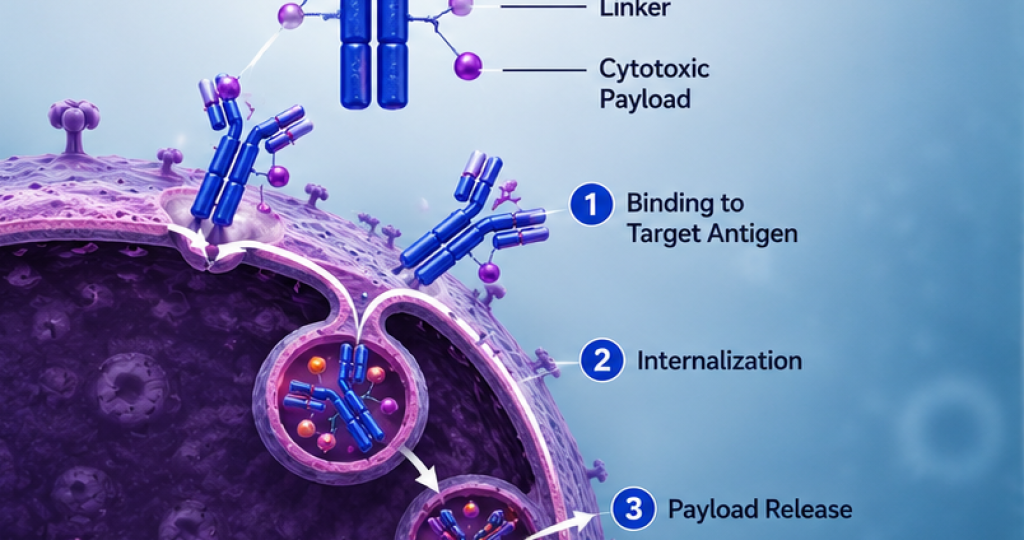
Biocytogen and Whitehawk Therapeutics have entered a global collaboration to develop bispecific antibody‑drug conjugates (BsADCs) for cancer, combining RenLite® antibody engineering with proprietary ADC linker‑payload technologies.
Written By: Amit Kumar Bharati, BPharm
Reviewed By: Pharmacally Editorial Team
Biocytogen and Whitehawk Therapeutics have formed a global research collaboration to develop bispecific antibody-drug conjugates (BsADCs) for oncology. Under the agreement, Biocytogen will provide access to up to five fully human bispecific antibodies generated through its proprietary RenLite® platform, while Whitehawk will evaluate these antibodies using its antibody-drug conjugate (ADC) linker-payload technologies.
If promising BsADC candidates emerge, Whitehawk will have the option to advance them into its development pipeline, retaining global rights and full program control.
The collaboration expands the application of bispecific antibody technology in targeted cancer therapeutics by combining complementary antibody discovery and ADC development capabilities.
Combining Bispecific Antibodies with ADC Technology
BsADCs integrate the tumor-targeting capabilities of bispecific antibodies with the cell-killing activity of antibody-drug conjugates. By recognizing two molecular targets simultaneously, bispecific antibodies may improve tumor selectivity, broaden target coverage, and potentially overcome resistance mechanisms that can limit conventional single-target therapies.
Biocytogen’s RenLite® platform uses a common light-chain architecture to generate fully human bispecific antibodies while minimizing light-chain mispairing, a common challenge in bispecific antibody engineering. The platform also supports antibody discovery, screening, and optimization across multiple target combinations, providing a foundation for subsequent BsADC development.
Whitehawk will contribute its proprietary linker-payload platform technologies, which determine how the cytotoxic payload is attached to the antibody and released within cancer cells. Optimizing these components is critical for improving therapeutic activity while limiting off-target toxicity.
Partnership Supports Pipeline Expansion
Dr. Yuelei Shen, President and Chief Executive Officer of Biocytogen, said the collaboration broadens the use of the company’s fully human bispecific antibody platform in ADC development. He added that Biocytogen will contribute high-quality antibody candidates and integrated research capabilities to help identify differentiated cancer therapies.
Dave Lennon, PhD, Chief Executive Officer of Whitehawk Therapeutics, said bispecific antibodies represent an important opportunity to expand tumor-targeting strategies. He noted that integrating Biocytogen’s antibody platform with Whitehawk’s ADC technologies could strengthen the company’s oncology pipeline and support its objective of advancing new ADC investigational new drug (IND) candidates over the next 12 to 24 months.
Financial Terms and Next Steps
Under the agreement, Biocytogen will receive an upfront payment and may earn development, regulatory, and commercial milestone payments. The company is also eligible to receive low single-digit royalties on future net sales of commercialized products. Financial details of the upfront payment and milestone structure were not disclosed.
The collaboration will initially evaluate up to five bispecific antibody programs. Whitehawk will decide whether to exercise its option to advance any resulting BsADC candidates into global development, with the partnership focused on expanding targeted treatment options for patients with cancer.
Reference

About the Writer
Amit Kumar Bharti (LinkedIn) is a pharmacy graduate from DPSRU, Delhi and healthcare writer with a strong interest in pharmaceutical research, medical writing, and evidence-based healthcare communication. He is passionate about translating complex scientific and medical information into clear, accurate, and engaging content for healthcare professionals and the pharmaceutical industry. His focus includes emerging therapies, clinical research, and recent advances in medicine.