
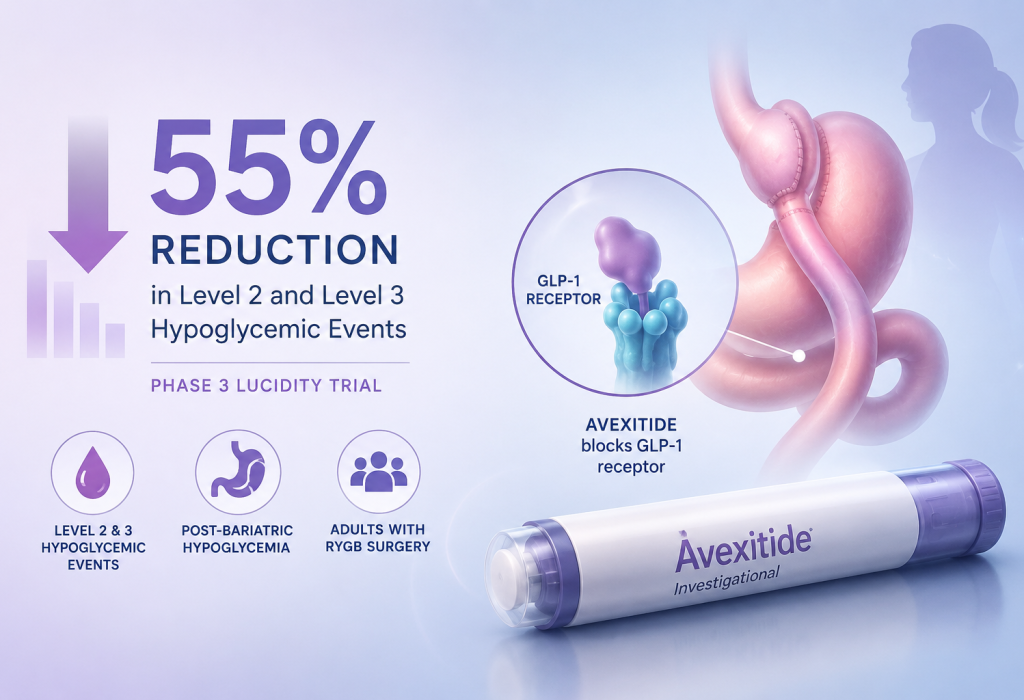
Avexitide reduced Level 2 and Level 3 hypoglycemic events by 55% versus placebo in the Phase 3 LUCIDITY trial in adults with post-bariatric hypoglycemia.
Written By: Anamika Koshti, PharmD
Reviewed By: Pharmacally Editorial Team
Amylyx Pharmaceuticals announced positive topline results from the Phase 3 LUCIDITY trial evaluating avexitide in adults with post-bariatric hypoglycemia (PBH) following Roux-en-Y gastric bypass (RYGB) surgery. The trial met its FDA-agreed primary endpoint, demonstrating a 55% reduction in the composite rate of Level 2 and Level 3 hypoglycemic events compared with placebo through Week 16 (p=0.000003). All secondary endpoints were also met, showing highly statistically significant and clinically meaningful reductions in hypoglycemic events.
If approved, avexitide could become the first FDA-approved treatment for PBH, for which there are currently no FDA-approved therapies.
Scientific Background
PBH is a chronic metabolic condition characterized by recurrent hypoglycemia after bariatric surgery. It is thought to involve an exaggerated glucagon-like peptide-1 (GLP-1) response following food intake, leading to excessive insulin secretion and subsequent reductions in blood glucose.
Avexitide is an investigational, first-in-class GLP-1 receptor antagonist designed to inhibit this exaggerated GLP-1-driven insulin response. By competitively blocking GLP-1 receptors on pancreatic islet beta cells, avexitide is intended to reduce inappropriate insulin secretion and stabilize blood glucose levels.
There are currently no FDA-approved therapies for PBH, underscoring the need for effective treatment options.
LUCIDITY Trial
LUCIDITY (NCT06747468) was a multicenter, randomized, double-blind, placebo-controlled Phase 3 trial conducted at 21 sites in the United States. The study enrolled 78 adults with PBH following RYGB surgery.
Participants were randomized 3:2 to receive 90 mg of avexitide subcutaneously once daily or placebo. The trial included an up to six-week screening period, including a three-week run-in period, followed by a 16-week double-blind treatment period and a 32-week open-label extension.
The FDA-agreed primary efficacy endpoint was reduction in the composite rate of Level 2 and Level 3 hypoglycemic events through Week 16.
Primary and Secondary Efficacy Results
Avexitide reduced the composite rate of Level 2 and Level 3 hypoglycemic events by 55% compared with placebo through Week 16 (p=0.000003).
The trial also met all secondary endpoints, with consistent reductions in:
- Level 2 hypoglycemic events measured by self-monitoring of blood glucose (SMBG)
- Level 2 hypoglycemic events measured by continuous glucose monitoring (CGM)
- Independently adjudicated Level 3 hypoglycemic events
Amylyx described the reductions across the secondary endpoints as highly statistically significant and clinically meaningful. The findings build on previous clinical studies of avexitide in PBH that demonstrated reductions in hypoglycemic events.
Clinical Perspective
Marilyn Tan, MD, FACE, Principal Investigator of LUCIDITY and Clinical Professor at Stanford School of Medicine, emphasized the clinical burden of PBH. She noted that Level 2 and Level 3 hypoglycemic events can cause significant cognitive or physical impairment, loss of consciousness, seizures, and the need for assistance from others. Tan also said that preventing even one such event is medically meaningful for people living with PBH.
Camille L. Bedrosian, MD, Chief Medical Officer at Amylyx, said the LUCIDITY findings, together with results from five previous clinical trials of avexitide in PBH, bring the company closer to potentially providing the first approved treatment for the condition. She also said Amylyx is moving toward an NDA submission by the end of 2026.
Safety and Tolerability
Avexitide was generally well tolerated during the double-blind treatment period, with a safety profile consistent with previous PBH clinical trials.
Most adverse events were mild to moderate, and no serious adverse events related to avexitide treatment were reported. The most common adverse events were diarrhea, injection-site erythema, and injection-site bruising.
No changes in body weight were observed in either the avexitide or placebo groups during the 16-week double-blind period.
Regulatory Path Forward
Amylyx plans to submit a New Drug Application (NDA) to the FDA by the end of 2026.
The FDA has granted avexitide Breakthrough Therapy Designation for PBH and congenital hyperinsulinism, Rare Pediatric Disease Designation for congenital hyperinsulinism, and Orphan Drug Designation for hyperinsulinemic hypoglycemia, which includes PBH and congenital hyperinsulinism.
Avexitide remains investigational and has not been approved by the FDA for PBH. The 32-week LUCIDITY open-label extension and Amylyx’s expanded access program remain ongoing. The company also plans to present the LUCIDITY findings at an upcoming medical meeting.
Reference

About the Writer
Anamika Koshti (LinkedIn) is a PharmD professional and healthcare writer with interests in clinical research, pharmacovigilance, and evidence-based medicine. She has authored peer-reviewed publications on Alzheimer’s disease and PCOS, presented research at national conferences, and gained hands-on experience in medical content development and clinical data interpretation. She is committed to translating complex medical research into accurate, accessible content for healthcare professionals and patients.