
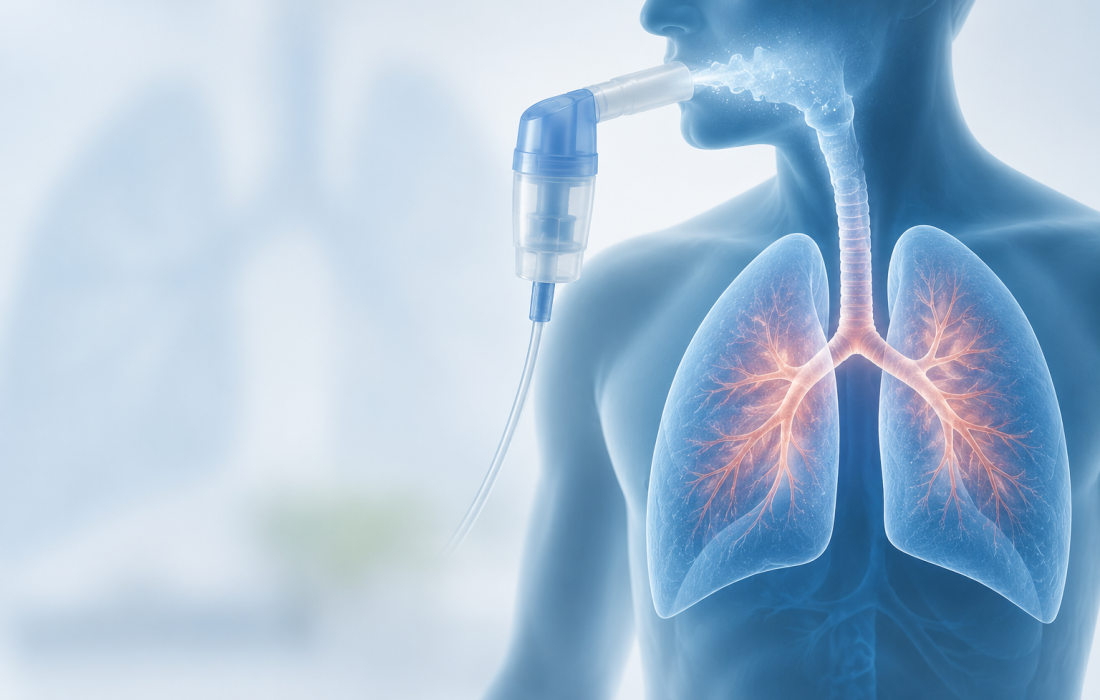
Avalyn’s inhaled nintedanib AP02 showed 26-fold higher predicted lung exposure and 10- to 56-fold lower systemic exposure than oral nintedanib in Phase 1 IPF studies.
Written By: Aasritha Thippavajjala, PharmD
Reviewed By: Pharmacally Editorial Team
Avalyn Pharma reported publication of detailed Phase 1 results for AP02, an inhaled formulation of nintedanib being developed for IPF. The data, published September 21 in Respiratory Research, show that nebulized AP02 delivered substantially more nintedanib to the lung while producing markedly lower systemic exposure than the approved oral formulation.
The findings provide clinical pharmacokinetic support for Avalyn’s strategy of delivering an established antifibrotic directly to the respiratory tract. The company has advanced AP02 into the ongoing AURA Phase 2 trial, with topline results expected in late 2027.
Direct Delivery Could Shift Nintedanib Exposure
Nintedanib is an intracellular tyrosine kinase inhibitor approved for IPF and other fibrotic lung diseases. Oral treatment exposes the entire body to the drug, which can contribute to systemic adverse effects and affect long-term treatment tolerability.
AP02 uses nebulization to deliver nintedanib directly into the lungs. The approach is intended to increase drug concentrations at the site of pulmonary fibrosis while limiting exposure outside the lungs.
The Phase 1 program included two randomized studies involving healthy volunteers and patients with IPF. Investigators assessed safety, tolerability, plasma pharmacokinetics and, in relevant cohorts, nintedanib concentrations in bronchoalveolar lavage fluid as a measure of lung exposure.
AP02 Produced Higher Lung Exposure
The first study evaluated single AP02 doses up to 2.0 mg in 32 healthy volunteers and six patients with IPF. A separate cohort of four healthy volunteers received the approved 150 mg oral dose of nintedanib.
The second study evaluated single doses in 36 healthy volunteers and multiple doses in 24 participants, with AP02 administered at doses up to 8.0 mg twice daily for seven days.
Across all multiple-dose cohorts, AP02 produced 10- to 56-fold lower systemic exposure than the mean steady-state exposure associated with oral nintedanib 150 mg twice daily. Systemic exposure generally increased as the AP02 dose increased.
At the 4.0 mg AP02 dose, predicted nintedanib exposure in epithelial lining fluid was approximately 26-fold higher than with oral nintedanib 150 mg. Both predicted peak concentration (Cmax) and overall 12-hour exposure (AUC0-12) were substantially higher with AP02.
Safety Findings Were Favorable in Phase 1
AP02 was generally well tolerated across the two studies, with no serious adverse events reported.
Treatment-related adverse events in the first study included headache, nausea and mild cough, while dizziness was reported in the second study. No treatment-related adverse event resulted in study withdrawal.
The Phase 1 findings establish a pharmacokinetic basis for evaluating whether higher pulmonary exposure and lower systemic exposure can translate into clinical benefits for patients with IPF. However, the studies were primarily focused on safety, tolerability and pharmacokinetics and do not establish comparative efficacy against oral nintedanib.
AURA Phase 2 Trial Moves Forward
Avalyn has advanced AP02 into the AURA Phase 2 trial, a randomized, double-blind, placebo-controlled study evaluating two twice-daily AP02 doses in patients with IPF.
The 12-week trial plans to enroll 160 patients and will assess the candidate’s safety and efficacy. Topline results are expected in late 2027.
The published Phase 1 results provide clinical evidence that nebulized nintedanib can substantially alter the drug’s exposure profile compared with oral administration. The AURA study will now test whether that pharmacokinetic advantage translates into meaningful clinical effects in patients with IPF.
Reference
Avalyn Publishes Phase 1 Data Highlighting AP02’s Lung-Targeted Delivery and Encouraging Safety Profile, Avalyn Pharma, 21 September 2026
Palacios, M., Boone, R., Pham, S. et al. Nebulized nintedanib (AP02) for idiopathic pulmonary fibrosis demonstrates favorable safety and lung lining fluid exposures: results from two phase I safety, tolerability, and pharmacokinetics studies. Respir Res (2026). https://doi.org/10.1186/s12931-026-03910-0

About the Writer
Aasritha Thippavajjala (Linkedin) is a pharm D student and aspiring medical writer with medical writing, clinical training experience and a strong interest in clinical research and patient safety She has hands-on exposure to clinical pharmacy activities including medication profile assessment, clinical case review, identification of potential drug-related problems, ADR awareness, patient counselling, and clinical documentation. She has also gained experience in medical literature review, evidence synthesis, and scientific communication through her published review article on digital twin-based patient simulation and her poster presentation at the 74th Indian Pharmaceutical Congress. Certified in ICH Good Clinical Practice (E6(R3)) and Scientific Writing in Health Research, she is passionate about applying her clinical knowledge and research skills to medical writing ,clinical research and contributing to accurate, evidence-based healthcare.