
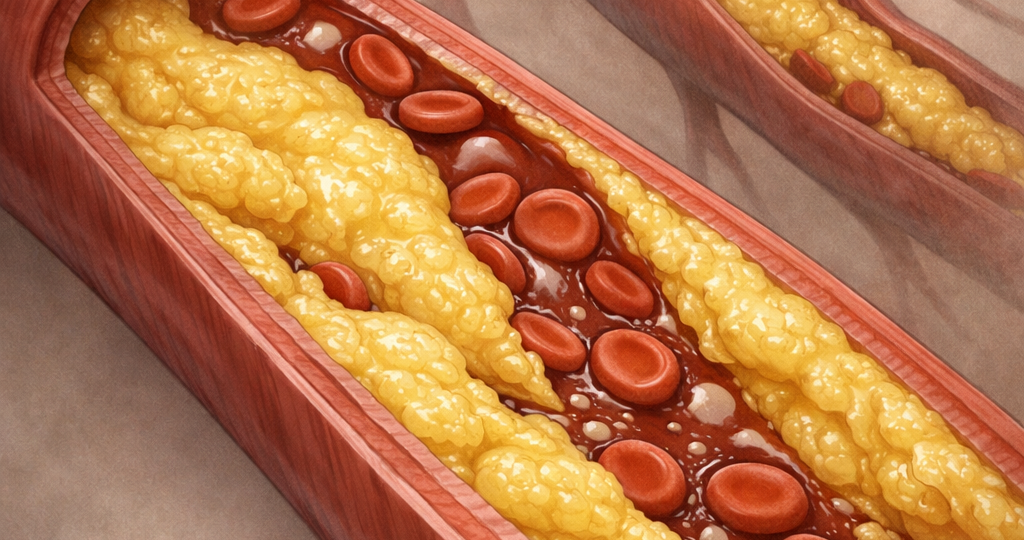
Arrowhead’s Phase 3 SHASTA-3 and SHASTA-4 trials showed plozasiran reduced triglycerides by up to 81% and significantly lowered acute pancreatitis risk in severe hypertriglyceridemia.
Written By: Farha Farheen, PharmD
Reviewed By: Pharmacally Editorial Team
Arrowhead Pharmaceuticals has announced positive topline results from its global Phase 3 SHASTA-3 (NCT06347003) and SHASTA-4 (NCT06347016) clinical trials evaluating plozasiran in patients with severe hypertriglyceridemia (sHTG). The studies assessed the drug’s ability to reduce triglyceride levels and lower the risk of acute pancreatitis, a serious and potentially life-threatening complication associated with extremely high triglyceride levels.
Phase 3 studies met primary and secondary endpoints
The Phase 3 SHASTA-3 and SHASTA-4 trials enrolled approximately 750 adults with severe hypertriglyceridemia. Participants received either 25 mg plozasiran or placebo as a subcutaneous injection once every three months for a total of four doses over a 12-month treatment period. The primary endpoint was the percent change in fasting serum triglyceride levels from baseline to Month 12 versus placebo.
Both studies successfully met the primary endpoint and all prespecified secondary endpoints, including statistically significant reductions in acute pancreatitis events compared with placebo.
Plozasiran achieved durable triglyceride reductions
Plozasiran produced substantial and sustained reductions in triglyceride levels over the 12-month treatment period. Patients treated with the drug experienced median triglyceride reductions of 79% in SHASTA-3 and 81% in SHASTA-4 at Month 12, compared with approximately 27% median reductions in the respective placebo groups. These findings demonstrate the robust lipid-lowering effect of plozasiran across a broad population of patients with severe hypertriglyceridemia.
Significant reduction in acute pancreatitis events
Beyond lowering triglyceride levels, plozasiran significantly reduced the risk of acute pancreatitis. A prespecified pooled analysis of SHASTA-3 and SHASTA-4 demonstrated statistically significant reductions in both the proportion of patients experiencing at least one acute pancreatitis event and the overall incidence rate of acute pancreatitis events compared with placebo.
Among the overall severe hypertriglyceridemia population, defined as patients with triglyceride levels above 500 mg/dL with or without a prior history of acute pancreatitis, treatment with plozasiran reduced cumulative acute pancreatitis events by 78% compared with placebo.
In the highest-risk subgroup comprising patients with triglyceride levels above 880 mg/dL and a prior history of acute pancreatitis, no acute pancreatitis events were reported in plozasiran-treated patients, representing a 100% reduction compared with placebo.
Favorable safety profile remained consistent
Plozasiran demonstrated a favorable safety and tolerability profile that was consistent with previous clinical studies. Overall treatment-emergent adverse events and treatment-related adverse events were similar to the established safety profile, with no new safety signals identified.
Researchers reported no clinically meaningful differences in routine laboratory measurements, no clinically meaningful changes in liver enzymes, and no statistically significant differences in liver fat content measured by MRI-proton density fat fraction (MRI-PDFF) in a prespecified subgroup. No cases of hypersensitivity or thrombocytopenia were observed during the studies.
Company plans regulatory submissions
Christopher Anzalone, Ph.D., President and Chief Executive Officer of Arrowhead Pharmaceuticals, said the results reinforce the company’s view that plozasiran has the potential to become a best-in-class therapy for severe hypertriglyceridemia because of its strong efficacy, favorable safety profile, and convenient once-every-three-month dosing schedule.
Arrowhead plans to begin global regulatory submissions using data from the Phase 3 SHASTA-3, SHASTA-4, and MUIR-3 studies, with a supplemental New Drug Application (sNDA) to the U.S. Food and Drug Administration expected before the end of 2026.
Current approval and next steps
Plozasiran is marketed as REDEMPLO® and is currently approved in the United States, European Union, China, Australia, and Canada as an adjunct to diet to reduce triglycerides in adults with genetically confirmed or clinically diagnosed familial chylomicronemia syndrome (FCS), the most severe form of hypertriglyceridemia.
Arrowhead intends to use the Phase 3 SHASTA-3, SHASTA-4, and MUIR-3 data to support an expanded indication for the broader severe hypertriglyceridemia population.
Detailed efficacy and safety findings from SHASTA-3 and SHASTA-4 will be presented during the HOT LINE Late Breaker Session at the European Society of Cardiology (ESC) Congress in Munich on August 30, 2026.
What This Means for Patients
People living with severe hypertriglyceridemia often face a high risk of acute pancreatitis, a painful condition that frequently requires hospitalization and can become life-threatening. The Phase 3 results suggest that plozasiran may become an important treatment option if approved for this broader indication. The therapy produced substantial and sustained reductions in triglyceride levels while significantly lowering the risk of acute pancreatitis, including eliminating pancreatitis events in the highest-risk patients during the study. Plozasiran was generally well tolerated, with no new safety concerns reported, and its once-every-three-month dosing schedule may make long-term treatment easier for many patients.
Reference

About the Writer
Farha Farheen, PharmD (LinkedIn) is a pharmacy professional with a strong interest in pharmacovigilance and clinical research. She has completed her Doctor of Pharmacy (Pharm.D) along with her internship as a Clinical Pharmacist. She has hands-on experience in adverse drug reaction (ADR) reporting, safety data documentation, and pharmacovigilance workflows, and is proficient in using VigiFlow. She is also a patent holder for an antibacterial formulation enriched with bioactive substances, granted by the German Patent and Trademark Office