
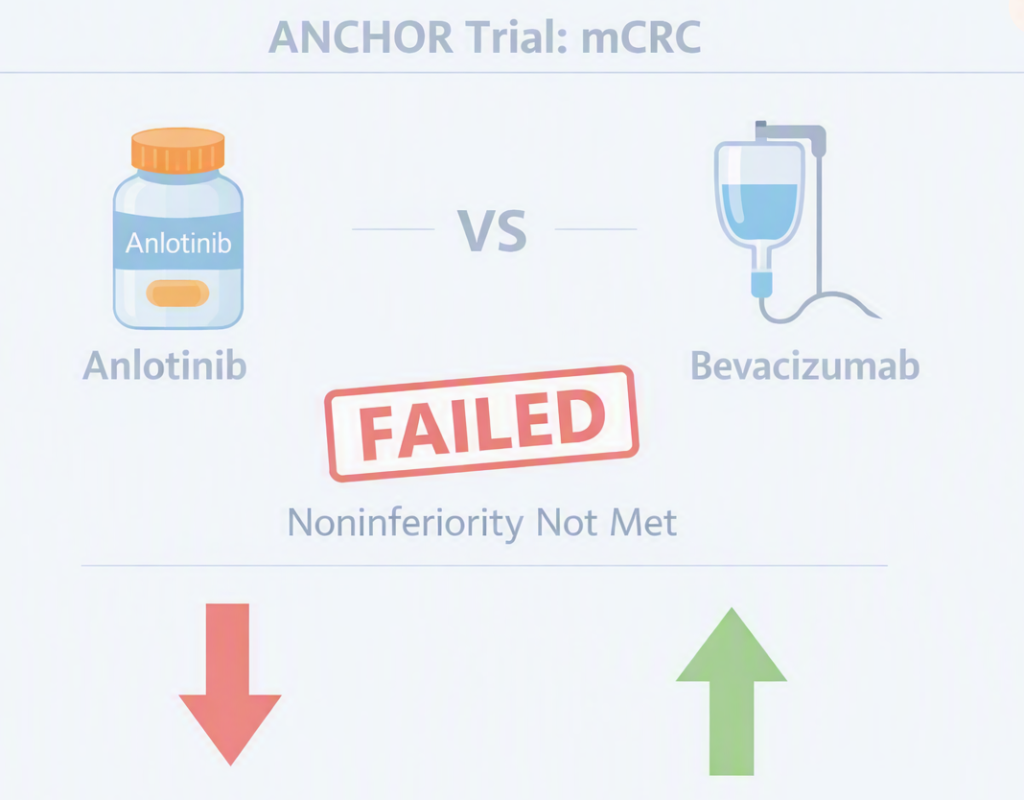
Phase 3 ANCHOR trial shows oral anlotinib plus CapeOX matched bevacizumab in PFS (11.0 mo) but failed noninferiority due to margin bounds and higher toxicity.
Written By: Mayuresh Salvi, PharmD
Reviewed By: Pharmacally Editorial Team
Bevacizumab plus chemotherapy remains a standard first-line approach for RAS/BRAF wild-type metastatic colorectal cancer (mCRC), while cetuximab and panitumumab are also established options, particularly in patients with left-sided tumors. The phase 3 ANCHOR trial found that adding the oral multitargeted tyrosine kinase inhibitor anlotinib to CapeOX produced a median progression-free survival (PFS) of 11.0 months, matching bevacizumab plus CapeOX, but failed to meet the prespecified criterion for noninferiority and caused more grade ≥3 treatment-related adverse events.
ANCHOR Trial Tests Oral Multitargeted TKI
ANCHOR (NCT04854668) was an open-label, multicenter, randomized phase 3 noninferiority trial conducted at 86 centers in China. It enrolled 748 patients with unresectable RAS/BRAF wild-type mCRC between May 2021 and August 2023. Patients received CapeOX with either anlotinib or bevacizumab, followed by maintenance therapy with the assigned targeted agent plus capecitabine.
At the February 2, 2025 data cutoff, median follow-up was 25.1 months. Independent review committee assessment showed a median PFS of 11.0 months in both groups. The stratified hazard ratio was 1.00 (95% CI, 0.84–1.18; P=0.87). However, the upper bound of the 95% confidence interval, 1.18, exceeded the prespecified noninferiority margin of 1.09, meaning anlotinib failed to demonstrate that its PFS was not unacceptably worse than that of bevacizumab.
Treatment Context Extends Beyond VEGF Blockade
Treatment selection in RAS/BRAF wild-type mCRC incorporates molecular features and primary tumor location. Chemotherapy combined with bevacizumab, cetuximab, or panitumumab remains a standard first-line approach. Clinical evidence has shown particular benefit from anti-EGFR therapy in left-sided RAS wild-type disease, making tumor sidedness an important consideration when selecting therapy.
Anlotinib takes a broader antiangiogenic approach. The oral TKI inhibits VEGFR1–3, FGFR1–4, RET, c-Kit, and PDGFRα/β, whereas bevacizumab selectively targets VEGF. This broader pathway inhibition and oral administration provided the rationale for testing anlotinib directly against bevacizumab in the first-line setting.
Comparable Tumor Control, Higher Severe Toxicity
Beyond the primary endpoint, anlotinib plus CapeOX produced antitumor activity broadly comparable with bevacizumab plus CapeOX. Objective response rates were 61.9% and 62.1%, respectively, while disease control rates were 92.8% and 93.1%. Median duration of response was 9.7 months in both groups. Maintenance PFS was also similar at 7.1 versus 6.9 months by independent review.
Safety, however, favored bevacizumab. Grade ≥3 treatment-related adverse events occurred in 64.9% of patients receiving anlotinib compared with 44.8% receiving bevacizumab. Grade ≥3 neutrophil reduction, thrombocytopenia, hypertension, and hypertriglyceridemia were more frequent with anlotinib. Dose reductions occurred in 47.5% versus 34.4% of patients, although treatment discontinuation because of adverse events was similar at 8.0% and 9.1%, respectively.
Patient-Reported Diarrhea Signals a Distinct Toxicity Burden
Patient-reported outcomes provided additional insight into tolerability. EORTC QLQ-C30 global health status and EQ-5D scores remained broadly stable in both groups, with no clinically meaningful deterioration. However, EORTC QLQ-C30 diarrhea scale scores were significantly higher with anlotinib at several treatment cycles.
The patient-reported finding was consistent with clinical adverse-event data: any-grade treatment-related diarrhea occurred in 33.0% of patients receiving anlotinib versus 23.5% with bevacizumab. Importantly, grade ≥3 treatment-related diarrhea was similar between groups, at 4.3% and 3.5%, respectively.
Noninferiority Failure Defines the Next Development Question
ANCHOR establishes that anlotinib plus CapeOX has substantial first-line activity in RAS/BRAF wild-type mCRC but does not support noninferior PFS compared with bevacizumab plus CapeOX. The higher incidence of severe treatment-related toxicity and greater need for dose reductions further complicate its positioning despite the convenience of oral administration.
Overall survival data remained immature at the PFS analysis and require longer follow-up. The trial’s exclusive enrollment of patients in China also limits the immediate generalizability of the findings to broader populations. Future positioning of anlotinib will therefore depend on mature survival outcomes, toxicity management, and confirmation of benefit in more diverse patient populations.
Reference

About the Writer
Mayuresh Sunil Salvi (Linkedin) is a PharmD professional and healthcare writer with a strong interest in pharmacovigilance, drug safety, and emerging medical research. He is passionate about exploring new drug discoveries, clinical research, and advances in evidence-based medicine. His interests also include ward rounds, prescription audits, and treatment analysis to support rational pharmacotherapy and improved patient care.