
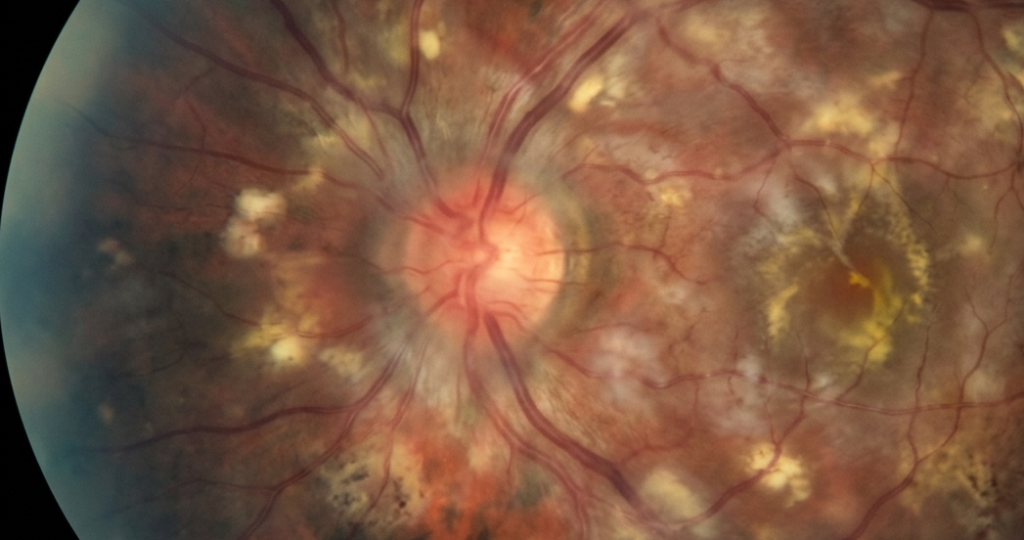
ANI Pharmaceuticals reported positive Phase 4 SYNCHRONICITY trial results showing ILUVIEN significantly improved visual acuity and retinal thickness in chronic non-infectious posterior uveitis with a consistent safety profile.
Written By: Dr. Preethi Putti, PharmD
Reviewed By: Pharmacally Editorial Team
ANI Pharmaceuticals has reported positive topline results from the Phase 4 SYNCHRONICITY trial evaluating ILUVIEN (fluocinolone acetonide intravitreal implant 0.18 mg) in patients with chronic non-infectious uveitis affecting the posterior segment of the eye (NIU-PS). The study met both co-primary efficacy endpoints, demonstrating statistically significant improvements in best corrected visual acuity (BCVA) and central subfield thickness (CST) after six months of treatment. The findings further support ILUVIEN’s use in routine retina practice following its expanded U.S. indication for chronic NIU-PS in 2025.
Long-Acting Corticosteroid for Chronic Posterior Uveitis
Chronic non-infectious posterior uveitis is an inflammatory eye disease that can lead to progressive retinal damage and irreversible vision loss if inflammation is not adequately controlled. Long-term treatment often requires repeated corticosteroid therapy, which carries risks associated with frequent administration.
ILUVIEN is an intravitreal implant that continuously releases low-dose fluocinolone acetonide for up to 36 months, providing sustained corticosteroid therapy following a single intravitreal injection. The implant was initially approved by the U.S. FDA in 2014 for diabetic macular edema. In 2025, the FDA expanded its prescribing information to include treatment of chronic NIU-PS after consolidating labeling for two bioequivalent strengths.
SYNCHRONICITY Trial Met Both Primary Endpoints
The Phase 4 SYNCHRONICITY study (NCT05322070) is a prospective, open-label, single-arm U.S. trial evaluating the inflammatory control achieved with fluocinolone acetonide intravitreal implant 0.18 mg over a 24-month follow-up period. The current announcement reports outcomes from the predefined six-month primary analysis in the intent-to-treat population of 108 patients.
Both co-primary endpoints achieved statistical significance
- Best corrected visual acuity (BCVA): Mean improvement of 3.6 ETDRS letters from baseline (62.5 to 65.8 letters; p<0.0077).
- Central subfield thickness (CST): Mean reduction of 157.5 microns from baseline (505.7 to 348.8 microns; p<0.0001).
The study enrolled adults with active, recurrent unilateral or bilateral chronic NIU-PS diagnosed for at least three months. Participants had a mean age of 64 years, 65% were women, and nearly 70% had undergone previous ocular surgery before enrollment, although recent ocular surgery within 12 weeks was an exclusion criterion.
Safety Findings Consistent with Previous Experience
The safety profile observed in SYNCHRONICITY aligned with previous clinical studies of the fluocinolone acetonide implant.
Among treated patients
- 29% experienced treatment-related treatment-emergent adverse events.
- The most common treatment-related adverse events were ocular hypertension (6%) and cataract (5%).
- 18% experienced an intraocular pressure (IOP) increase of at least 25 mmHg.
- 7% required laser or surgical intervention to lower intraocular pressure.
No new safety concerns were highlighted in the topline analysis.
Investigators Highlight Real-World Clinical Relevance
ANI President and Chief Executive Officer Nikhil Lalwani said the findings reinforce the role of fluocinolone acetonide intravitreal implant in managing chronic NIU-PS in patients treated by retina specialists and noted that additional analyses will be presented later this year.
Principal investigator David Almeida, MD, MBA, PhD, President and CEO of Erie Retina Research, said the study provides clinically relevant evidence supporting ILUVIEN as an established treatment option for patients commonly managed in retina practices.
Path Forward
Patients in SYNCHRONICITY will continue to be followed for 24 months to evaluate longer-term outcomes. ANI Pharmaceuticals plans to present detailed efficacy and safety analyses, including additional subgroup findings, at medical conferences during the fourth quarter of 2026.
What This Means to Patients
For people living with chronic non-infectious posterior uveitis, the Phase 4 SYNCHRONICITY results suggest that ILUVIEN may help improve vision and reduce retinal swelling after a single intravitreal implant, while providing sustained corticosteroid treatment for up to three years. Patients should also be aware that regular eye examinations remain important, as increased eye pressure and cataracts were among the most common treatment-related side effects observed in the study.
Reference

About the Writer
Dr.Preethi Putti, PharmD (LinkedIn) is a pharmaceutical researcher with experience in healthcare and pharmaceutical market research and competitive intelligence. She specializes in analyzing drug pipelines, clinical data, and industry trends and translating complex scientific data into clear and structured medical content. Strong foundation in clinical research, data interpretation, and evidence-based healthcare analysis. Committed to advancing a global career in clinical research and healthcare innovation.