
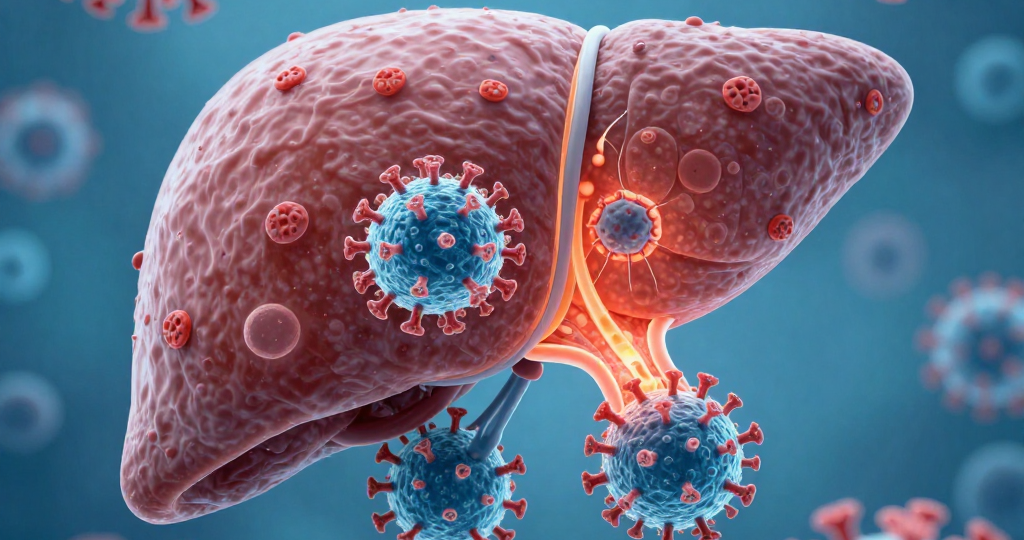
Aligos Therapeutics’ EASL 2026 data show pevifoscorvir sodium delivers durable HBV DNA suppression, sustained antigen/RNA reductions, and synergy with ASO therapy, supporting functional cure strategies.
Written By: Disha Jadhav, BPharm
Reviewed By: Pharmacally Editorial Team
Aligos Therapeutics presented new chronic hepatitis B (HBV) data at the EASL Congress 2026, underscoring the long‑term antiviral activity of pevifoscorvir sodium and its potential role in future curative regimens. The findings stem from an investigator‑led follow‑up study in HBeAg‑positive patients who completed 96 weeks of 300 mg pevifoscorvir sodium monotherapy before transitioning to nucleos(t)ide analog (NA) therapy for at least 24 weeks.
Clinical Outcomes in HBeAg‑Positive Patients
Newly presented data highlight outcomes for treatment‑naïve or currently untreated HBeAg‑positive subjects. Of 10 participants, nine transitioned to NA monotherapy after pevifoscorvir treatment. Four of those nine (44%) maintained HBV DNA levels below the lower limit of quantification (LLOQ; 10 IU/mL, target detected [TD] or target not detected [TND]) throughout the ≥24‑week NA‑only follow‑up period.
Investigators also observed sustained reductions in HBV antigens and HBV RNA during this period biomarkers typically unaffected by NA therapy suggesting pevifoscorvir sodium may reduce the covalently closed circular DNA (cccDNA) reservoir through secondary antiviral mechanisms.
Functional Cure Context
Current NA therapies effectively suppress HBV replication but rarely eliminate HBsAg or achieve durable functional cure, defined as sustained HBsAg loss with or without seroconversion. Persistent cccDNA within hepatocytes enables viral rebound even after prolonged treatment, making cccDNA reduction a central goal in next‑generation HBV drug development.
Mechanistic Rationale
Pevifoscorvir sodium belongs to the capsid assembly modulator‑expanded phenotype (CAM‑E) class. Beyond disrupting HBV capsid formation, the therapy may interfere with cccDNA replenishment and viral transcriptional activity. Preclinical in vitro studies with ALG‑001075, the active parent compound, demonstrated durable suppression of HBeAg, HBsAg, and intracellular HBV RNA in HepaRG cells, even after treatment withdrawal, further supporting potential reductions in cccDNA levels or transcriptional activity.
Antigen Reduction and Pipeline Synergy
Additional analyses showed that 40% of patients with baseline HBsAg levels ≥3,000 IU/mL achieved reductions below this threshold after 48 weeks of treatment. Lower HBsAg levels may improve eligibility for antisense oligonucleotide (ASO)‑based cure strategies, including ALG‑170675, which Aligos is co‑developing with Amoytop Biotech. ALG‑170675 directly targets HBV transcripts, complementing pevifoscorvir sodium’s capsid‑focused mechanism.
Combination Strategy
Preclinical data demonstrated additive to synergistic reductions across HBV viral markers when pevifoscorvir sodium was combined with ALG‑170675. The combination strategy may support future curative regimens for chronic HBV infection.
Strategic Outlook
Chief Executive Officer Lawrence Blatt said the findings strengthen confidence in pevifoscorvir sodium’s potential to move beyond standard NA replacement and become a central component of future HBV cure strategies.
Reference
Aligos Therapeutics Presents Positive Data at the EASL Congress 2026 | Aligos Therapeutics

About the Writer
Disha Sanjay Jadhav (LinkedIn) is a pharmacy graduate and healthcare writer with a strong interest in clinical documentation and simplifying healthcare information for better reader understanding. She is enthusiastic, adaptable, and eager to take on new challenges while contributing to clear, accurate, and engaging medical and pharmaceutical content.