
Agios discontinue tebapivat development in sickle cell disease after Phase 2 results lacked differentiation. Mitapivat remains under FDA Priority Review.
Written By: Anamika Koshti, PharmD
Reviewed By: Pharmacally Editorial Team
On July 21, 2026, Agios Pharmaceuticals announced topline results from its Phase 2 clinical trial of tebapivat (NCT06924970), an oral pyruvate kinase (PK) activator, in patients with sickle cell disease (SCD). While tebapivat demonstrated hematologic activity consistent with the PK activator class, the results did not establish a sufficiently differentiated profile to warrant continued development in SCD. Agios has therefore decided not to advance tebapivat further in this indication.
The company’s foundational PK activator, mitapivat, remains on track under FDA Priority Review for accelerated approval in SCD, with a Prescription Drug User Fee Act (PDUFA) goal date of November 1, 2026.
Why PK Activation Matters in Sickle Cell Disease
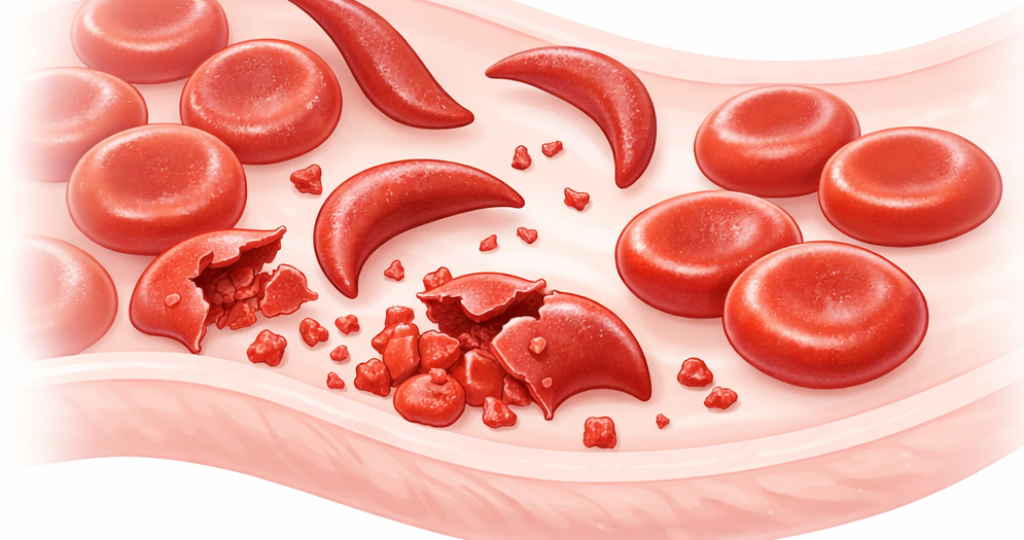
Sickle cell disease (SCD) is a rare inherited disorder of red blood cells characterized by chronic hemolytic anemia and rigid, sickle-shaped red blood cells. The disease is caused by polymerization of abnormal hemoglobin S (HbS) under low-oxygen conditions, leading to vaso-occlusive pain crises, progressive organ damage, and reduced life expectancy.
PK activation addresses this underlying biology by increasing intracellular adenosine triphosphate (ATP) levels to stabilize red blood cell membranes while reducing 2,3-diphosphoglycerate (2,3-DPG), a molecule that promotes HbS polymerization. Together, these effects help reduce hemolysis, improve anemia, and support healthier red blood cell function.
Phase 2 Trial Design
The Phase 2 study (NCT06924970) was a double-blind, randomized, placebo-controlled, dose-finding trial that evaluated the dose-response relationship of tebapivat in SCD and assessed whether its clinical profile was meaningfully differentiated from other PK activators. The trial enrolled 59 participants aged 16 years or older with SCD, who were randomized in a 2:2:2:1 ratio to receive one of three once-daily (QD) tebapivat dose levels or placebo. The primary assessment period lasted 12 weeks.
The primary endpoint was hemoglobin response, defined as an increase of at least 1.0 g/dL in average hemoglobin concentration during Weeks 10 through 12 compared with baseline.
Phase 2 Efficacy Results
Improvements in hemoglobin levels and laboratory markers of hemolysis were observed across all three tebapivat dose groups during the 12-week treatment period, consistent with the established mechanism of PK activation. The primary endpoint, defined as a hemoglobin increase of at least 1.0 g/dL from baseline during Weeks 10 through 12, was achieved by 43.8% (7/16) of patients receiving 2.5 mg once daily, 47.1% (8/17) receiving 5.0 mg, and 29.4% (5/17) receiving 7.5 mg, compared with 33.3% (3/9) in the placebo group.
Although the 2.5 mg and 5.0 mg dose groups showed numerically higher hemoglobin response rates than placebo, the overall dose-response pattern did not demonstrate the differentiated clinical profile Agios had sought. Based on these findings, the company concluded that tebapivat did not provide sufficient differentiation from other PK activators to support continued development in sickle cell disease.
Safety Findings
The safety and tolerability profile of tebapivat in the Phase 2 trial was consistent with findings from previous SCD studies. No new or unexpected safety signals were identified across any of the three dose levels.
Decision Rationale
Agios conducted the Phase 2 study not only to confirm proof of concept but also to determine whether tebapivat offered a meaningfully differentiated profile from other PK activators. According to Sarah Gheuens, M.D., Ph.D., Chief Medical Officer and Head of R&D at Agios, the findings further reinforce PK activation as a clinically validated mechanism in sickle cell disease. However, the results did not provide the level of differentiation the company considered necessary to advance tebapivat when it already has mitapivat, a more advanced PK activator currently under regulatory review.
Mitapivat in Sickle Cell Disease: What Continues?
Agios remains focused on mitapivat, its first-generation, foundational oral PK activator. Earlier this month, the U.S. Food and Drug Administration accepted the company’s supplemental New Drug Application (sNDA) for accelerated approval of mitapivat in SCD and granted the application Priority Review. The PDUFA goal date is November 1, 2026.
Mitapivat’s SCD program was evaluated in the Phase 2/3 RISE UP trial (NCT05031780) and has generated the clinical evidence supporting the current regulatory submission.
What the Results Mean
The discontinuation of tebapivat does not reflect a failure of the PK activation mechanism in sickle cell disease. Instead, the Phase 2 findings confirm that tebapivat activates the pathway and produces hematologic responses consistent with the PK activator class. However, the results did not demonstrate sufficient differentiation from existing PK activator programs to support continued development.
Agios will now concentrate its development efforts on mitapivat, which is substantially further along in the regulatory process and could become the first oral PK activator approved for sickle cell disease if the FDA grants accelerated approval later this year. For patients with SCD, the immediate focus now shifts to the FDA’s November 1, 2026, PDUFA decision, which could introduce a new disease-modifying treatment option for this serious inherited blood disorder.
Reference

About the Writer
Anamika Koshti (LinkedIn) is a PharmD professional and healthcare writer with interests in clinical research, pharmacovigilance, and evidence-based medicine. She has authored peer-reviewed publications on Alzheimer’s disease and PCOS, presented research at national conferences, and gained hands-on experience in medical content development and clinical data interpretation. She is committed to translating complex medical research into accurate, accessible content for healthcare professionals and patients.