
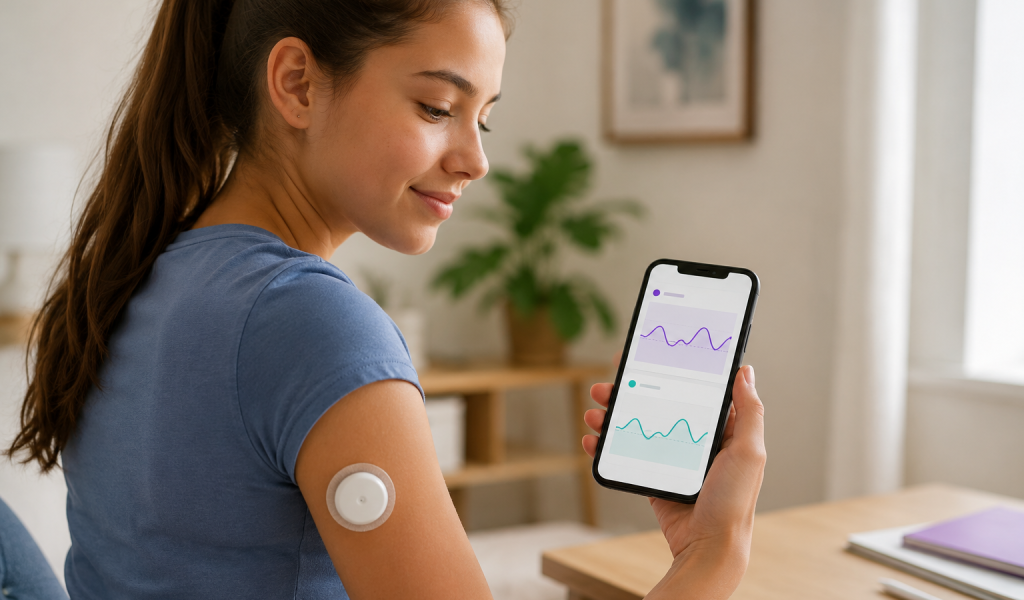
Abbott’s Libre Duo 10 Day receives FDA authorization as the first wearable to continuously monitor glucose and ketone levels for people with diabetes.
Written By: Kalyani Boharapi,
M.Pharm (Reg. Affairs)
Reviewed By: Pharmacally Editorial Team
Abbott announced that the U.S. Food and Drug Administration (FDA) has authorized Libre Duo 10 Day, the first wearable device in the world to continuously monitor both glucose and ketone levels in a single system. The device is intended for people with diabetes aged 2 years and older and is designed to provide real-time glucose monitoring while detecting rising ketone levels that may signal an increased risk of diabetic ketoacidosis (DKA). Abbott plans to launch Libre Duo 10 Day in the United States later this year.
First Dual Glucose-Ketone Monitoring System
Libre Duo 10 Day received FDA marketing authorization through the De Novo premarket review pathway after receiving Breakthrough Device designation. The FDA said the device is the first wearable in the United States to continuously monitor ketone levels and the first worldwide to continuously monitor ketones and glucose together.
According to Abbott, the system is also the first to meet the FDA’s integrated continuous glucose monitoring (iCGM) standard and the newly established integrated continuous glucose and ketone monitoring (iCGK) standard.
How Libre Duo 10 Day Works
The wearable continuously measures glucose and ketone levels in interstitial fluid beneath the skin every minute, day and night. Readings are transmitted wirelessly to a compatible smartphone, allowing users to view current glucose and ketone levels and their trends. The system can provide automatic alerts when ketone levels reach a concerning threshold.
Unlike blood or urine ketone tests, which provide a single point-in-time measurement, Libre Duo 10 Day continuously tracks ketones and is designed to alert users when levels rise. The system provides up to 10 days of wear and is intended for people with diabetes aged 2 years and older, including those with type 1 or type 2 diabetes who use insulin or other glucose-lowering therapies such as SGLT2 inhibitors.
Clinical Evidence and DKA Risk
The FDA’s authorization was supported by six clinical studies involving more than 600 participants aged 2 years and older. These studies evaluated the accuracy of the system’s glucose and ketone monitoring across a range of concentrations. The FDA reported that the device accurately tracked clinically meaningful differences in ketone levels throughout the 10-day wear period, including identifying elevated ketones before DKA developed.
DKA can develop rapidly when insufficient insulin causes the body to break down fat for energy, resulting in potentially dangerous ketone accumulation. If untreated, DKA can progress to coma or death. Continuous ketone monitoring could provide earlier awareness of rising ketones compared with conventional point-in-time testing.
Libre Ecosystem and AID Integration
Libre Duo 10 Day uses Abbott’s latest-generation U.S. Libre app and integrates with the broader Libre digital health ecosystem, including LibreView for healthcare professionals and LibreLinkUp for caregivers. Abbott expects compatibility with Beta Bionics’ iLet and Sequel Med Tech’s twiist automated insulin delivery (AID) systems by the end of 2026, followed by devices from Insulet and Tandem in 2027. Abbott and MiniMed are also collaborating on integration with MiniMed smart dosing systems, expected in 2027.
Safety and Limitations
The FDA emphasizes that ketone information should be interpreted alongside glucose readings and symptoms. Abbott states that the Urgent High Ketones alarm may not detect every instance of ketone levels above 3.0 mmol/L. If readings or alarms do not match symptoms or expectations, users should follow the product’s safety instructions and seek medical attention when appropriate.
Abbott previously received CE Mark for Libre Duo and Libre Duo 10 Day in May 2026. The FDA authorization establishes a new category of continuous ketone-monitoring technology in the United States and expands the Libre platform beyond glucose monitoring, potentially enabling earlier recognition of ketone elevations associated with DKA.
Reference

About the Writer
Kalyani Boharapi (LinkedIn) is a pharmacy professional and healthcare writer currently pursuing an M.Pharm in Regulatory Affairs at Dr. D. Y. Patil College of Pharmacy, with interests in pharmaceutical regulations, drug development, and healthcare innovation. She has academic exposure to dossier preparation, scientific writing, and regulatory documentation. Kalyani has also completed certification courses in Generative AI, AI in Pharma, and Bioinformatics, and actively participates in pharmaceutical conferences to stay updated with emerging trends and advancements in the healthcare and pharmaceutical industry.