
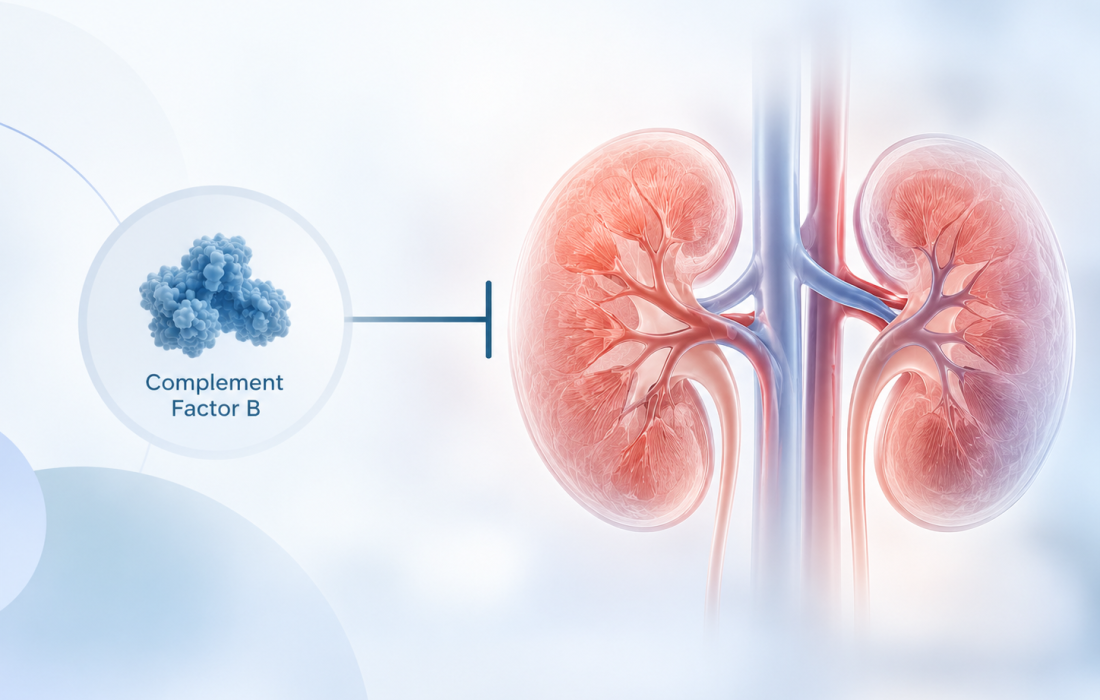
Roche reports a 43.1% reduction in proteinuria with investigational sefaxersen in Phase 3 IgA nephropathy results, while long-term kidney outcomes remain under evaluation.
Written By: Sravani Pamanji, PharmD
Reviewed By: Pharmacally Editorial Team
Roche reported positive interim Phase 3 results for investigational sefaxersen on October 23, 2026, showing a 43.1% reduction in proteinuria relative to placebo at Week 37 in adults with primary immunoglobulin A nephropathy (IgAN). Presented at the American Society of Nephrology (ASN) Kidney Week 2026, the findings from the ongoing IMAgINATION study support further evaluation of complement factor B inhibition as a targeted treatment approach for IgAN.
The treatment effect was statistically significant, with a 95% confidence interval (CI) of 32.5% to 52.0% and a p-value below 0.0001. However, the interim results do not yet establish whether the reduction will translate into sustained preservation of kidney function or a lower risk of kidney failure.
Sefaxersen Targets Complement-Mediated Kidney Injury
IgAN is a chronic, progressive kidney disease characterized by deposits of immunoglobulin A-containing immune complexes in the glomeruli. These deposits activate inflammatory pathways, including the alternative complement pathway, contributing to kidney damage and progressive loss of renal function.
Sefaxersen (RO7434656) is an investigational, liver-directed antisense oligonucleotide designed to reduce complement factor B production. By suppressing this component of the alternative complement pathway, the treatment aims to reduce complement-mediated inflammation associated with IgAN.
Roche licensed sefaxersen from Ionis Pharmaceuticals. The investigational therapy is designed for once-monthly subcutaneous administration, with the intention of enabling self-administration at home.
Phase 3 IMAgINATION Study Evaluates Efficacy and Safety
The IMAgINATION study (NCT05797610) is an ongoing, multicentre, randomized, double-blind, placebo-controlled Phase 3 trial evaluating sefaxersen in adults with primary IgAN at high risk of disease progression despite optimized supportive care.
The study enrolled 459 participants randomized to receive subcutaneous sefaxersen or matching placebo. Dosing consisted of initial administrations on Days 1, 15 and 29, followed by injections every four weeks through Week 105.
The primary endpoint was the change from baseline in the 24-hour urine protein-to-creatinine ratio (UPCR) at Week 37. A key secondary endpoint is the estimated glomerular filtration rate (eGFR) slope through Week 105, which will help assess the treatment’s effect on kidney function over time.
Proteinuria Reduction Supports Further Clinical Evaluation
At Week 37, sefaxersen achieved a 43.1% reduction in proteinuria relative to placebo. Roche reported consistent treatment effects across all prespecified patient subgroups. Among participants with blood in the urine at baseline, a greater proportion of those receiving sefaxersen achieved resolution of hematuria by Week 37 than those receiving placebo.
Proteinuria is an important marker of kidney injury and is associated with the risk of disease progression in IgAN. The observed reduction therefore provides evidence of biological and clinical activity. Nevertheless, the magnitude of the proteinuria response alone cannot establish the extent of long-term kidney protection.
Roche also reported that sefaxersen was well tolerated, with a safety profile consistent with previously reported Phase 2 findings and no new safety signals identified in the interim analysis. Continued follow-up will be needed to characterize its safety during longer-term administration.
Kidney Function Remains the Key Long-Term Question
The IMAgINATION study will continue as a blinded trial, evaluating kidney function through Week 105. This assessment is important because a reduction in proteinuria, although clinically relevant, does not independently demonstrate that a treatment slows eGFR decline or prevents kidney failure.
The findings strengthen the clinical rationale for targeting complement factor B in IgAN, particularly among patients who remain at risk despite optimized supportive care. However, the available results represent an interim assessment rather than evidence of established long-term benefit.
Roche plans to share the study data with health authorities. Until longer-term kidney-function results and further safety data become available, sefaxersen should be regarded as an investigational therapy with encouraging Phase 3 findings, not an established treatment for IgAN.
References
Roche. Roche presents interim phase III data showing sefaxersen significantly reduced proteinuria in people with IgA nephropathy (IgAN). October 23, 2026.
A Study to Evaluate the Efficacy and Safety of Sefaxersen (RO7434656) in Participants with Primary Immunoglobulin A (IgA) Nephropathy at High Risk of Progression (IMAgINATION). ClinicalTrials.gov ID NCT05797610

About the Writer
Sravani Pamanji is a PharmD (LinkedIn) professional with experience in scientific writing, medical literature review, drug profile preparation, and clinical case documentation. She has contributed to scientific publication and presented at the 74th Indian Pharmaceutical Congress. Her training includes ICH GCP E6(R3), scientific research, and medication safety. She is passionate about evidence-based medical communication and accurate dissemination of clinical and pharmaceutical information.