
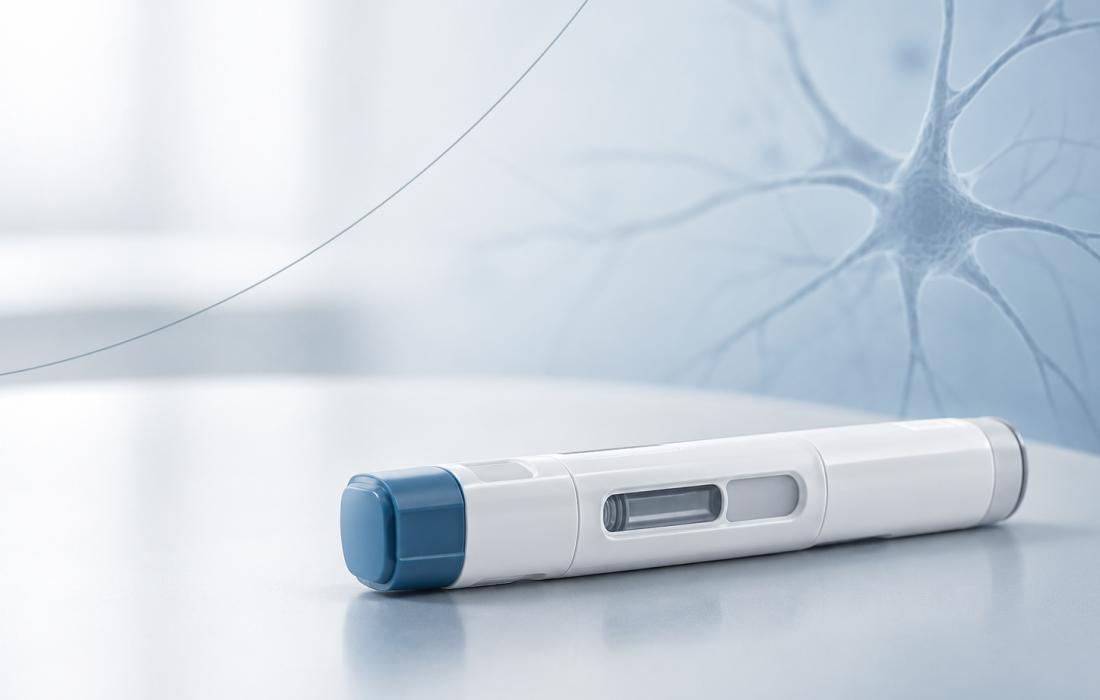
The FDA approved UCB’s ZILBRYSQ autoinjector for adults with anti-AChR-positive generalized myasthenia gravis. Complete dose delivery reached 99.8% across 449 administrations.
Written By: Aasritha Thippavajjala, PharmD
Reviewed By: Pharmacally Editorial Team
UCB has received U.S. Food and Drug Administration (FDA) approval for an autoinjector presentation of ZILBRYSQ (zilucoplan) for adults with generalized myasthenia gravis (gMG) who are positive for anti-acetylcholine receptor (AChR) antibodies. Announced on October 16, 2026, the approval adds a second self-administration option for the existing once-daily, subcutaneous treatment, which was previously available as a prefilled syringe.
The decision addresses drug delivery rather than a new therapeutic indication. The supporting evidence evaluates bioequivalence, dose delivery and device usability. UCB expects the autoinjector to become commercially available in the United States in the first quarter of 2027.
Bioequivalence Supports the Additional Administration Option
Zilucoplan is a synthetic macrocyclic peptide that inhibits complement component 5 (C5). Although complement inhibition is relevant to the disease process in gMG, the precise mechanism through which zilucoplan produces its therapeutic effects is not fully understood.
The approval was supported by DV0012, a Phase 1 (NCT06511076), open-label, single-centre, two-period crossover study involving 14 healthy adults. The study established bioequivalence between zilucoplan administered through the autoinjector and the existing prefilled syringe.
Bioequivalence supports comparable drug exposure between the two delivery presentations under the conditions studied. However, it does not demonstrate that either device produces superior clinical efficacy, better symptom control or improved long-term outcomes.
Dose Delivery and Usability Findings Support Self-Administration
A second study, DV0013, was a Phase 3b (NCT06471361), open-label, multicentre study involving 31 adults with gMG who self-administered zilucoplan daily using the autoinjector. Complete dose delivery was achieved in 99.8% of 449 autoinjector administrations, according to UCB.
This result provides evidence of reliable dose delivery under the study conditions. The denominator represents administrations rather than individual patients, and the finding should not be interpreted as a treatment-response rate or evidence of improved disease control.
UCB also reported high patient satisfaction with autoinjector self-injection, although the announcement did not provide numerical satisfaction scores or detailed questionnaire results.
A separate human-factors validation study involving 100 participants assessed device usability. The group included people with gMG or ocular symptoms, caregivers and healthcare professionals, with participants having varying levels of previous injection experience. According to UCB, 90% successfully completed an injection on their first attempt without training.
The result supports usability under the assessment conditions but does not establish that all patients can use the device independently without instruction or assistance in routine practice.
In DV0013, the autoinjector was generally well tolerated. Injection-site pain was the most commonly reported treatment-emergent adverse event, occurring in three participants (9.7%). The small study population limits conclusions about uncommon adverse events and does not establish comparative safety against the prefilled syringe.
Existing Safety Requirements Remain in Place
ZILBRYSQ carries a boxed warning for serious meningococcal infections, including life-threatening and fatal cases associated with complement inhibitors. Patients should complete or update vaccination against meningococcal serogroups A, C, W, Y and B at least two weeks before treatment begins, unless the risks of delaying therapy outweigh the infection risk.
When urgent treatment is necessary before vaccination requirements are met, the prescribing information recommends antibacterial prophylaxis and vaccination as soon as possible. Vaccination does not eliminate the risk of infection, and patients require monitoring for signs of serious infection.
ZILBRYSQ is available only through the ZILBRYSQ Risk Evaluation and Mitigation Strategy (REMS). The autoinjector approval does not remove these existing safety requirements. Clinicians should consult the current U.S. prescribing information for complete guidance.
Clinical Interpretation
The approval expands how adults with anti-AChR antibody-positive gMG can administer zilucoplan without changing the active ingredient or approved patient population. The evidence addresses three distinct considerations: comparable drug exposure, reliable dose delivery and successful device operation.
The 99.8% complete dose-delivery rate across 449 administrations and the 90% first-attempt success rate in the human-factors study provide useful evidence about device performance. However, neither result establishes improved clinical efficacy, better adherence or superior safety compared with the prefilled syringe.
The practical value of the autoinjector will depend on patient preference, individual ability to use the device, access following launch and its suitability for daily treatment routines. The planned U.S. launch in the first quarter of 2027 will make the additional administration option available to patients and care partners, subject to the existing prescribing and safety requirements.
References
UCB. UCB announces U.S. FDA approval for ZILBRYSQ (zilucoplan) autoinjector self-administration for adults living with generalized myasthenia gravis. October 16, 2026.
UCB, Inc. ZILBRYSQ (zilucoplan) injection: U.S. Prescribing Information. https://www.ucb-usa.com/zilbrysq-prescribing-information.pdf
A Study to Evaluate Zilucoplan Injected Subcutaneously Either by a Prefilled Syringe or an Auto-injector in Healthy Adult Participants, ClinicalTrials.gov ID NCT06511076
A Study to Evaluate the Safe and Effective Use of a Zilucoplan Auto-injector by Study Participants with Generalized Myasthenia Gravis, ClinicalTrials.gov ID NCT06471361

About the Writer
Aasritha Thippavajjala (Linkedin) is a pharm D student and aspiring medical writer with medical writing, clinical training experience and a strong interest in clinical research and patient safety She has hands-on exposure to clinical pharmacy activities including medication profile assessment, clinical case review, identification of potential drug-related problems, ADR awareness, patient counselling, and clinical documentation. She has also gained experience in medical literature review, evidence synthesis, and scientific communication through her published review article on digital twin-based patient simulation and her poster presentation at the 74th Indian Pharmaceutical Congress. Certified in ICH Good Clinical Practice (E6(R3)) and Scientific Writing in Health Research, she is passionate about applying her clinical knowledge and research skills to medical writing ,clinical research and contributing to accurate, evidence-based healthcare.