
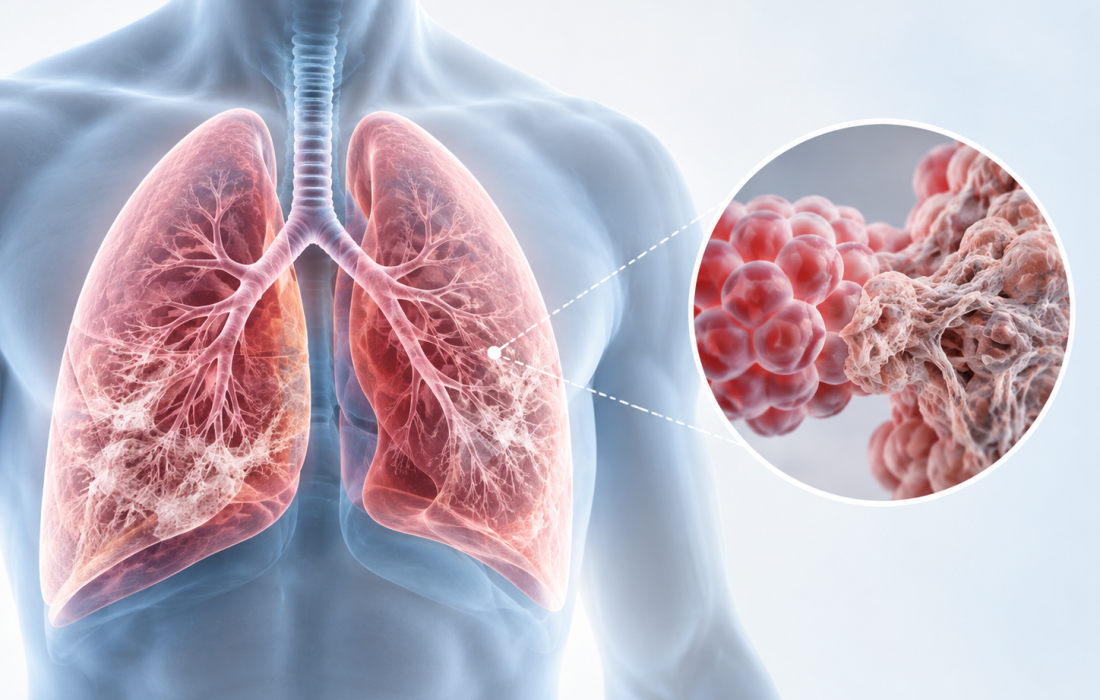
Endeavor’s taladegib met the Phase 2b WHISTLE-PF primary endpoint, improving lung function and reducing quantitative measures of fibrosis in IPF.
Written By: Saniya Katakdhond, PharmD
Reviewed By: Pharmacally Editorial Team
Endeavor BioMedicines reported positive topline results from the Phase 2b WHISTLE-PF trial (NCT06422884), a randomized, double-blind, placebo-controlled, dose-ranging study evaluating taladegib in 213 patients with idiopathic pulmonary fibrosis (IPF).
The 24-week trial met its primary endpoint, with taladegib producing a statistically significant improvement in ppFVC compared with placebo. Patients receiving taladegib also showed an improvement from baseline in percent predicted forced vital capacity (ppFVC) through Week 24, including in a prespecified analysis assessing lung function while patients remained on treatment.
The findings are notable because approved antifibrotic therapies for IPF primarily slow the decline in lung function rather than restore lost lung capacity.
Quantitative Imaging Shows Reduced Fibrosis
Taladegib also produced statistically significant improvements versus placebo across several quantitative high-resolution computed tomography (HRCT) measures of disease severity.
These included total lung capacity (TLC), percent quantitative interstitial lung disease (%QILD), and percent quantitative lung fibrosis (%QLF). Each measure improved from baseline through Week 24 in patients receiving taladegib.
The company also reported a statistically significant improvement in absolute FVC measured in milliliters. A numerical improvement in IPF-related symptoms was observed using the Living with Pulmonary Fibrosis Symptoms (L-PF) questionnaire, although the trial was not statistically powered to establish significance for this measure.
Hedgehog Pathway Targeting in IPF
Taladegib, also known as ENV-101, inhibits the Hedgehog signaling pathway, which regulates cellular processes involved in tissue development and repair. Aberrant activation of this pathway has been implicated in fibrotic diseases, including IPF.
Endeavor is investigating whether inhibiting Hedgehog signaling can reduce the abnormal wound-healing response that contributes to progressive accumulation of scar tissue in the lungs.
The WHISTLE-PF results therefore provide clinical evidence across both functional and imaging-based measures, although longer and larger studies will be needed to determine whether these changes translate into durable disease modification.
Safety Profile Remained Consistent
Taladegib showed a tolerability profile consistent with earlier studies. The incidence of serious adverse events was balanced between the placebo and taladegib groups.
The study permitted background standard-of-care antifibrotic treatment, with 73% of participants receiving such therapy. The trial enrolled patients across 74 sites in 14 countries.
Regulatory Discussions Planned
Endeavor plans to present the detailed WHISTLE-PF findings at a future medical meeting and engage global regulatory authorities regarding the design and development path for a Phase 3 program.
Taladegib has received Orphan Drug Designation from the U.S. Food and Drug Administration and the European Medicines Agency’s Committee for Orphan Medicinal Products. The EMA has also granted the program PRIME designation.
The Phase 2b findings strengthen the rationale for advancing taladegib into later-stage development, but the company will need to establish whether the observed improvements in lung function and quantitative fibrosis measures can be reproduced and sustained in a larger Phase 3 population.
Reference
Endeavor BioMedicines’ WHISTLE-PF Phase 2b Trial of Taladegib Meets Primary and Key Secondary Endpoints in Patients with IPF, Endeavor BioMedicines, 08 October 2026
A Phase 2 Trial of ENV-101 in Patients With Lung Fibrosis (WHISTLE-PF Trial), ClinicalTrials.gov ID NCT06422884

About the Writer
Saniya Sanjay Katakdhond (Linkedin) is a Doctor of Pharmacy professional with hands-on experience in patient case review, clinical documentation, medical record analysis, and patient care.
Her hospital experience has strengthened her understanding of clinical conditions, treatment approaches, and multidisciplinary healthcare practices.
With ICH-GCP certification and a research-oriented approach, she brings clinical insight and attention to detail to healthcare content development.
As a healthcare writer, Saniya focuses on translating clinical knowledge and patient-care experience into clear, accurate, and evidence-informed medical content.