
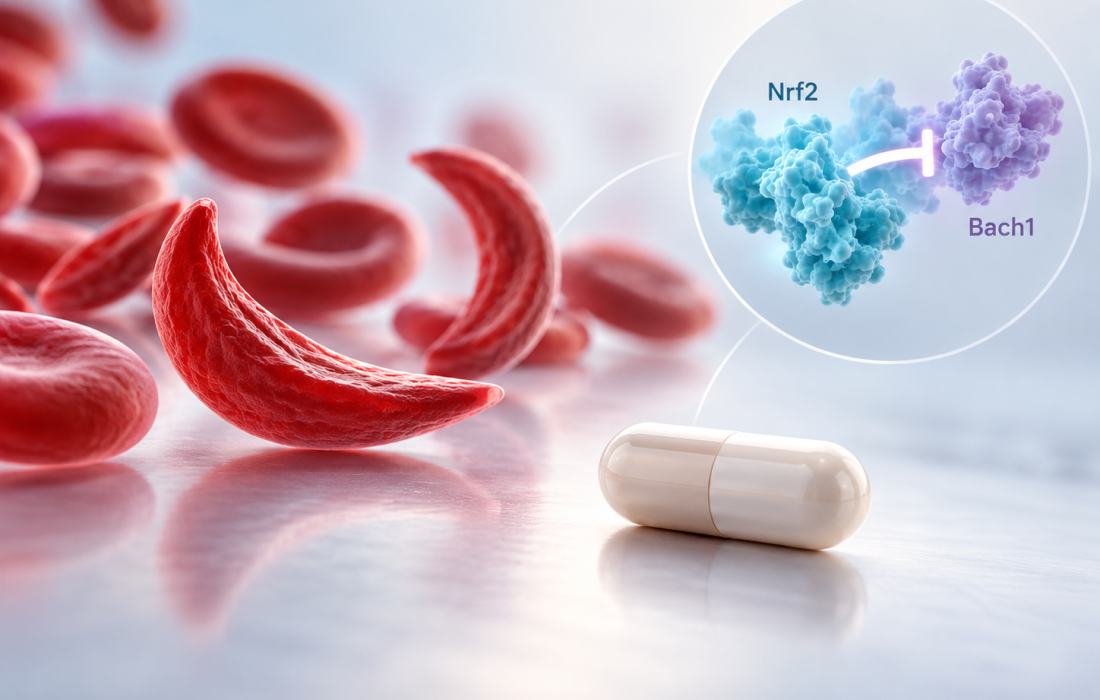
The FDA has granted Orphan Drug Designation to vTv Therapeutics’ investigational HPPD for sickle cell disease, supporting further development and partnering discussions.
Written By: Khushi Patel, PharmD
Reviewed By: Pharmacally Editorial Team
The U.S. Food and Drug Administration has granted Orphan Drug Designation to HPPD (HPP8668), an investigational oral Nrf2/Bach1 modulator being developed by vTv Therapeutics for sickle cell disease (SCD).
The designation marks a regulatory milestone for the program as the company explores strategic partnerships for HPPD while maintaining its primary focus on cadisegliatin, its late-stage investigational therapy for type 1 diabetes.
Orphan Drug Designation is granted to therapies being developed for rare diseases or conditions affecting fewer than 200,000 people in the United States. The designation can provide certain development and regulatory incentives, although it does not establish the efficacy or safety of a drug.
HPPD Targets HbF and Oxidative Stress
HPPD represents a potential disease-modifying approach that targets two biological pathways involved in SCD: fetal hemoglobin (HbF) regulation and oxidative stress.
Preclinical studies conducted at Augusta University using the Townes SCD mouse model showed that oral HPPD increased HbF in a time- and dose-dependent manner. The compound also reduced oxidative stress and the proportion of sickled red blood cells.
The findings are relevant because increased HbF can reduce hemoglobin S polymerization, a key driver of red blood cell sickling. Reducing oxidative stress could provide an additional therapeutic effect beyond HbF induction.
In the preclinical studies, HPPD produced HbF effects comparable to or greater than those observed with hydroxyurea, an established HbF-inducing therapy for SCD.
Unmet Need Remains in Sickle Cell Disease
SCD is an inherited blood disorder characterized by chronic hemolytic anemia, recurrent vaso-occlusive pain crises, progressive organ damage and substantial disease burden.
Approximately 100,000 people in the United States live with SCD. Although hydroxyurea and other disease-modifying approaches have improved treatment, some patients continue to experience inadequate response, tolerability issues or persistent complications.
HPPD could potentially address this gap through an oral mechanism that combines HbF induction with modulation of oxidative stress. However, its therapeutic potential remains unproven until clinical studies establish its safety and efficacy in patients.
Partnering Becomes a Focus for the Program
Paul Sekhri, chairman, president and CEO of vTv Therapeutics, said the designation highlights the unmet need in SCD and strengthens the company’s ability to pursue strategic partnering discussions for HPPD.
The company has not disclosed a clinical development timeline for HPPD in SCD in the announcement. The program remains at the investigational stage, with the available evidence limited to preclinical studies.
Cadisegliatin Remains the Lead Program
While advancing HPPD through potential partnering opportunities, vTv continues to prioritize cadisegliatin (TTP399), an oral glucokinase activator being developed as a potential adjunctive treatment for type 1 diabetes.
Cadisegliatin selectively activates hepatic glucokinase independently of insulin and is being evaluated for its potential to improve glycemic control by increasing hepatic glucose uptake and glycogen storage. The FDA has previously granted the program Breakthrough Therapy Designation.
HPPD remains investigational, and its safety and efficacy have not been established in humans. Further clinical development will be required to determine whether its preclinical HbF induction and effects on oxidative stress translate into meaningful clinical benefits for people with SCD.
Reference
vTv Therapeutics Announces FDA Orphan Drug Designation for HPPD in Sickle Cell Disease, vTv Therapeutics, 07 October 2026

About the Writer
Khushi Patel is a Pharm.D (Linkedin) professional with a strong foundation in clinical pharmacy, patient-centered care, regulatory affairs, and pharmacovigilance, with published work on Brugada syndrome.
Her interests include regulatory affairs, pharmacovigilance, guideline integration, multimodal therapy, pharmacogenomics, and antibiogram utilization, with a focus on evidence-based clinical decision-making and medication safety.
As a Pharmacally healthcare writer, she translates clinical and scientific evidence into clear, accurate, and clinically relevant healthcare content, while continuously developing her expertise in evolving pharmacy practice.