
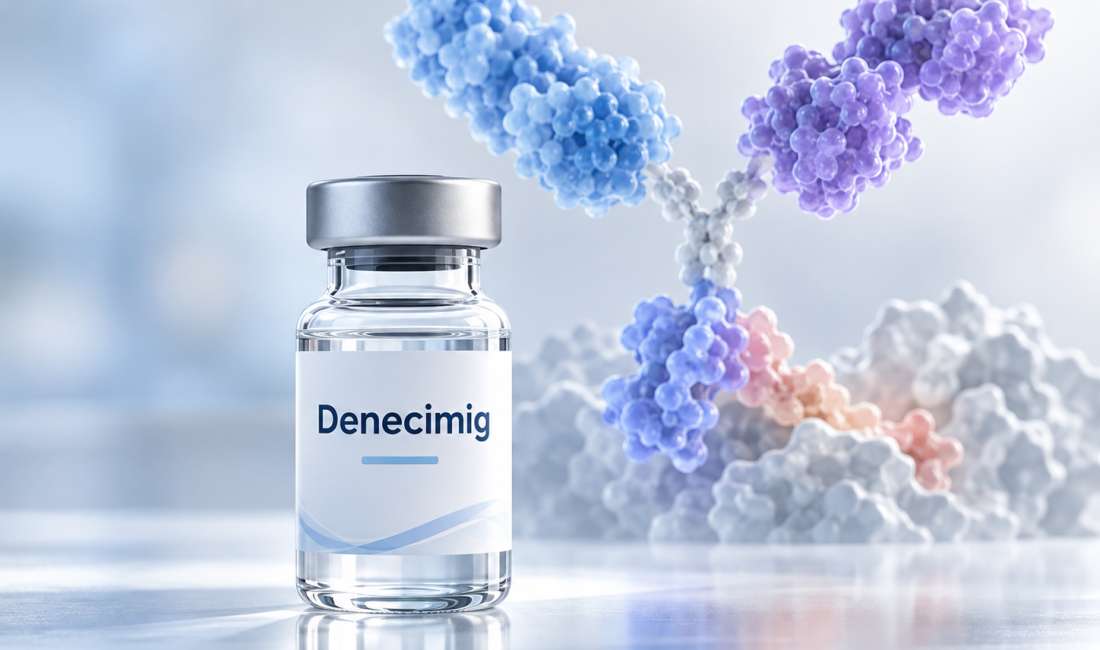
Novo Nordisk says the FDA review of denecimig remains ongoing, with facility remediation delaying the BLA decision for haemophilia A.
Written By: Siddhi Bhadekar, M. Pharm (QA)
Reviewed By: Pharmacally Editorial Team
Novo Nordisk on 2 October 2026 disclosed that the US Food and Drug Administration (FDA) is still reviewing its Biologics License Application (BLA) for denecimig, a subcutaneous bispecific antibody being developed for haemophilia A with or without inhibitors in adults and children. The FDA has not communicated a new timeline for regulatory action.
Novo submitted the BLA in September 2025 and had anticipated a decision in the third quarter of 2026. Following submission, the FDA conducted a pre-license inspection of the manufacturing site and provided feedback. According to Novo, the FDA has informed the company that ongoing facility remediation activities are responsible for the extension of the review.
Facility Remediation, Not Clinical Data, Drives Review Extension
Novo said the FDA has not identified deficiencies related to the clinical efficacy or safety data submitted in the denecimig BLA. The outstanding requirements instead relate to remediation activities at the manufacturing facility.
The company has not disclosed the specific observations from the inspection or provided an expected timeline for completing the remediation. Novo said it is implementing corrective measures and working with the FDA to address the outstanding requirements. The company also said the manufacturing-site feedback does not affect its other marketed products.
The additional review time does not change Novo’s 2026 financial outlook.
Novo continues to target a US launch of denecimig in the first half of 2027, subject to regulatory approval. With no new FDA action date announced, however, the timing will depend on completion of the facility remediation and the Agency’s subsequent regulatory decision.
FRONTIER Programme Supports Denecimig Development
The FRONTIER clinical programme evaluates denecimig as prophylaxis for paediatric and adult patients with haemophilia A, including patients with and without factor VIII inhibitors.
Novo identifies three studies as the basis of its Marketing Authorisation Application. FRONTIER2 (NCT05053139) evaluated once-monthly and once-weekly denecimig in patients aged 12 years and older, while FRONTIER3 (NCT05306418) evaluated the same schedules in children younger than 12 years.
FRONTIER4 (NCT05685238), an open-label extension study, evaluated once-every-two-weeks dosing and long-term safety across monthly, every-two-weeks and weekly regimens in patients with or without inhibitors.
Denecimig Mechanism and European Regulatory Status
Denecimig is a factor VIIIa (FVIIIa)-mimetic bispecific antibody that bridges factor IXa and factor X, reproducing the cofactor function normally provided by FVIIIa and supporting thrombin generation. The subcutaneous therapy is being developed for once-monthly, once-every-two-weeks and once-weekly prophylaxis.
Outside the US, denecimig received a positive opinion from the European Medicines Agency’s Committee for Medicinal Products for Human Use (CHMP) on 17 September 2026. Final European marketing authorisation remains pending, and Novo said the product is also under review by other regulatory authorities.
For the US application, the immediate regulatory issue remains the manufacturing facility rather than identified deficiencies in denecimig’s clinical efficacy or safety data. Until the remediation requirements are resolved, the FDA review remains ongoing without a new regulatory action date.
References
Novo provides update on the denecimig Biologics License Application (BLA) in the US, Novo Nordisk, 03 October 2026

About the Writer
Siddhi Rajendra Bhadekar (Linkedin) is an M.Pharm professional with expertise in medical and scientific writing, literature review, publication writing, and evidence synthesis, supported by four peer-reviewed publications.
She brings working knowledge of ICH-GCP, MedDRA, pharmacovigilance, ADR/AE reporting, clinical data management, and regulatory documentation.
With experience across pharmaceutical R&D, Quality Control, and Quality Assurance, she combines scientific research skills with strong attention to accuracy and detail.
Her background in manuscript development, publication planning, and scientific communication enables her to translate complex healthcare information into clear, reliable content.