
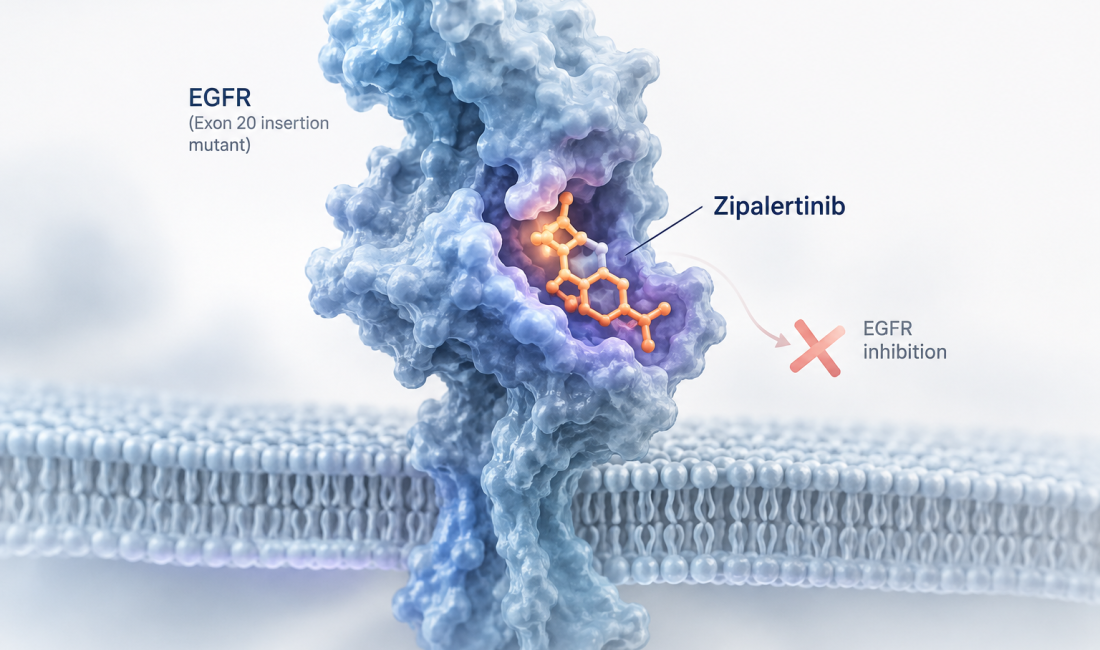
Phase 3 REZILIENT3 results show zipalertinib plus chemotherapy improved median progression-free survival by 6 months in first-line EGFR exon 20 insertion-positive NSCLC.
Written By: Charvi Kalal, PharmD
Reviewed By: Pharmacally Editorial Team
Taiho Pharmaceutical, Taiho Oncology, and Cullinan Therapeutics reported results from the Phase 3 REZILIENT3 trial evaluating zipalertinib plus platinum-based chemotherapy versus chemotherapy alone as first-line treatment for patients with locally advanced or metastatic non-squamous non-small cell lung cancer (NSCLC) harboring epidermal growth factor receptor (EGFR) exon 20 insertion (ex20ins) mutations. The late-breaking results were presented at the IASLC 2026 World Conference on Lung Cancer in Seoul.
EGFR ex20ins mutations are a distinct molecular subtype of NSCLC that has historically been more difficult to treat with conventional EGFR-targeted therapies. They occur in up to 4% of NSCLC cases globally and account for up to 12% of EGFR mutations among the approximately 16% of U.S. NSCLC patients whose tumors harbor EGFR mutations.
Zipalertinib Extended Progression-Free Survival by 6 Months
REZILIENT3 enrolled 285 adults with previously untreated, locally advanced or metastatic non-squamous NSCLC with EGFR ex20ins mutations. Following a six-patient safety lead-in, 279 patients were randomized to receive zipalertinib 100 mg twice daily plus platinum-based chemotherapy (n=140) or chemotherapy alone (n=139). Baseline characteristics were balanced between the groups, including brain metastases, which were present in 31.4% and 31.7% of patients, respectively.
At the prespecified interim efficacy analysis after 122 PFS events, median PFS was 14.5 months with zipalertinib plus chemotherapy versus 8.5 months with chemotherapy alone. This represented a 6.0-month improvement and a 50% reduction in the risk of disease progression or death (HR, 0.50; 95% CI, 0.34–0.73; P=0.00015). The PFS benefit was consistent across prespecified subgroups, including patients with brain metastases, for whom the hazard ratio was 0.38.
The combination also improved tumor response. Objective response rate was 65.0% with zipalertinib plus chemotherapy compared with 40.3% with chemotherapy alone (P<0.0001), while median duration of response was 14.2 versus 9.9 months, respectively.
At the interim overall survival analysis, with 30% maturity, the hazard ratio for death was 0.72 (95% CI, 0.42–1.23). Because OS data remain immature and the confidence interval crosses 1.0, continued follow-up is needed to determine whether the PFS benefit translates into a definitive overall survival advantage.
Safety Profile
The safety profile of zipalertinib plus chemotherapy was generally consistent with the known safety profiles of the individual treatments, and no new safety signals were observed. Grade ≥3 adverse events occurred in 87.1% of patients receiving the combination compared with 54.4% of those receiving chemotherapy alone. Hematologic adverse events accounted for much of the higher-grade toxicity, occurring in 58.6% versus 28.7% of patients, respectively.
Grade ≥3 EGFR-related toxicities were infrequent. Rash occurred in 10.7% of patients in the combination group, while diarrhea occurred in 1.4%.
Potential First-Line Treatment Option
Although amivantamab, a bispecific antibody targeting EGFR and MET, in combination with carboplatin and pemetrexed is an established first-line treatment option for EGFR ex20ins-positive advanced NSCLC in the United States, REZILIENT3 evaluated a different treatment approach using the oral EGFR inhibitor zipalertinib alongside chemotherapy. This mechanistic and treatment-modality distinction could provide an additional therapeutic option if the combination receives regulatory approval.
Zipalertinib, also known as CLN-081/TAS6417, is an investigational next-generation, irreversible EGFR inhibitor designed to target activating EGFR mutations, including exon 20 insertion variants. It has not been approved by any health authority.
The companies plan to discuss the REZILIENT3 findings with health authorities. Continued follow-up will help further characterize overall survival and other exploratory outcomes.
Reference
Zipalertinib Plus Chemotherapy Demonstrates 6-Month Median Progression-Free Survival Benefit in REZILIENT3 Phase 3 Trial in First-Line EGFR Exon 20 Insertion Mutation Non-Small Cell Lung Cancer, Taiho Pharma, 14 September 2026
REZILIENT3 (REsearching ZIpaLertinib In Egfr Non-small Cell Lung Cancer Tumors) (REZILIENT3), ClinicalTrials.gov ID NCT05973773

About the Writer
Charvi Kalal (LinkedIn) is a Pharm.D intern and aspiring medical writer with hands-on experience in medical writing, clinical research, pharmacovigilance, and clinical pharmacy. She has experience in medical content writing through CliMed, along with exposure to ADR monitoring, prescription analysis, patient counselling, literature review, and research documentation. Her research focuses on ADR monitoring and reporting in breast cancer patients receiving targeted therapy. With certifications in GCP, biomedical research, scientific writing, and clinical research, she is passionate about transforming scientific evidence into accurate, engaging, and accessible healthcare content.