
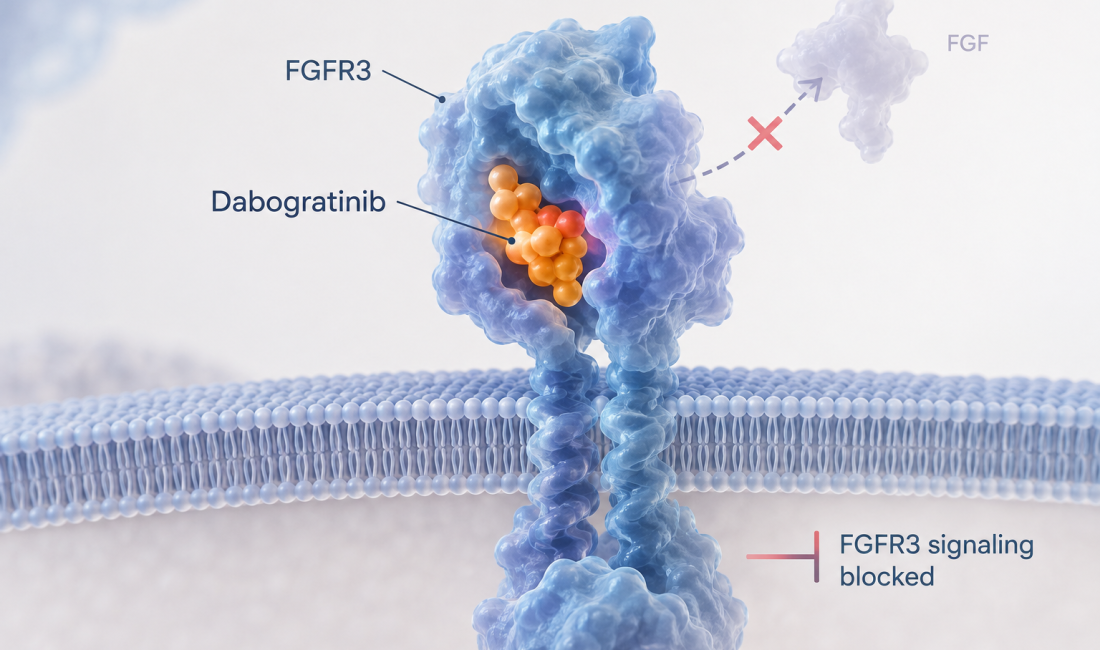
Tyra Biosciences reports 79% ORR with dabogratinib 60 mg in Phase 2 SURF302 for FGFR3-altered LG IR NMIBC, supporting planned Phase 3 development.
Written By: Kalyani Boharapi,
M.Pharm (Reg. Affairs)
Reviewed By: Pharmacally Editorial Team
Tyra Biosciences reported initial Phase 2 results from the SURF302 trial evaluating oral dabogratinib in patients with FGFR3-altered low-grade intermediate-risk non-muscle invasive bladder cancer (LG IR NMIBC). At the 60 mg once-daily dose, dabogratinib produced a 79% overall response rate (ORR) and a 64% best overall response (BOR) complete response (CR) rate, supporting further development of the selective FGFR3 inhibitor as a potential once-daily oral treatment option.
Dabogratinib Targets FGFR3-Driven Disease
Dabogratinib is an investigational oral, FGFR3-selective inhibitor developed through Tyra’s SNÅP platform. The drug is being evaluated across urologic cancers and skeletal dysplasias, including LG IR NMIBC in SURF302, low-grade upper tract urothelial carcinoma (LG UTUC) in SURF303, and achondroplasia in BEACH301.
LG IR NMIBC is characterized by frequent tumor recurrence and often requires repeated surveillance, tumor resection, and intravesical treatment delivered through bladder catheterization. Despite evidence that adjuvant therapy can reduce recurrence, approximately 70% of patients do not receive treatment intended to prevent recurrence. The burden of repeated procedures can lead patients to choose surveillance instead. An effective oral therapy could offer a less invasive approach for patients who currently defer adjuvant treatment.
60 mg Dose Produces Strong Early Responses
SURF302 (NCT06995677) is a multicenter, open-label Phase 2 study evaluating dabogratinib in adults with FGFR3-altered LG IR NMIBC across dose-optimization cohorts. Key endpoints include best overall response, three-month CR, time to recurrence, duration of response, recurrence-free survival, progression-free survival, safety, and tolerability.
As of the August 31, 2026 data cutoff, 26 patients were evaluable for efficacy across the 60 mg (n=14) and 50 mg (n=12) cohorts. Among the 14 patients receiving 60 mg once daily, dabogratinib achieved a 79% ORR (11/14), while 57% (8/14) achieved a CR at the three-month assessment. One patient with a three-month partial response converted to CR at six months, increasing the BOR CR rate to 64% (9/14). Responses were particularly strong among patients with a single marker lesion, a population considered representative of minimal disease in the planned adjuvant setting. Across the 60 mg cohort, all eight patients achieved a response, including six who achieved CR as their best overall response, corresponding to a 100% ORR and 75% BOR CR rate.
All five patients with a three-month CR who had reached the six-month assessment remained in response. The first patient enrolled remained in CR at 12 months and continued treatment at 14 months.
Safety Profile Supports Chronic Oral Dosing
Safety findings across the 60 mg (n=22) and 50 mg (n=22) cohorts supported continued dose evaluation. Most treatment-emergent adverse events (TEAEs) were Grade 1 or 2. Grade 3 TEAEs occurred in 14% (3/22) of patients receiving 60 mg and 9% (2/22) receiving 50 mg. Grade 3 treatment-related adverse events (TRAEs) occurred in two of 44 patients (4.5%), both in the 50 mg cohort, with none reported at 60 mg. No Grade 4 or 5 TEAEs occurred.
At 60 mg, no dose reductions or treatment-related discontinuations were reported. No clinically significant hyperphosphatemia, nail toxicity, or ocular toxicity was observed. Transaminase-related TEAEs occurred in fewer than 10% of patients, while fatigue, diarrhea, and dry eye were among the most frequently reported TEAEs. Diarrhea was generally Grade 1, transient, and limited.
Exposure Analysis Guides Next Dose Strategy
Preliminary exposure-response analyses showed an 86% ORR among patients with steady-state exposure above an AUC threshold of 2,500 ng·hr/mL, compared with 58% among those below the threshold. The relationship was most apparent in patients with multiple marker lesions, who had a higher disease burden. By contrast, responses among patients with single marker lesions occurred across the observed exposure range.
These findings support continued evaluation of 60 mg once daily in the planned adjuvant setting while higher exposure is explored for patients with greater tumor burden in the ablative setting. Tyra plans to complete enrollment in the 60 mg cohort and initiate a 70 mg once-daily cohort. The company also plans to engage health authorities on Phase 3 study design and dose selection for a planned registrational adjuvant study.
Separately, the first patient treated in the Phase 2 SURF303 study of dabogratinib in LG UTUC achieved a CR at three months on 60 mg once daily, with no TEAEs reported as of the August 31, 2026 data cutoff. The patient remained on study treatment at that time.
Reference
Tyra Biosciences Reports Initial Phase 2 SURF302 Results Supporting the First Potential Oral Innovation in LG IR NMIBC with Dabogratinib, Tyra Bioscience, 09 September 2026

About the Writer
Kalyani Boharapi (LinkedIn) is a pharmacy professional and healthcare writer currently pursuing an M.Pharm in Regulatory Affairs at Dr. D. Y. Patil College of Pharmacy, with interests in pharmaceutical regulations, drug development, and healthcare innovation. She has academic exposure to dossier preparation, scientific writing, and regulatory documentation. Kalyani has also completed certification courses in Generative AI, AI in Pharma, and Bioinformatics, and actively participates in pharmaceutical conferences to stay updated with emerging trends and advancements in the healthcare and pharmaceutical industry.