
Gepotidacin showed high, similar microbiological success to ceftriaxone in a Phase 3 EAGLE-1 NAAT analysis, supporting its approved gonorrhea use.
Written By: Mansi Nakum, PharmD
Reviewed By: Pharmacally Editorial Team
GSK’s oral gepotidacin showed high and broadly similar microbiological success to ceftriaxone plus azithromycin in an exploratory NAAT analysis of the phase 3 EAGLE-1 trial, supporting the culture-based efficacy findings that underpinned its December 2025 FDA approval for uncomplicated urogenital gonorrhea.
Oral Option for a Growing Resistance Problem
Gonorrhea, caused by Neisseria gonorrhoeae, remains a major global sexually transmitted infection, with an estimated 85 million new cases annually among adolescents and adults. Treatment has become increasingly challenging as antimicrobial resistance narrows available options. Ceftriaxone remains a recommended empirical therapy, while an effective oral alternative could simplify treatment and improve access across clinical settings.
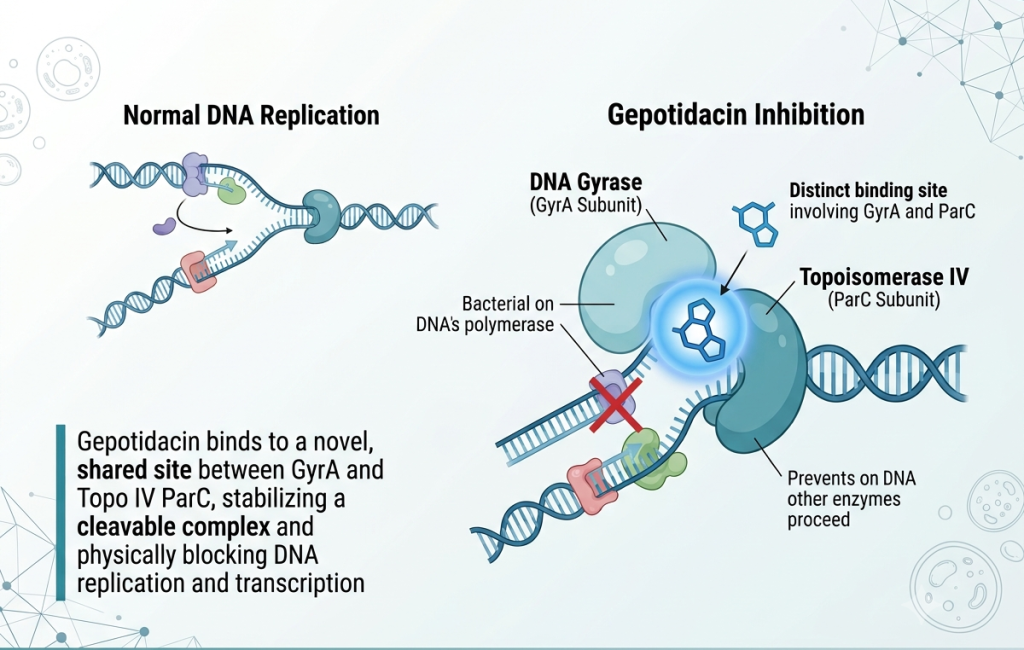
Gepotidacin is an oral, bactericidal triazaacenaphthylene antibacterial that inhibits bacterial DNA replication through a distinct binding site involving GyrA and ParC. The drug was approved in the US and UK in 2025 for uncomplicated urinary tract infections and received FDA approval in December 2025 for uncomplicated urogenital gonorrhea in adults and pediatric patients aged at least 12 years and weighing at least 45 kg.
The NAAT analysis was not the basis for the FDA approval. It was a prespecified exploratory analysis intended to assess treatment response using a diagnostic method widely used in clinical practice. The regulatory approval relied on the primary EAGLE-1 efficacy analysis using culture-confirmed bacterial eradication, which showed 92.6% microbiological success with gepotidacin versus 91.2% with ceftriaxone plus azithromycin and established noninferiority.
EAGLE-1 NAAT Findings
The phase 3, multicenter, open-label, active-comparator EAGLE-1 trial (NCT04010539) compared two 3,000 mg oral doses of gepotidacin, administered 10–12 hours apart, with a single 500 mg intramuscular dose of ceftriaxone plus 1,000 mg oral azithromycin. The study enrolled participants aged at least 12 years with uncomplicated urogenital gonorrhea and ran from October 2019 through October 2023.
The exploratory analysis assessed treatment response using nucleic acid amplification testing (NAAT), with test-of-cure samples collected four to eight days after treatment. NAAT-defined success required clearance of N. gonorrhoeae nucleic acid from the urogenital specimen.
Among NAAT-positive participants in the microbiological intent-to-treat population, urogenital treatment success reached 82.5% with gepotidacin versus 75.0% with ceftriaxone plus azithromycin. The adjusted difference was 8.2 percentage points, with a 95% confidence interval of −0.1% to 16.5%.
In the microbiologically evaluable NAAT population, success rates were 88.3% and 86.3%, respectively, producing an adjusted difference of 3.8 percentage points (95% CI, −3.6% to 11.2%).
These NAAT results were numerically lower than the culture-based success rates, reflecting an important diagnostic limitation rather than evidence of reduced antibacterial activity. No urogenital bacterial persistence was detected by culture in either treatment group.
NAAT Highlights a Testing Challenge
Gonococcal DNA can remain detectable after viable bacteria have been cleared, potentially producing a positive NAAT result that does not represent persistent infection. EAGLE-1 scheduled test-of-cure at a time optimized for culture under FDA requirements rather than for NAAT interpretation.
Baseline concordance between NAAT and culture was high at 98.4%, with 99.4% sensitivity and a 98.9% positive predictive value. The findings support using NAAT alongside culture in future registrational trials, combining practical pathogen detection with the antimicrobial susceptibility information provided by culture.
Pharyngeal Results Require Caution
Extragenital findings were less definitive because sample numbers were small. NAAT-defined rectal success favored gepotidacin, while pharyngeal results numerically favored ceftriaxone plus azithromycin. Two participants treated with gepotidacin had culture-confirmed pharyngeal persistence at test-of-cure.
Pharyngeal gonorrhea is generally more difficult to eradicate than urogenital infection because the anatomy and tissue characteristics of the pharynx can result in suboptimal antibiotic concentrations and increase the risk of treatment failure.
The small number of pharyngeal specimens limits the strength of any comparison between treatments, so these findings should not be interpreted as evidence of a definitive difference in gepotidacin’s activity at this site.
Implications for Gonorrhea Treatment
The NAAT analysis reinforces the primary EAGLE-1 conclusion that oral gepotidacin provides efficacy comparable to ceftriaxone plus azithromycin for uncomplicated urogenital gonorrhea. It also illustrates how the timing and characteristics of microbiological testing can influence apparent treatment success.
A key remaining question is gepotidacin’s performance against ceftriaxone-resistant N. gonorrhoeae. EAGLE-1 enrolled participants with ceftriaxone-susceptible isolates, leaving limited clinical evidence for infections caused by resistant strains. The small extragenital populations also warrant further study.
Overall, the findings provide additional clinical support for gepotidacin’s established urogenital gonorrhea efficacy while highlighting NAAT’s potential as a complementary tool to culture in future gonorrhea trials.
Reference

About the Writer
Mansi Nakum (Linkedin) is a Pharm.D professional with a strong foundation in clinical pharmacy, evidence-based healthcare writing, and clinical data interpretation.
She has published work on Brugada syndrome and has a keen interest in guideline integration, multimodal therapy, pharmacogenomics, and antibiogram utilization.
As a healthcare writer, she focuses on translating clinical evidence into clear, accurate, and clinically relevant content, while continuously developing her expertise in evolving pharmacy practice.