
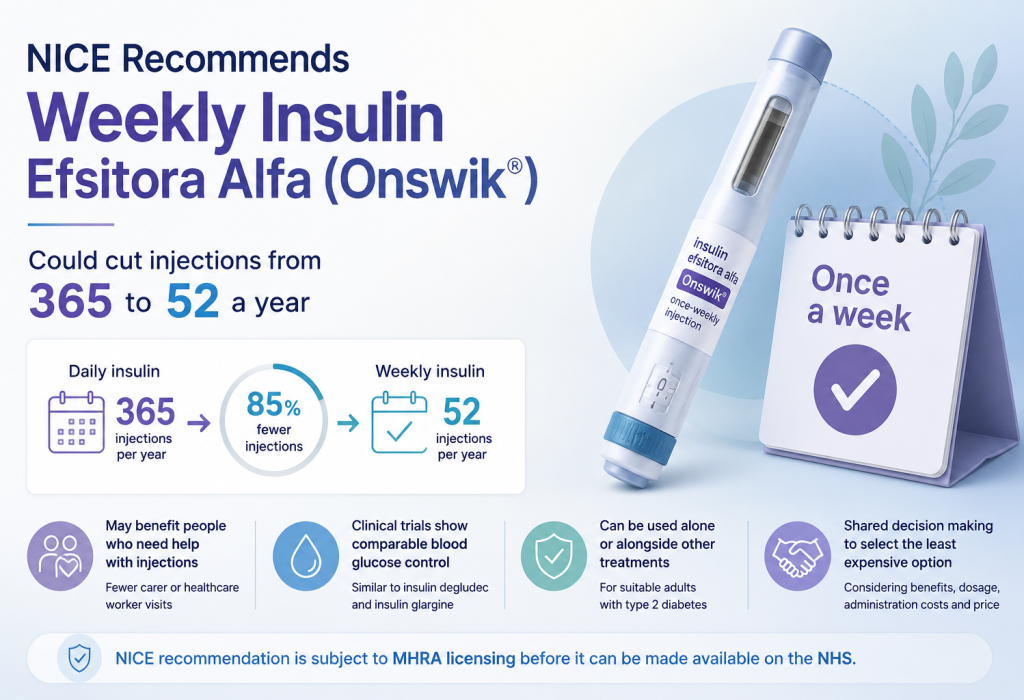
NICE recommends once-weekly insulin efsitora alfa for suitable adults with type 2 diabetes, potentially reducing injections from 365 to 52 a year.
Written By – Anshu Gupta (PharmD)
Reviewed By – Pharmacally Editorial Team
The National Institute for Health and Care Excellence (NICE) has recommended once-weekly insulin efsitora alfa, also known as Onswik and made by Eli Lilly, as an option for suitable adults with type 2 diabetes. The recommendation could allow hundreds of thousands of people to replace daily insulin injections with a weekly dose, reducing the number of injections from 365 to 52 a year.
Weekly insulin could reduce treatment burden
The switch from daily to weekly administration would reduce insulin injections by approximately 85%, or 313 injections over a year. NICE said this could particularly benefit people who need help administering insulin, including some frailer people and those with sight loss, limited hand movement, learning disabilities or difficulty following the steps involved in injecting insulin.
Fewer injections could also mean fewer visits from carers or healthcare workers and less disruption to everyday life. The weekly option may additionally benefit people who struggle to maintain a daily treatment routine, including some people under 40 with early-onset type 2 diabetes who are managing intensive treatment alongside working life.
Clinical evidence supports weekly insulin
Clinical trial evidence shows that insulin efsitora alfa controls blood glucose levels as well as insulin degludec and insulin glargine, two widely used long-acting insulins used to maintain blood glucose control throughout the day.
For people who are suitable for the weekly treatment, the evidence indicates that switching from these established daily insulin options to efsitora alfa can provide similar blood glucose control while requiring substantially fewer injections.
The weekly insulin can be used alone or alongside other treatments for type 2 diabetes.
NICE recommends individual treatment decisions
The recommendation does not mean that all people with type 2 diabetes who use insulin should switch to a weekly injection. Healthcare professionals and patients should discuss the benefits and disadvantages of suitable treatment options and select the least expensive treatment that meets the person’s needs.
NICE says this decision should take account of factors including dosage, administration costs and treatment price, alongside the clinical suitability of each option.
Helen Knight, director of medicines evaluation at NICE, said moving from daily injections to a single weekly dose could make a real difference to the day-to-day lives of people with type 2 diabetes, particularly those who rely on a carer, family member or healthcare professional to administer insulin.
Diabetes UK highlights implementation and access
Douglas Twenefour, Head of Clinical at Diabetes UK, said the recommendation could give people with type 2 diabetes greater flexibility in managing their condition, particularly those with additional care needs.
He also highlighted the need for clear guidance, staff training and fair access if the treatment is introduced through the NHS. People who could benefit should be supported by their healthcare teams to make informed decisions, while implementation should help reduce inequalities in diabetes care.
NHS availability depends on MHRA licensing
NICE’s recommendation is subject to insulin efsitora alfa being licensed by the Medicines and Healthcare products Regulatory Agency (MHRA) before it can be made available on the NHS.
The recommendation therefore provides a potential once-weekly alternative for suitable patients rather than an immediate replacement for daily insulin treatment. For eligible people, reducing injections from 365 to 52 annually could substantially lessen the practical burden of insulin therapy while maintaining comparable blood glucose control to established long-acting insulin options.
Reference
Weekly insulin jab could cut injections from 365 a year to just 52 | NICE

About the Writer
Anshu Gupta (LinkedIn) is a PharmD professional and healthcare writer with interests in clinical research, pharmacovigilance, regulatory affairs, and medical writing. She has presented research at academic conferences and completed certifications in Good Clinical Practice (GCP), ICH-GCP, and drug safety. Passionate about clinical trials and evidence-based medicine, she is committed to translating scientific evidence into accurate, reliable, and accessible healthcare content.