
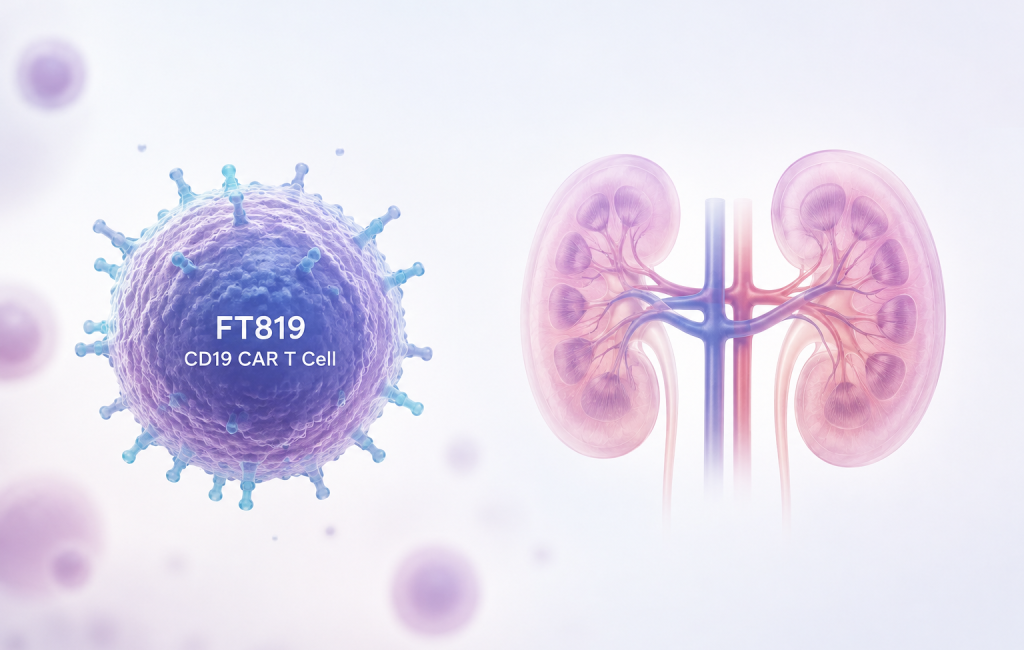
Fate Therapeutics begins its Phase 2 RECLAIM-LN trial of fixed-dose FT819 CAR T therapy in refractory lupus nephritis, with Week 26 complete renal response as the primary endpoint.
Written By: Umesh Hanumante,
M.Pharm (Reg. Affairs)
Reviewed By: Pharmacally Editorial Team
Fate Therapeutics has dosed the first patient in RECLAIM-LN (NCT07570862), a Phase 2 potentially registrational trial evaluating off-the-shelf CAR T-cell therapy FT819 in patients with refractory moderate-to-severe systemic lupus erythematosus (SLE) and Class III or IV lupus nephritis. The first patient received FT819 in an outpatient setting and was discharged the same day, while additional patients are undergoing screening at multiple activated sites.
FT819 Brings an Off-the-Shelf CAR T Approach to Lupus Nephritis
FT819 is an iPSC-derived, CD19-targeting CAR T-cell therapy developed from a clonal master induced pluripotent stem cell (iPSC) bank. The approach allows Fate to manufacture a standardized cellular product in advance and maintain inventory for treatment, avoiding the patient-specific cell collection and manufacturing process required for autologous CAR T therapies.
CD19 targeting enables FT819 to eliminate B cells, which play a central role in autoantibody production and immune dysregulation in SLE. This strategy is particularly relevant to lupus nephritis, a serious SLE complication that can cause progressive kidney damage and kidney failure despite immunosuppressive treatment.
Fixed 900 Million-Cell Dose and Less-Intensive Conditioning
RECLAIM-LN will enroll approximately 53 patients with refractory moderate-to-severe SLE and Class III or IV lupus nephritis, with or without concomitant Class V disease. Patients must have failed at least two prior systemic immunosuppressive therapies.
Each participant will receive a single fixed dose of 900 million FT819 cells. The predefined cell dose represents an operational distinction from many autologous CAR T regimens, which use patient-specific dosing approaches. Because FT819 is manufactured as an off-the-shelf product, the fixed-dose strategy also fits the broader goal of standardized, inventory-based treatment.
Patients will receive FT819 following less-intensive conditioning with bendamustine. The regimen is notable because it avoids the commonly used cyclophosphamide-plus-fludarabine lymphodepletion used in many CAR T-cell studies. Fate previously reported that the fludarabine-free approach was viewed more favorably by patients and clinicians than the more intensive combination.
The less-intensive conditioning strategy could reduce treatment burden and support outpatient administration, although the Phase 2 study will provide a more definitive assessment of its clinical and safety implications.
Week 26 Complete Renal Response Is the Primary Endpoint
The primary endpoint is the proportion of patients achieving complete renal response (CRR) at Week 26. Secondary endpoints include CRR at later time points, overall and partial renal response, lupus low disease activity state, remission, quality-of-life measures and other disease-specific and patient-reported outcomes.
Earlier Phase 1 data showed favorable safety and tolerability, with reductions in disease activity measures including clinical SLEDAI-2K and urine protein-to-creatinine ratio. Fate reported that these measures showed further reductions among patients receiving less-intensive bendamustine conditioning.
Reported Phase 1 experience included no high-grade cytokine release syndrome (CRS), ICANS, graft-versus-host disease or dose-limiting toxicities in the evaluated SLE population. This safety profile, together with same-day discharge of the first RECLAIM-LN patient, supports the feasibility of an outpatient treatment model, although the larger Phase 2 study will better define the safety profile.
RMAT Designation Supports Accelerated Development
RECLAIM-LN was developed through interactions with the FDA under FT819’s Regenerative Medicine Advanced Therapy (RMAT) designation. FT819 has also entered the FDA’s Chemistry, Manufacturing, and Controls Development and Readiness Pilot program, providing opportunities for enhanced regulatory interaction around CMC readiness during accelerated development.
Bob Valamehr, Ph.D., MBA, president and CEO of Fate Therapeutics, said the trial initiation and first treatment mark an important step toward establishing FT819 as an accessible off-the-shelf CAR T-cell therapy for serious autoimmune diseases.
Enrollment Expected to Complete by 1H2028
Fate expects to complete enrollment of the approximately 53-patient RECLAIM-LN study within 15 to 18 months, targeting completion by the first half of 2028.
The combination of a fixed 900 million-cell dose, off-the-shelf manufacturing, less-intensive bendamustine conditioning and early safety findings gives RECLAIM-LN a distinct development profile within the emerging autoimmune CAR T field. The key clinical question now is whether these operational advantages translate into durable renal responses in patients with refractory lupus nephritis.
Reference

About the Writer
Umesh Hanumante (M.Pharm) (LinkedIn) is a pharmacy professional and healthcare writer with a background in Regulatory Affairs, pharmaceutical innovation, and clinical research. He has around two years of industry experience as an Executive PMT at Troikaa Pharmaceuticals Ltd and qualified GPAT 2024. His areas of interest include regulatory compliance, dossier preparation, clinical trials, emerging therapies, and advancements in the global pharmaceutical and healthcare sector.