Jazz Pharmaceuticals will acquire Actio Biosciences for $820 million upfront, gaining ABS-1230, an investigational KCNT1 therapy for rare epilepsy
Written By: Rishabh Sonawane, BPharm
Reviewed By: Pharmacally Editorial Team
Jazz Pharmaceuticals and Actio Biosciences today announced a definitive agreement under which Jazz will acquire Actio for $820 million upfront, with Actio shareholders eligible for up to $500 million in contingent consideration tied to regulatory approval and sales milestones.
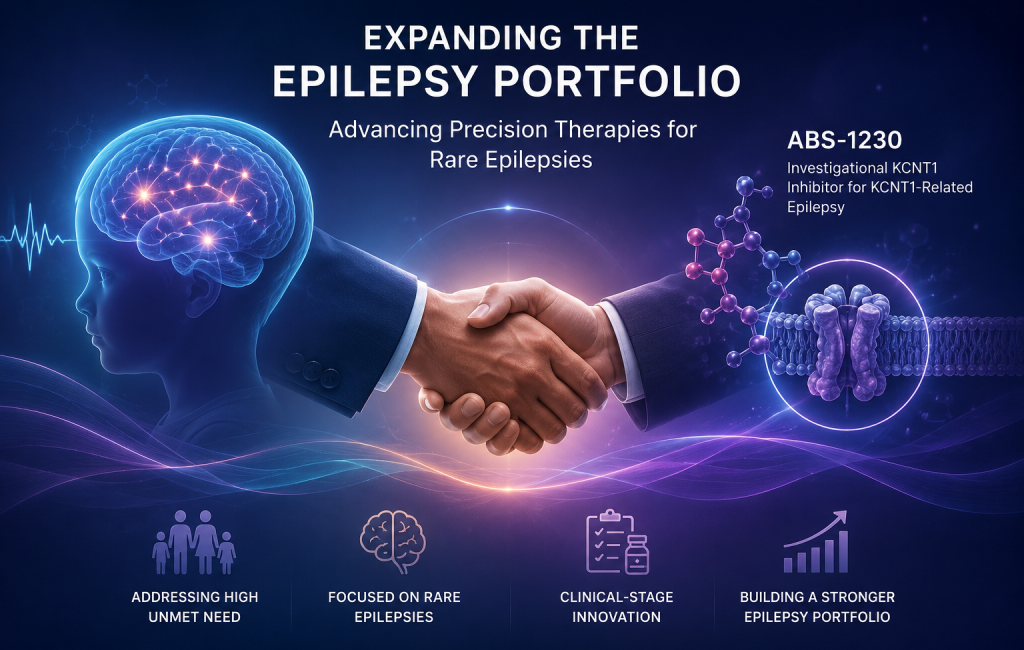
The acquisition is designed to expand Jazz’s rare epilepsy portfolio through the addition of ABS-1230, a clinical-stage precision therapy targeting KCNT1-related epilepsy. Jazz plans to fund the transaction through a combination of cash on hand and existing financing facilities.
Scientific Background
ABS-1230 is an orally available, small-molecule inhibitor of the KCNT1 ion channel being developed for KCNT1-related epilepsy, a rare genetic developmental and epileptic encephalopathy affecting approximately 2,500 patients in the United States. The disorder is characterized by severe, treatment-resistant seizures and substantial developmental and neurological impairment, and there are currently no FDA-approved therapies specifically for the condition.
Preclinical studies demonstrated that ABS-1230 inhibits KCNT1 across all evaluable pathogenic mutations, suggesting potential applicability across KCNT1-related epilepsy. The therapy has the potential to provide patients with the convenience of an oral treatment.
ABS-1230 Clinical Development
Early clinical proof-of-concept data for ABS-1230 showed meaningful seizure reductions in children with KCNT1-related epilepsy. Development is ongoing in the Phase 1b/2a KYRON trial (NCT07600736), which is intended to serve as the registrational study supporting a potential U.S. New Drug Application (NDA) submission.
To facilitate its advancement, ABS-1230 has received FDA Fast Track, Rare Pediatric Disease, and Orphan Drug Product designations and has been accepted into the FDA’s Rare Disease Evidence Principles (RDEP) program. The RDEP program aims to facilitate rapid development of therapies for ultra-rare diseases.
Executive Perspective
Commenting on the transaction, Renee Gala, President and Chief Executive Officer of Jazz Pharmaceuticals, said the acquisition expands the company’s rare epilepsy portfolio and builds on its global experience with Epidiolex. She emphasized that Jazz looks forward to collaborating with the epilepsy patient community and regulators to address the critical lack of treatment options for children and families affected by KCNT1-related epilepsy.
David Goldstein, Ph.D., Chief Executive Officer of Actio Biosciences, said Actio selected Jazz because of its development capabilities and commercial scale, which could support the continued advancement of ABS-1230 toward patients.
Transaction Includes New Rare Neurological Disease Company
As part of the transaction, Actio will spin out a new privately held company focused on genetic rare neurological diseases. Certain Actio management, employees, and assets will be transferred to the new entity, while ABS-1230 will remain with Actio and be acquired by Jazz.
The new company will advance ABS-0871, a clinical-stage small-molecule TRPV4 inhibitor being developed for Charcot-Marie-Tooth disease type 2C, along with other early-stage programs. Jazz will receive a minority stake and certain related rights in the new company.
Acquisition Expected to Close in Fourth Quarter 2026
The acquisition has been unanimously approved by the boards of directors of both companies and is expected to close in the fourth quarter of 2026, subject to customary closing conditions.
Following completion of the transaction, Jazz will assume ownership of ABS-1230 and continue its clinical development. Jazz has not provided a specific timeline for a potential NDA submission or approval.
The regulatory path will depend on the outcome of the ongoing KYRON study and subsequent FDA review. Any potential approval of ABS-1230 therefore remains contingent on successful clinical development and regulatory assessment.
Reference

About the Writer
Rishabha Sonawane, B.Pharm (LinkedIn) is healthcare writer with a strong interest in medical writing, regulatory affairs, clinical research, and AI-driven drug discovery. He has completed specialized training from the NIH and ICMR in clinical pharmacology, clinical research, and scientific writing. Passionate about evidence-based healthcare communication, he focuses on translating complex scientific research into clear, accurate, and engaging medical content.