
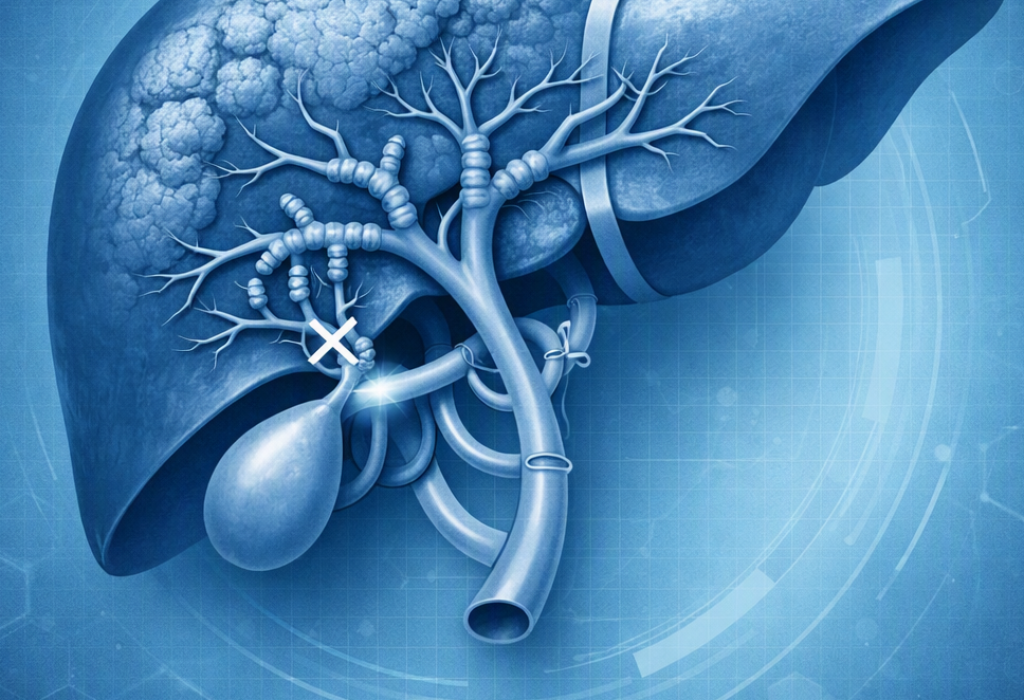
Ipsen’s Phase 3 BOLD trial found that Bylvay (odevixibat) did not improve native liver survival in children with biliary atresia after Kasai surgery, while maintaining its established safety profile.
Written By: Shaik Yasmeen, PharmD
Reviewed By: Pharmacally Editorial Team
Ipsen reported that its Phase 3 BOLD trial evaluating Bylvay (odevixibat) in children with biliary atresia (BA) did not meet its primary endpoint of improving native liver survival compared with placebo. The findings underscore the continued lack of effective medical therapies for this rare pediatric liver disease, where surgery and liver transplantation remain the only treatment options.
The randomized, double-blind, placebo-controlled BOLD study (NCT04336722) evaluated odevixibat in infants with biliary atresia who had previously undergone a Kasai hepatoportoenterostomy (HPE).
Topline results showed no significant improvement in native liver survival, defined as the time to liver transplantation or death through 104 weeks, compared with placebo. The drug’s safety findings remained consistent with its established profile in approved indications.
Bylvay Targets Bile Acid Reabsorption but Falls Short in Biliary Atresia
Bylvay (odevixibat) is a once-daily ileal bile acid transport (IBAT) inhibitor that reduces intestinal reabsorption of bile acids, increasing their elimination through feces. Lowering circulating bile acids has shown clinical benefit in several pediatric cholestatic liver disorders characterized by severe pruritus.
The therapy is already approved in the United States as the first treatment for cholestatic pruritus associated with Progressive Familial Intrahepatic Cholestasis (PFIC) across all subtypes and for pruritus in Alagille syndrome (ALGS). In Europe, it is approved for PFIC and marketed as KAYFANDA for ALGS.
Biliary atresia, however, presents a far more complex disease biology. The condition affects approximately 1 in 5,000 to 20,000 newborns and causes progressive obstruction and destruction of the bile ducts, leading to liver fibrosis, cirrhosis, and eventual liver failure if untreated. Although early Kasai HPE surgery can restore bile flow in some infants, many children ultimately require liver transplantation, making biliary atresia the leading indication for pediatric liver transplant worldwide.
Largest Global Trial in Biliary Atresia
The BOLD trial enrolled 254 patients across 19 countries, making it the largest study conducted to evaluate disease modification in biliary atresia. Eligible infants underwent Kasai HPE within the first 90 days of life and were randomized to receive oral odevixibat 120 mcg/kg once daily or placebo for up to 104 weeks.
The primary endpoint measured native liver survival through Week 104. While efficacy was not demonstrated, the safety profile aligned with previous clinical experience and revealed no unexpected safety concerns.
An ongoing open-label extension study, BOLD-EXT, continues to evaluate the long-term safety and efficacy of odevixibat. Ipsen stated that continuation of patients in the extension study will be determined after a comprehensive review of the complete trial dataset.
Trial Data May Advance Understanding of Disease Biology
Lead investigator Dr. Saul J. Karpen, Pediatric Hepatologist and Chief Scientific Officer at the Stravitz-Sanyal Institute for Liver Disease and Metabolic Health, Virginia Commonwealth University, said the study has generated the most comprehensive clinical dataset ever assembled in biliary atresia despite missing its primary endpoint.
He noted that biliary atresia is a heterogeneous disease with variable progression and that additional analyses could identify patient subgroups with differing clinical outcomes while providing valuable insights into disease biology and future therapeutic research.
Christelle Huguet, PhD, Executive Vice President and Head of Research & Development at Ipsen, acknowledged the disappointing outcome for patients and families but emphasized the importance of the trial in advancing scientific understanding of this rare pediatric liver disease. She also thanked participating patients, caregivers, investigators, and the broader biliary atresia community for their contribution.
Future Development
Ipsen plans to conduct a full analysis of the BOLD dataset before determining the future of the ongoing BOLD-EXT extension study. Although the trial did not establish odevixibat as a disease-modifying therapy for biliary atresia, the extensive clinical data generated may guide future research in a disease that currently has no approved medical treatment beyond surgical intervention and liver transplantation.
Reference
Ipsen provides update on Phase III BOLD trial in biliary atresia

About the Writer
Shaik Yasmeen (LinkedIn) is a Pharm.D graduate with interests in clinical pharmacy, pharmacovigilance, and medical writing. She has gained experience through hospital clinical postings, patient case reviews, case presentations, and literature evaluation. Passionate about evidence-based healthcare, she is committed to creating accurate and engaging medical content while continuously expanding her professional knowledge.