
Unicycive Therapeutics resubmits NDA for oxylanthanum carbonate (OLC), a next-gen phosphate binder for dialysis patients with hyperphosphatemia. Addresses CRL manufacturing issues; PDUFA expected H1 2026. Low pill burden, 90% phosphate control.
Written By: Pharmacally Medical News Desk
Unicycive Therapeutics has resubmitted its New Drug Application (NDA) to the U.S. Food and Drug Administration (FDA) for Oxylanthanum Carbonate (OLC), an investigational oral phosphate binder for patients with chronic kidney disease (CKD) on dialysis. The filing uses the 505(b)(2) pathway and follows FDA feedback provided in a prior Complete Response Letter (CRL).
Hyperphosphatemia remains common in dialysis populations. Data referenced from National Kidney Foundation guidance suggest that up to 74.9 percent of dialysis patients have serum phosphate levels above 4.5 mg/dL, highlighting the need for therapies that can maintain control while minimizing pill burden.
The resubmission, announced December 29, 2025, will undergo standard FDA acceptance procedures before entering formal review, with a regulatory decision anticipated in 2026.
Regulatory background: CRL and manufacturing updates
Unicycive first submitted the NDA in late 2024 with a planned PDUFA action date of June 28, 2025. In June 2025, the FDA issued a CRL identifying current Good Manufacturing Practice (cGMP) deficiencies at a third-party contract manufacturing vendor. The observations were not related to OLC’s clinical efficacy, safety, or pharmacologic characteristics.
The company worked with its manufacturing partner to address the findings and updated the chemistry, manufacturing, and controls documentation to meet FDA expectations. If the resubmission is accepted, the application is expected to follow a six-month review timeline. Unicycive has stated that it has financial resources to continue program development through the regulatory process.
Clinical data supporting the NDA
The NDA includes data from three clinical programs:
- Phase 1 study in healthy volunteers
- Bioequivalence evaluation
- Phase 2 tolerability trial (NCT06218290) in dialysis patients with CKD
Across studies, OLC produced reductions in serum phosphate within evaluated dosing ranges. The safety profile was consistent with other lanthanum-based binders, with gastrointestinal events such as nausea and diarrhea being the most commonly reported treatment-related effects.
In the Phase 2 trial involving 86 participants, most patients achieved target phosphate control. The formulation uses engineered particle technology intended to improve phosphate binding capacity, which may help reduce overall pill volume compared with some currently available binders.
These findings reflect controlled study environments, and real-world outcomes will require continued observation if approval is granted.
About Oxylanthanum carbonate
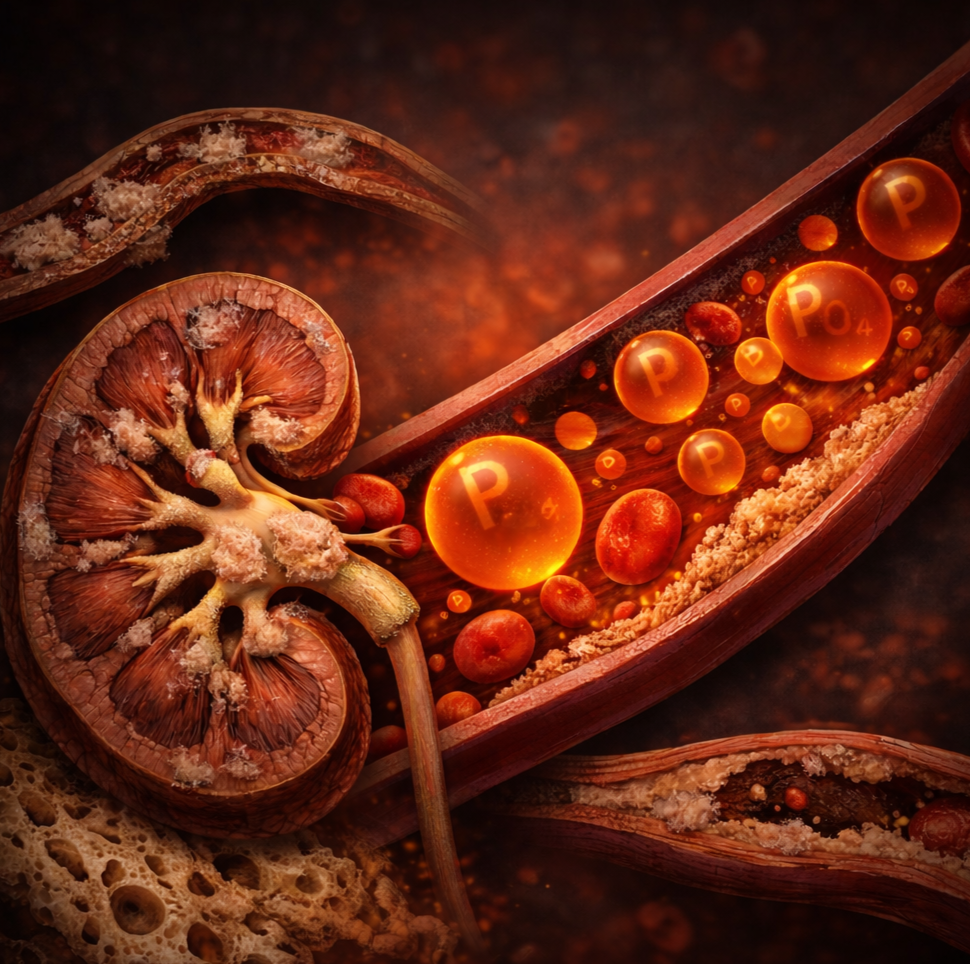
Oxylanthanum carbonate is an oral phosphate binder engineered to trap dietary phosphate in the gastrointestinal tract and prevent its absorption into the bloodstream. By reducing circulating phosphate levels, the therapy aims to lower the downstream risk of cardiovascular calcification, bone disease, and other complications linked to chronic phosphate overload.
OLC is designed to deliver: High phosphate-binding efficiency, A potentially lower pill burden compared with some existing binders, A non-calcium, non-iron composition, which may help avoid additional safety concerns sometimes seen with those classes
Hyperphosphatemia in CKD: clinical context
Hyperphosphatemia is a frequent complication in advanced CKD. Persistent elevation contributes to vascular calcification, bone and mineral disorders, secondary hyperparathyroidism, and increased cardiovascular risk. Dietary restriction alone is rarely sufficient, leading many dialysis patients to require long-term phosphate binders.
However, pill burden, gastrointestinal intolerance, and adherence challenges remain ongoing barriers to optimal phosphate control.
If approved, Oxylanthanum carbonate may offer nephrologists an additional option within the non-calcium, non-iron phosphate binder category. Its development is aimed primarily at dialysis care settings, where simplifying pill schedules may help support treatment persistence in some patients.
Unicycive continues ongoing dialogue with the FDA based on prior Type A meeting guidance and is preparing operational plans pending the outcome of the review.
The resubmission of the Oxylanthanum carbonate NDA represents the next regulatory step following manufacturing-related feedback that delayed the original application. With updated manufacturing documentation and supporting clinical data now under evaluation, the FDA will determine whether OLC can proceed toward approval for managing hyperphosphatemia in patients with CKD on dialysis.
References
Unicycive Therapeutics Announces Resubmission of New Drug Application (NDA) for Oxylanthanum Carbonate (OLC), 29 December 2025, https://ir.unicycive.com/news/detail/116/unicycive-therapeutics-announces-resubmission-of-new-drug?_gl=1*17xakw5*_gcl_au*NDA2NTIwNTcyLjE3NjcxMDEzOTU
A Study to Assess the Tolerability of Oxylanthanum Carbonate in Patients with Chronic Kidney Disease on Dialysis, ClinicalTrials.gov ID NCT06218290, https://www.clinicaltrials.gov/study/NCT06218290
Unicycive Therapeutics Announces Receipt of Complete Response Letter for Oxylanthanum Carbonate for the Treatment of Hyperphosphatemia in Patients with Chronic Kidney Disease on Dialysis, 30 June 2025, https://ir.unicycive.com/news/detail/104/unicycive-therapeutics-announces-receipt-of-complete
Sprague SM, Reddy G, Jermasek D, Gupta P. High Phosphate-Binding Capacity of Oxylanthanum Carbonate with a Low Medication Volume: Comparison with Commercially Available Phosphate Binders. Am J Nephrol. 2023;54(5-6):219-223. doi: 10.1159/000530989. Epub 2023 Jun 27. PMID: 37231835; PMCID: PMC10614253.
Unicycive Therapeutics Announces the Publication of Oxylanthanum Carbonate Pivotal Trial Data in Clinical Journal of the American Society of Nephrology, 24 July 2025, https://ir.unicycive.com/news/detail/107/unicycive-therapeutics-announces-the-publication-of