
Written By: Pharmacally Medical News Desk
Otsuka Pharmaceutical submitted a New Drug Application (NDA) to the U.S. FDA on November 25, 2025, for Centanafadine extended-release capsules, targeting attention-deficit hyperactivity disorder (ADHD) across children, adolescents, and adults. This first-in-class norepinephrine, dopamine, and serotonin reuptake inhibitor (NDSRI) seeks to offer a non-stimulant option with a low abuse potential, backed by four pivotal Phase 3 trials showing significant symptom reductions.
Phase 3 Trial Designs
Four randomized, double-blind, placebo-controlled Phase 3 studies evaluated centanafadine’s efficacy and safety. The pediatric trial (NCT05428033) in children aged 4-12 used weight-based high doses, low doses or placebo over 6 weeks, measuring ADHD-RS-5 total score changes.
The pivotal Phase 3 trial in adolescents (NCT05257265) was a randomized, double-blind, placebo-controlled, three-arm, fixed-dose study evaluating the efficacy, safety, and tolerability of once-daily Centanafadine extended-release (XR) capsules at 164.4 mg (low dose) or 328.8 mg (high dose) versus placebo in participants aged 13-17 years with ADHD over a 6-week treatment period.
The two pivotal Phase 3 trials in adults (NCT03605680 and NCT03605836) were randomized, double-blind, placebo-controlled studies designed to assess the efficacy, safety, and tolerability of Centanafadine sustained-release (SR) tablets in adults aged 18 to 55 years with ADHD. Participants received oral doses of Centanafadine SR at either 200 mg/day or 400 mg/day, or placebo, administered twice daily over a 6-week treatment period.
Across four pivotal Phase 3 trials Centanafadine demonstrated statistically significant and clinically meaningful improvements in core ADHD symptoms of inattention, hyperactivity, and impulsivity compared to placebo, as measured by ADHD-RS-5 total scores in pediatric/adolescent studies and AISRS total scores in adult studies at Week 6.
High-dose regimens consistently met primary endpoints: in children aged 4-12 (weight-based high dose), adolescents aged 13-17 (328.8 mg/day), and adults aged 18-55 (200 mg/day and 400 mg/day in both trials), with early symptom reductions sustained through 6 weeks. Low-dose arms showed mixed efficacy, achieving significance in some adult and adolescent studies but not the pediatric trial.
Centanafadine exhibited a favorable safety profile with low abuse/dependence potential from preclinical and clinical data. Common adverse events in children/adolescents included decreased appetite, nausea, rash, fatigue, abdominal pain, somnolence, and vomiting; adults primarily reported decreased appetite and headache. No new safety signals emerged across trials.
John Kraus, M.D., Ph.D., executive vice president and chief medical officer of Otsuka Pharmaceutical Development & Commercialization, Inc., stated: “As mental health innovators, we’re advancing Centanafadine a first-in-class ADHD therapy to offer new options for patients. If approved, it could broaden treatments for this complex condition; we thank trial participants.”
About Centanafadine
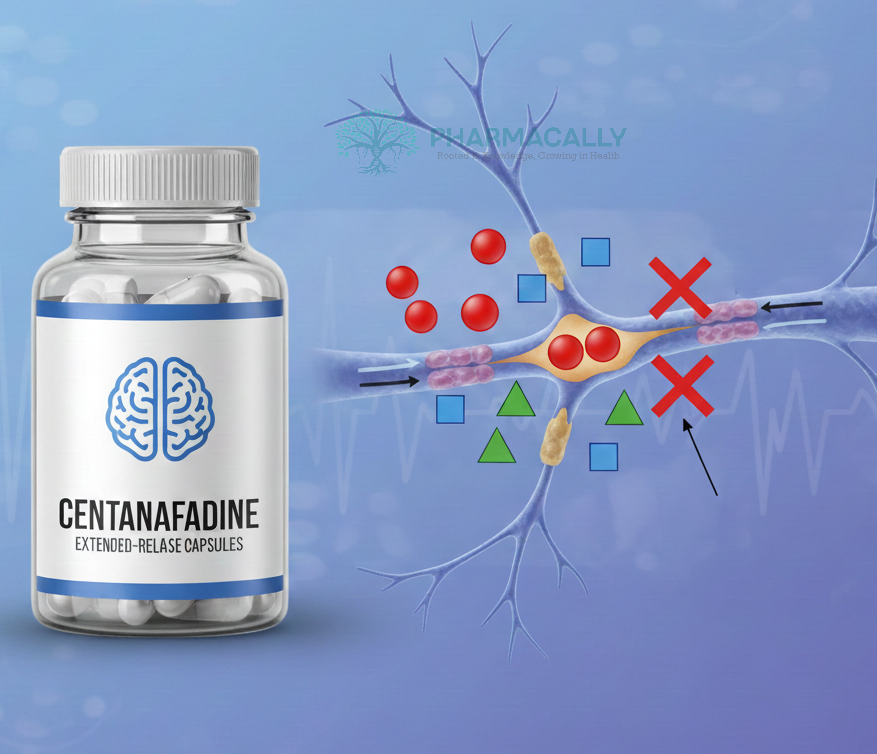
Centanafadine belongs to the norepinephrine, dopamine, and serotonin reuptake inhibitor (NDSRI) class, inhibiting reuptake of norepinephrine, dopamine, and serotonin to increase their synaptic availability in brain regions regulating attention, impulse control, and executive function. Unlike stimulants like methylphenidate (which primarily boost dopamine/norepinephrine release), centanafadine’s balanced triple action offers efficacy with lower abuse potential, as preclinical data show minimal reinforcing effects. This mechanism addresses ADHD’s neurochemical imbalances without cardiovascular risks associated with amphetamines.
ADHD
ADHD (Attention-Deficit/Hyperactivity Disorder) is a chronic neurodevelopmental disorder marked by persistent inattention, hyperactivity, and impulsivity that impair daily functioning; approximately 84 million people worldwide are diagnosed with ADHD, many of whom continue to experience symptoms into adulthood. persist into adulthood for many, and include trouble focusing, fidgeting, interrupting, disorganization, and poor time management across settings like school or work. While stimulants dominate treatment, unmet needs persist for non-abuse-prone options amid high comorbidity with anxiety, sleep issues, and executive dysfunction.
References
Otsuka Pharmaceutical Submits New Drug Application to U.S. FDA for Centanafadine for the Treatment of ADHD in Children, Adolescents, and Adults, Otsuka, 25 November 2025, https://www.otsuka.co.jp/en/company/newsreleases/2025/20251125_1.html
Caroline L et al, Efficacy and Safety of Centanafadine for ADHD Treatment in Children: A Randomized Clinical Trial. Pediatrics Open Science September 2025; 1 (3): 1–11. https://doi.org/10.1542/pedsos.2024-000349
Ward, Caroline L. et al., Centanafadine for Attention-Deficit/Hyperactivity Disorder in Adolescents: A Randomized Clinical Trial, Journal of the American Academy of Child & Adolescent Psychiatry, DOI: 10.1016/j.jaac.2025.06.023
Adler, Lenard A., et al. “Efficacy, safety, and tolerability of Centanafadine sustained-release tablets in adults with attention-deficit/hyperactivity disorder, ” Journal of Clinical Psychopharmacology, vol. 42, no. 5, 2 June 2022, pp. 429-439, https://doi.org/10.1097/jcp.0000000000001575.
Ayano G et al, The global prevalence of attention deficit hyperactivity disorder in children and adolescents: An umbrella review of meta-analyses. J Affect Disord. 2023 Oct 15;339:860-866. Doi: 10.1016/j.jad.2023.07.071. Epub 2023 Jul 24. PMID: 37495084.
A Trial of Centanafadine Efficacy and Safety in Children With Attention-deficit/ Hyperactivity Disorder (ADHD), ClinicalTrials.gov ID NCT05428033, https://clinicaltrials.gov/study/NCT05428033
A Trial of Centanafadine Efficacy and Safety in Adolescents With Attention- Deficit/Hyperactivity Disorder, ClinicalTrials.gov ID NCT05257265, https://clinicaltrials.gov/study/NCT05257265
A Trial Evaluating the Efficacy, Safety, & Tolerability of Centanafadine Sustained-release Tablets in Adults with Attention-deficit/Hyperactivity Disorder, ClinicalTrials.gov ID NCT03605680, https://clinicaltrials.gov/study/NCT03605680
A Trial to Evaluate the Efficacy, Safety, and Tolerability of Centanafadine Sustained-release Tablets in Adults with Attention-deficit/Hyperactivity Disorder, ClinicalTrials.gov ID NCT03605836, https://clinicaltrials.gov/study/NCT03605836