
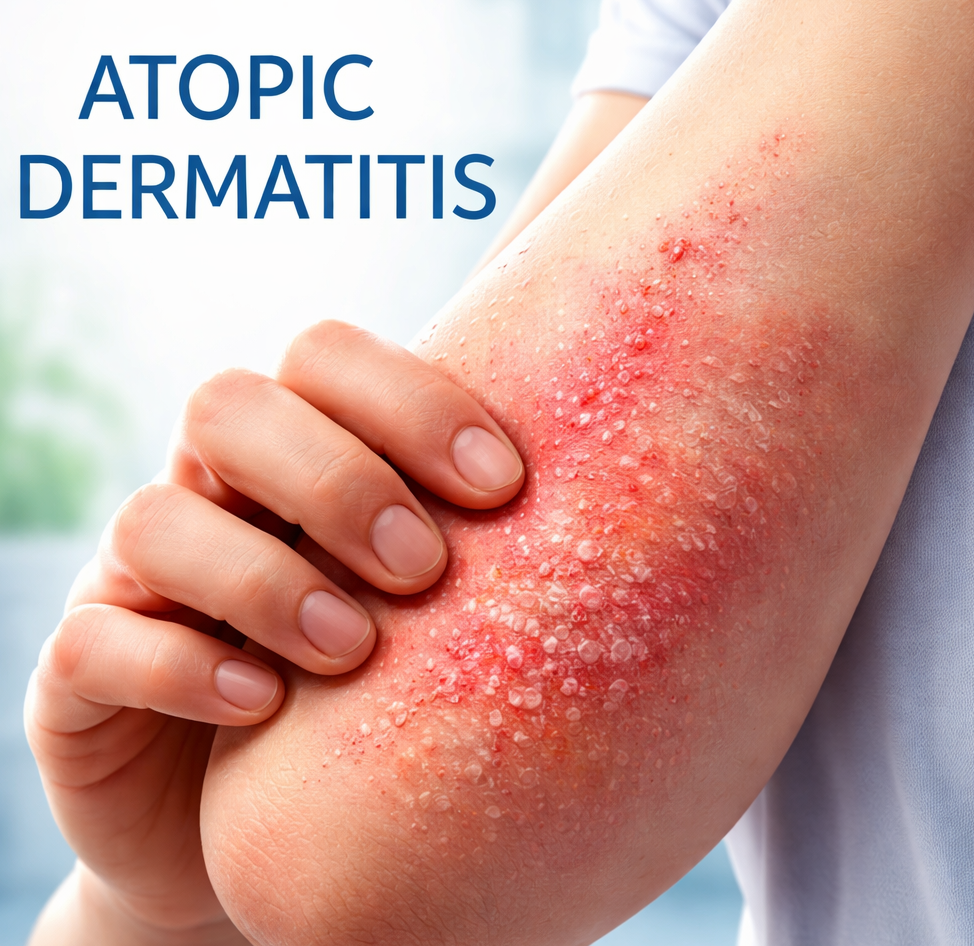
Sanofi reported new Phase 3 results for amlitelimab in moderate-to-severe atopic dermatitis, with SHORE meeting all endpoints, COAST 2 showing significant efficacy in US analysis, and global regulatory submissions planned for 2026
Written By: Pharmacally Medical News Desk
Sanofi has reported new late-stage clinical results for amlitelimab, an investigational monoclonal antibody targeting OX40-ligand (OX40L), in adolescents and adults aged 12 years and older with moderate-to-severe atopic dermatitis (AD). Following the previously positive COAST 1 study (NCT06130566), two additional global Phase 3 trials, SHORE and COAST 2, delivered further evidence supporting amlitelimab’s potential as a novel immune-modulating therapy designed to normalize inflammation over time without depleting T cells. Based on the totality of data across the program, Sanofi confirmed it will move forward with global regulatory submissions.
Clinical evidence: SHORE Phase 3
The SHORE trial (NCT06224348) was a randomized, double-blind, placebo-controlled Phase 3 study enrolling 596 participants aged 12 years and older with moderate-to-severe AD. The study evaluated amlitelimab given at 250 mg (or 125 mg for patients weighing <40 kg) either every four weeks (Q4W) or every twelve weeks (Q12W), following a loading dose, in combination with background medium-potency topical corticosteroids (TCS) with or without topical calcineurin inhibitors.
At Week 24, SHORE met all primary and key secondary endpoints across both US and EU estimands. Amlitelimab significantly increased the proportion of patients achieving vIGA-AD 0/1 (clear or almost clear skin) and those reaching EASI-75, compared with placebo plus topical therapy. Sanofi noted that efficacy continued to increase throughout treatment, with some patients demonstrating improvement as early as Week 2.
Clinical evidence: COAST 2 Phase 3
The COAST 2 study (NCT06181435) was a global, randomized, double-blind, placebo-controlled Phase 3 trial involving 547 adults and adolescents with moderate-to-severe AD. Unlike SHORE, COAST 2 evaluated amlitelimab as monotherapy, dosed Q4W or Q12W after a loading dose.
At Week 24, amlitelimab met the single primary endpoint of vIGA-AD 0/1 in the US and US reference countries, confirming statistically significant improvement compared with placebo and supporting the potential for Q12W dosing from the start. However, amlitelimab did not achieve statistical significance for the co-primary endpoints as assessed in the EU and EU reference countries, and therefore additional secondary endpoint p-values were considered nominal under hierarchical statistical testing procedures.
Safety profile
Across both SHORE and COAST 2, amlitelimab was generally well tolerated, with a safety profile consistent with prior reports. The most common treatment-emergent adverse events included nasopharyngitis, upper respiratory tract infection, and dermatitis flares. Rates of serious adverse events and treatment discontinuation were similar between amlitelimab and placebo groups, and no major new safety signals were identified in these Phase 3 trials.
Longer-term support: ATLANTIS Phase 2
Sanofi also highlighted preliminary findings from the ongoing open-label ATLANTIS Phase 2 study (NCT05769777), which enrolled 591 patients in this Week 52 analysis. Patients receiving amlitelimab Q4W continued to demonstrate progressive improvements in skin clearance and disease severity beyond Week 24, with no evidence of plateau. The study further supports OX40L as an important emerging mechanism in AD. Serious adverse events and discontinuations remained low, although one case of cutaneous Kaposi’s sarcoma was reported in a patient with known risk factors.
Houman Ashrafian, Executive Vice President and Head of R&D at Sanofi, emphasized that the findings validate amlitelimab’s mechanism of selectively blocking OX40L signaling without depleting T cells. He noted that results reinforce confidence in the therapy’s ability to deliver progressive efficacy and enable Q12W dosing from initiation, potentially offering a differentiated option for long-term disease control.
Regulatory outlook and future studies
Amlitelimab is still in clinical development and has not yet been evaluated or approved by any regulatory authority worldwide. Sanofi plans to present full results from SHORE, COAST 2, COAST 1, and ATLANTIS at upcoming medical congresses. Two additional Phase 3 trials, AQUA (NCT06241118) and ESTUARY (NCT06407934), are expected to report results in the second half of 2026. Global regulatory submissions remain on track for H2 2026, positioning amlitelimab as a potential new long-interval biologic therapy for moderate-to-severe atopic dermatitis.
References
Press Release: Sanofi’s amlitelimab confirms its potential in atopic dermatitis, 23 January 2026, Press Release: Sanofi’s amlitelimab confirms its potential in atopic dermatitis
A Study to Evaluate the Efficacy and Safety of Subcutaneous Amlitelimab Monotherapy Compared with Placebo in Participants Aged 12 Years and Older with Moderate-to-severe Atopic Dermatitis (COAST 1), ClinicalTrials.gov ID NCT06130566, https://www.clinicaltrials.gov/study/NCT06130566
A Study to Evaluate the Efficacy and Safety of Subcutaneous Amlitelimab in Participants Aged 12 Years and Older with Moderate-to-severe Atopic Dermatitis on Background Topical Corticosteroids (SHORE), 23 January 2026, Press Release: Sanofi’s amlitelimab confirms its potential in atopic dermatitis
A Study to Evaluate the Efficacy and Safety of Subcutaneous Amlitelimab Monotherapy Compared with Placebo in Participants Aged 12 Years and Older with Moderate-to-severe Atopic Dermatitis (COAST 2), ClinicalTrials.gov ID NCT06181435, https://clinicaltrials.gov/study/NCT06181435
Open Label, Long-term Study Evaluating Safety and Efficacy of Subcutaneous Amlitelimab in Participants Aged 12 Years and Older with Moderate to Severe Atopic Dermatitis (ATLANTIS), ClinicalTrials.gov ID NCT05769777, https://clinicaltrials.gov/study/NCT05769777