
Written By: Pharmacally Medical News Desk
Novartis recently announced new, late-breaking phase III data on Ianalumab from the NEPTUNUS-1 and NEPTUNUS-2 trials during the American College of Rheumatology (ACR) Convergence congress. Ianalumab, an investigational monoclonal antibody, demonstrated clinically meaningful benefits by significantly reducing disease activity and patient burden in Sjögren’s disease, the second most prevalent rheumatic autoimmune disease globally. The trials mark a milestone as the first replicated phase III studies showing significant improvement in disease activity for Sjögren’s disease, paving the way for ianalumab to potentially become the first targeted treatment for this chronic systemic autoimmune condition.
Clinical Trial Evidence: NEPTUNUS-1 and NEPTUNUS-2
The NEPTUNUS-1 (NCT05350072) and NEPTUNUS-2 (NCT05985915) phase III trials were global, multicenter, randomized, double-blind studies designed to evaluate the efficacy, safety, and tolerability of ianalumab in adults with active Sjögren’s disease. NEPTUNUS-1 involved 275 patients randomized into two arms receiving either 300 mg of subcutaneous ianalumab monthly or placebo for 52 weeks, while NEPTUNUS-2 enrolled 504 patients randomized into three arms to receive 300 mg ianalumab either monthly, every three months, or placebo over the same duration. The primary endpoint in both studies was the change from baseline in systemic disease activity measured by the EULAR Sjögren’s Syndrome Disease Activity Index (ESSDAI) at Week 48, complemented by secondary endpoints including patient and physician global assessments and symptom evaluations such as dryness and fatigue.
Both trials successfully met the primary endpoint, with ianalumab 300 mg monthly demonstrating statistically significant and clinically meaningful reductions in ESSDAI scores compared to placebo. In NEPTUNUS-1, the improvement was a 6.4-point reduction versus 5.1 points in placebo, and in NEPTUNUS-2, a 6.5-point improvement against 5.5 points on placebo, sustained through Week 52. Secondary endpoints like Patient’s Global Assessment and Physician’s Global Assessment also showed nominal statistical significance in NEPTUNUS-1 and favorable trends in NEPTUNUS-2, indicating symptomatic relief beyond disease activity improvement. The safety profile was favorable in both trials, with adverse event rates comparable between ianalumab and placebo arms, reinforcing its potential as a well-tolerated targeted therapy for Sjögren’s disease.
Safety Profile
Ianalumab was well tolerated with a favorable safety profile comparable to placebo in both trials. Adverse events were similar across treatment arms, with injection-site reactions being the most notable. There were some cases of decreased neutrophil counts observed during post-treatment, but infections associated with these cases were minimal and non-severe. Overall, the safety data reinforce the positive benefit-risk profile of ianalumab in treating Sjögren’s disease.
About Ianalumab
Ianalumab (VAY736) is a fully human monoclonal antibody with a dual mechanism of action targeting B cells by inducing depletion through antibody-dependent cellular cytotoxicity (ADCC) and inhibiting B cell activating factor receptor (BAFF-R) signaling critical for B cell function and survival. It is being investigated for B cell-driven autoimmune diseases including Sjögren’s disease, immune thrombocytopenia, systemic lupus erythematosus, lupus nephritis, autoimmune hemolytic anemia, and systemic sclerosis. Ianalumab originated from collaboration with MorphoSys AG, which Novartis acquired in 2024.
About Sjögren’s Disease
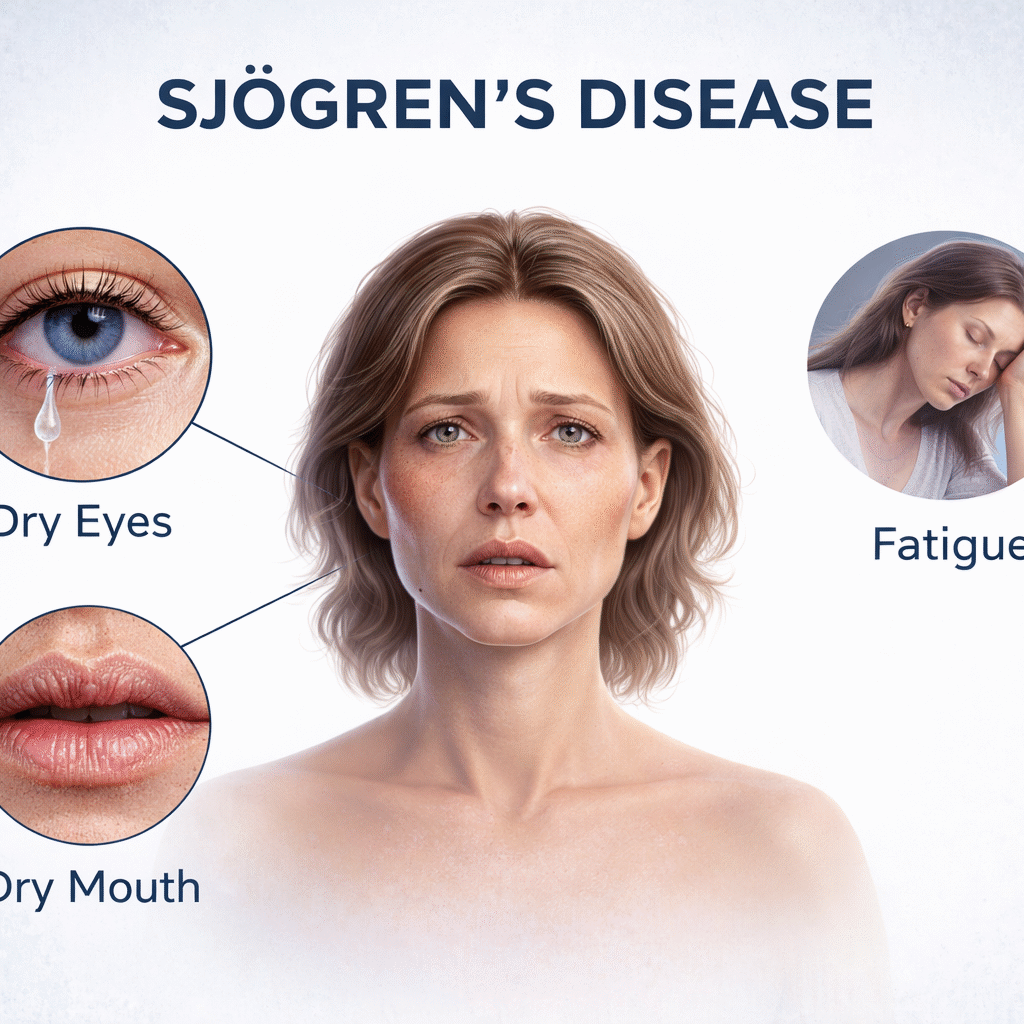
Sjögren’s disease is a systemic autoimmune disorder characterized by lymphocytic infiltration of exocrine glands, leading to symptoms such as dryness of eyes and mouth, debilitating fatigue, joint pain, and an increased risk of lymphoma. It is the second most common rheumatic autoimmune disease and has a significant impact on quality of life with limited effective treatment options to date.
Key Opinions
Professor Xavier Mariette, Head of Department of Immuno-Rheumatology, Bicêtre Hospital, Assistance Publique – Hôpitaux de Paris, expressed that the NEPTUNUS trials are the first phase III studies to demonstrate significant improvements in disease activity, highlighting ianalumab’s potential to offer meaningful clinical benefit to patients suffering from Sjögren’s disease. Shreeram Aradhye, M.D., President of Development and Chief Medical Officer at Novartis, emphasized the need for effective treatments in this debilitating condition and called the trials a significant milestone toward addressing it.
Public Health Implications
If approved, ianalumab could become the first targeted therapy specifically approved for Sjögren’s disease, representing a breakthrough for millions of patients worldwide. Its demonstrated efficacy in reducing disease activity and symptom burden may improve patient quality of life, reduce complications such as lymphoma risk, and alleviate the substantial healthcare burden posed by this systemic autoimmune disease. Novartis plans to submit regulatory applications globally in early 2026, following this promising late-stage clinical success.
References
Novartis ianalumab first drug to reduce disease activity and patient burden in Sjögren’s disease Phase III trials, 29 October 2025, Novartis, https://www.novartis.com/news/media-releases/novartis-ianalumab-first-drug-reduce-disease-activity-and-patient-burden-sjogrens-disease-phase-iii-trials
Two-arm Study to Assess Efficacy and Safety of Ianalumab (VAY736) in Patients with Active Sjogren’s Syndrome (NEPTUNUS-1), ClinicalTrials.gov ID NCT05350072, https://clinicaltrials.gov/study/NCT05350072
Abstract Number: LB24: Ianalumab demonstrates significant reduction in disease activity in patients with Sjögren’s disease: Efficacy and safety results from two global Phase 3, randomized, placebo-controlled double-blind studies (NEPTUNUS-1 and NEPTUNUS-2), American College of Rheumatology, https://acrabstracts.org/abstract/ianalumab-demonstrates-significant-reduction-in-disease-activity-in-patients-with-sjogrens-disease-efficacy-and-safety-results-from-two-global-phase-3-randomized-placebo-controlled-double-blind-s/
A Randomized, Double-blind 2-arm NEPTUNUS Extension Study to Assess the Long-term Safety and Efficacy of Ianalumab in Patients With Sjogrens Syndrome. (NEPTUNUS-Ext), ClinicalTrials.gov ID NCT05985915, https://clinicaltrials.gov/study/NCT05985915