
A detailed look at nimesulide in India, from its widespread use to mounting safety concerns, regulatory scrutiny, and the final ban on high-dose formulations.
Written By: Vikas Londhe,
MPharm-Pharmacology,
Chief Editor
Early Promise and Rapid Uptake
Nimesulide entered the Indian pharmaceutical landscape in the early 1990s and was quickly adopted as a non-steroidal anti-inflammatory drug (NSAID) for pain and inflammation. Doctors valued it for its relatively fast onset of analgesic and antipyretic action compared with some older NSAIDs, and it was prescribed for musculoskeletal pain, dysmenorrhea, and fever. Over time, it was incorporated into combination products, which increased its visibility and availability across pharmacies and households in India. However, as usage expanded, early warning signals began emerging from clinical practice and post-marketing surveillance. Reports of serious adverse effects, particularly hepatotoxicity, gradually brought the drug under closer scrutiny from researchers, clinicians, and regulators.
Safety Signals Emerge
Concerns about Nimesulide’s safety soon moved beyond isolated case descriptions. Scientific publications and pharmacovigilance databases documented multiple cases of acute liver injury, ranging from mild elevations in liver enzymes to fulminant hepatic failure and death. Analyses comparing adverse drug reaction reports suggested a disproportionately higher rate of hepatic events with Nimesulide compared with several other NSAIDs, signaling a distinct safety risk. Importantly, many of these events developed after short treatment durations, indicating a possible idiosyncratic mechanism that was unpredictable and sometimes very rapid in onset.
In India, one of the earliest strong academic appeals for regulatory attention emerged in the early 2000s. A 2003 correspondence published in the BMJ urged that the use of Nimesulide in Indian children should be stopped, citing life-threatening hepatotoxic reactions and the drug’s lack of approval in several major markets. The editorial also highlighted that the drug was not approved in the United States and had restrictions in several European countries. The authors emphasized that safer alternatives such as paracetamol offered comparable efficacy for fever and pain, particularly in pediatric patients, making the widespread use of Nimesulide in children scientifically unjustified.
Indian case reports added further weight to these concerns. One report described a child who developed both liver and kidney toxicity after only several days of treatment with Nimesulide. Laboratory investigations confirmed significant hepatocellular injury, which gradually resolved after the drug was discontinued. These clinical observations illustrated how serious harm could arise during ordinary therapeutic use, especially when the medicine was obtained or taken without appropriate medical supervision.
Phased Regulatory Response
Despite growing signals, regulatory authorities acted gradually. In 2011, the Government of India imposed its first major restriction by banning the use of Nimesulide formulations in children below 12 years of age. This measure was taken after reviews suggested that children were particularly vulnerable to hepatic injury and that pediatric formulations were being used indiscriminately. The decision represented an early regulatory acknowledgment that Nimesulide carried meaningful risk, yet adult prescriptions were still permitted, and the drug remained widely available.
Environmental Fallout: Vulture Link
The debate surrounding Nimesulide eventually extended beyond human health. In late 2024, the Indian government banned all veterinary formulations of Nimesulide following evidence that vultures feeding on carcasses of treated livestock developed fatal kidney failure. Research indicated that NSAIDs such as Nimesulide contributed to sharp vulture population declines, similar to earlier experiences with diclofenac. This move indicated that the consequences of drug use could extend across ecosystems, reinforcing the importance of evaluating ecological as well as human safety.
Global Status Mixed
Globally, regulatory responses to Nimesulide have varied. In the United States, the drug was never approved by the Food and Drug Administration, largely due to ongoing concerns about liver toxicity, and therefore it remains unavailable. In Europe, the European Medicines Agency reviewed safety data and imposed restrictions in some regions, including dose limitations, strengthened warnings, and, in a few countries, complete withdrawal. These international developments occurred well before India’s more recent policy actions and reflected longstanding caution within global regulatory frameworks.
In India, however, the regulatory process remained cautious and incremental. Instead of pursuing early withdrawal, authorities preferred age-specific and situational restrictions while further data accumulated. This approach attracted criticism, particularly because the pharmaceutical market already contained numerous safer alternatives such as paracetamol, ibuprofen, and naproxen. Despite an abundance of effective options, Nimesulide continued to be prescribed, raising questions about clinical inertia and policy hesitancy. Critics argued that delayed decision-making may have exposed patients to preventable risk and highlighted shortcomings in translating pharmacovigilance signals into firm regulatory action.
Recent High-Dose Ban
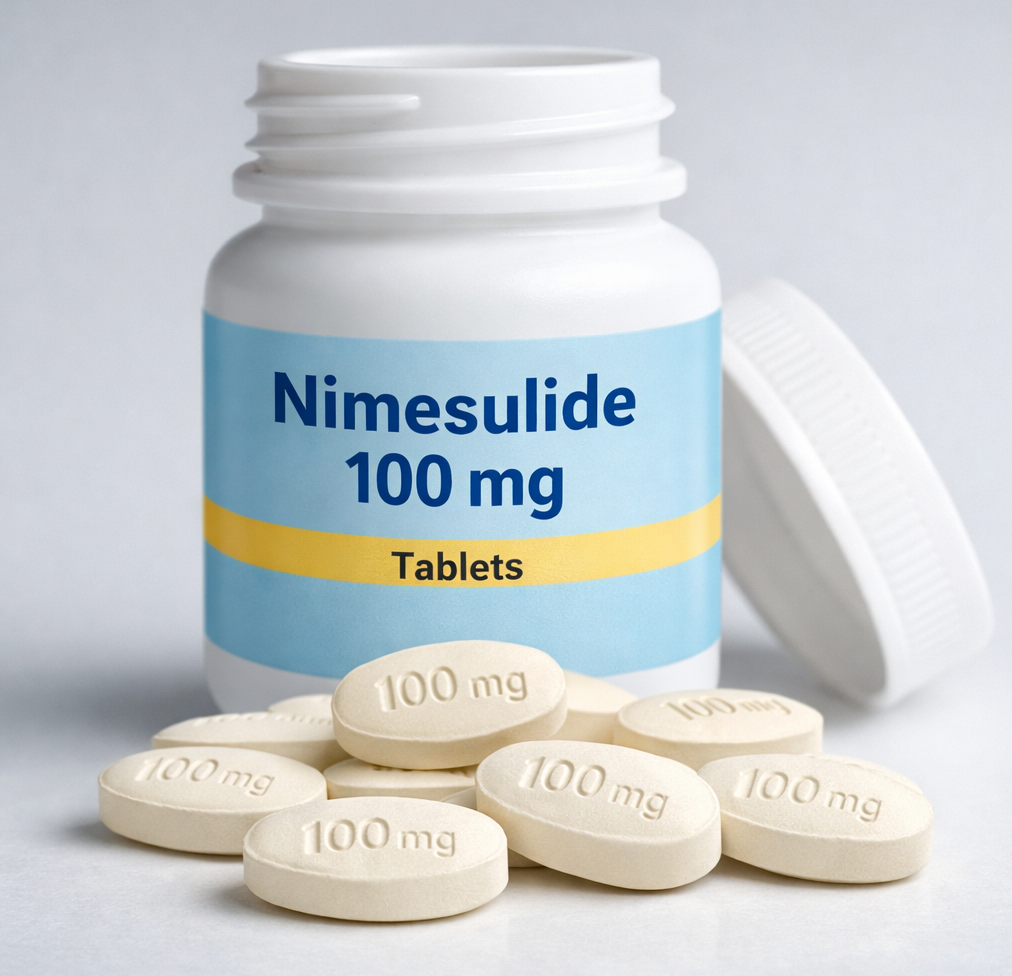
A major turning point occurred with the notification prohibiting the manufacture, sale, and distribution of oral immediate-release formulations of Nimesulide containing more than 100 mg for human use. The ban was justified on the grounds of unacceptable health risk and the presence of safer alternatives. However, the decision also revealed ongoing caution. The notification applied only to higher-dose formulations and did not clearly state the intended regulatory position for products containing less than 100 mg dose. As a result, uncertainty remains regarding whether low-dose preparations will eventually face reassessment or further restriction, suggesting that regulators preferred a phased approach rather than a sweeping, universal prohibition.
The evolution of Nimesulide in India from a widely used pain medicine to a drug with significant regulatory constraints highlights how medical knowledge evolves over time. It reflects the dynamic relationship between clinical practice, emerging safety data, and policy action. The narrative underscores the importance of strong post-marketing surveillance, timely evaluation of benefit–risk profiles, and transparent decision-making processes designed to protect patient safety. As regulatory science continues to advance, Nimesulide stands as a case study showing how accumulated real-world evidence can reshape the therapeutic standing of a familiar medicine.
The prolonged debate surrounding Nimesulide also illustrates a broader lesson. Drugs that appear effective in daily practice may still carry rare but severe risks that only become apparent through long-term observation. India’s restrictions represent a growing shift toward prioritizing patient safety, even when a drug is popular and deeply embedded in prescribing habits. For patients, this serves as a reminder that self-medication is never entirely benign, and that repeated or long-term use of painkillers should always be discussed with a clinician. For healthcare systems, the history of Nimesulide emphasizes vigilance, open communication, and readiness to act when evolving evidence demands reevaluation.
References
Kwon J, Kim S, Yoo H, Lee E. Nimesulide-induced hepatotoxicity: A systematic review and meta-analysis. PLoS One. 2019 Jan 24;14(1):e0209264. Doi: 10.1371/journal.pone.0209264. PMID: 30677025; PMCID: PMC6345488.
Tiwaskar M, Charde S, Balankhe N, et al. Nimesulide: Critical Appraisal of Safety and Efficacy in Acute Pain. J Assoc Physicians India 2025;73(3): e22–e28.
Saha K. Use of nimesulide in Indian children must be stopped. BMJ. 2003 Mar 29;326(7391):713. Doi: 10.1136/bmj.326.7391.713. PMID: 12663421; PMCID: PMC1125612.
Gupta G et al, A Case of Nimesulide toxicity in an Indian Child, Indian Journal of Pharmacy Practice Volume 5 Issue 2 Apr – Jun, 2012
Ferreiro C, Vivas S, Jorquera F, et al, Toxic hepatitis caused by nimesulide, presentation of a new case and review of the literature. Gastroenterologia y Hepatologia. 2000 Nov;23(9):428-430. PMID: 11126038.
Tan HH et al, Nimesulide-induced hepatotoxicity and fatal hepatic failure, Singapore Med J 2007; 48(6) : 582
Walker SL, Kennedy F, Niamh N, McCormick PA. Nimesulide associated fulminant hepatic failure. Pharmacoepidemiol Drug Saf. 2008 Nov;17(11):1108-12. Doi: 10.1002/pds.1665. PMID: 18821716.
Banned Medicines, Press Information Bureau, Government of India, Ministry of Family and Health Welfare, https://www.pib.gov.in/newsite/PrintRelease.aspx?relid=70841®=3&lang=2
India Imposes National Ban on Nimesulide for Veterinary Use Due to Toxicity Risks, 08 Jan 2025, https://vaayath.com/india-bans-nimesulide-veterinary-use-toxicity-vultures/
Nimesulide Regulatory Status Worldwide, https://medicinman.net/2025/05/nimesulide-nice-or-not-nise/
Nimesulide – referral, European Medicine Agency, https://www.ema.europa.eu/en/medicines/human/referrals/nimesulide
DTAB backs ICMR recommendations on use of nimesulide in adults, suggests further review, 09 May 2025, https://www.pharmabiz.com/NewsDetails.aspx?aid=177771&sid=1&
Nimesulide ban, Government of India Notification, Official Gazette of India, 29 December 2025,https://cdsco.gov.in/opencms/opencms/system/modules/CDSCO.WEB/elements/download_file_division.jsp?num_id=MTM3NTA=
Govt bans manufacturing, sale and distribution of oral drug Nimesulide above 100 mg, Akashvani News, 31 December 2025, https://www.newsonair.gov.in/govt-bans-manufacturing-sale-and-distribution-of-oral-drug-nimesulide-above-100-mg