
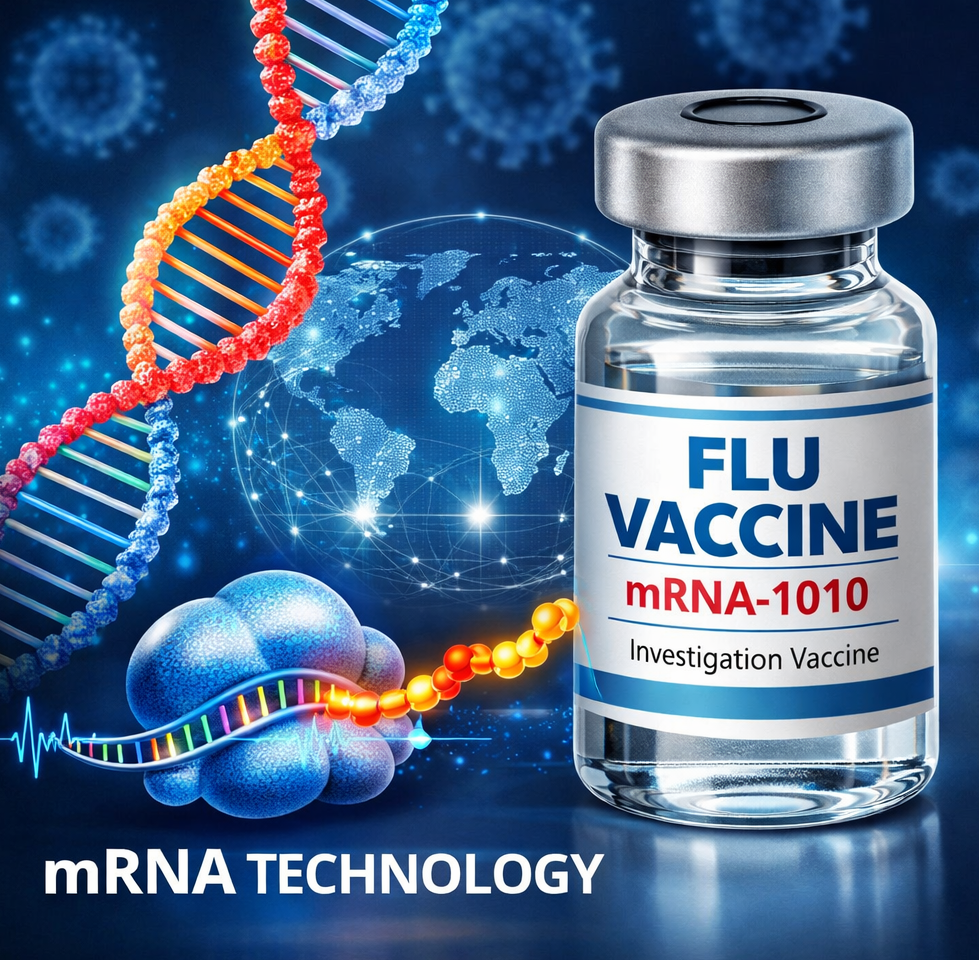
Moderna has submitted global regulatory applications for its investigational mRNA-1010 seasonal flu vaccine to the FDA, EMA, Health Canada, and TGA, supported by Phase 3 data in older adults.
Written By: Pharmacally Medical News Desk
Moderna has submitted regulatory applications for its investigational seasonal influenza vaccine, mRNA-1010, to major health authorities across the United States, Europe, Canada, and Australia. Adults aged 50 years and older move closer to potential global access as these filings advance through regulators.
What Moderna Filed and Where
On January 5, 2026, Moderna announced that it has filed for marketing authorization with the following regulatory agencies:
- U.S. Food and Drug Administration (FDA)
- European Medicines Agency (EMA)
- Health Canada
- Therapeutic Goods Administration (TGA) in Australia
The applications are based on data from late-stage clinical studies showing that mRNA-1010 met predefined efficacy and immune response criteria against seasonal influenza strains in adults aged 50 and older.
Stéphane Bancel, CEO of Moderna says Moderna’s regulatory filings mark a key step for its flu portfolio. He explains that flu vaccine mismatch remains a big challenge when viruses mutate, and believes mRNA technology can adapt more quickly and better match circulating strains. If regulators approve the vaccine, he sees it as a meaningful global launch that could help public health while also supporting Moderna’s growth starting in 2027 and after.
The Vaccine Candidate: mRNA-1010
According to data published in The Journal of Infectious Diseases Moderna’s mRNA-1010 is designed as a quadrivalent seasonal influenza vaccine, meaning it targets four flu virus strains commonly included in annual flu vaccines. It uses the company’s mRNA platform, which has shown flexibility in responding to evolving respiratory viruses and was previously used in its COVID-19 vaccines.
The regulatory filings were supported by results from multiple Phase 3 trials:
In the P304 Phase 3 efficacy study, mRNA-1010 achieved the predefined superiority criterion relative to a licensed seasonal flu vaccine in adults aged 50 years and older. The vaccine showed a relative vaccine efficacy (rVE) of 26.6% in this age group.
- In participants aged 65 and older, the rVE was 27.4%.
- Earlier Phase 3 data from study P303 showed that mRNA-1010 induced higher seroconversion rates and geometric mean titer ratios (GMR) against all included strains compared with both high-dose and standard-dose licensed seasonal flu vaccines.
Safety data from these studies described the vaccine as well tolerated, with most solicited adverse reactions reported as mild, such as injection site pain, fatigue, headache, and muscle aches.
Background on Seasonal Flu Vaccines
Seasonal influenza vaccines are reformulated each year to match current circulating strains and are recommended especially for older adults and those at higher risk of complications. Traditional flu vaccines are typically inactivated virus products produced in eggs or cell culture. Regulatory guidance from agencies like the FDA outlines the clinical and safety data needed to support approval of these vaccines, including evidence of immune response and effectiveness in target populations.
Reference
Moderna Announces Global Regulatory Submissions for Its Investigational Seasonal Influenza Vaccine, 05 January 2026, News Release
Ananworanich J et al, Safety and Immunogenicity of mRNA-1010, an Investigational Seasonal Influenza Vaccine, in Healthy Adults: Final Results from a Phase 1/2 Randomized Trial. J Infect Dis. 2025 Feb 4;231(1): e113-e122. Doi: 10.1093/infdis/jiae329. PMID: 38934845; PMCID: PMC11793046.
Clinical Data Needed to Support the Licensure of Seasonal Inactivated Influenza Vaccines, Guidance for Industry, CBER, US FDA, May 2007, https://www.fda.gov/files/vaccines%2C%20blood%20%26%20biologics/published/Guidance-for-Industry–Clinical-Data-Needed-to-Support-the-Licensure-of-Seasonal-Inactivated-Influenza-Vaccines.pdf