
Written By: Shreya Bendsure BPharm
Reviewed By: Rahul Gaikwad, MBBS, MD-Medicine
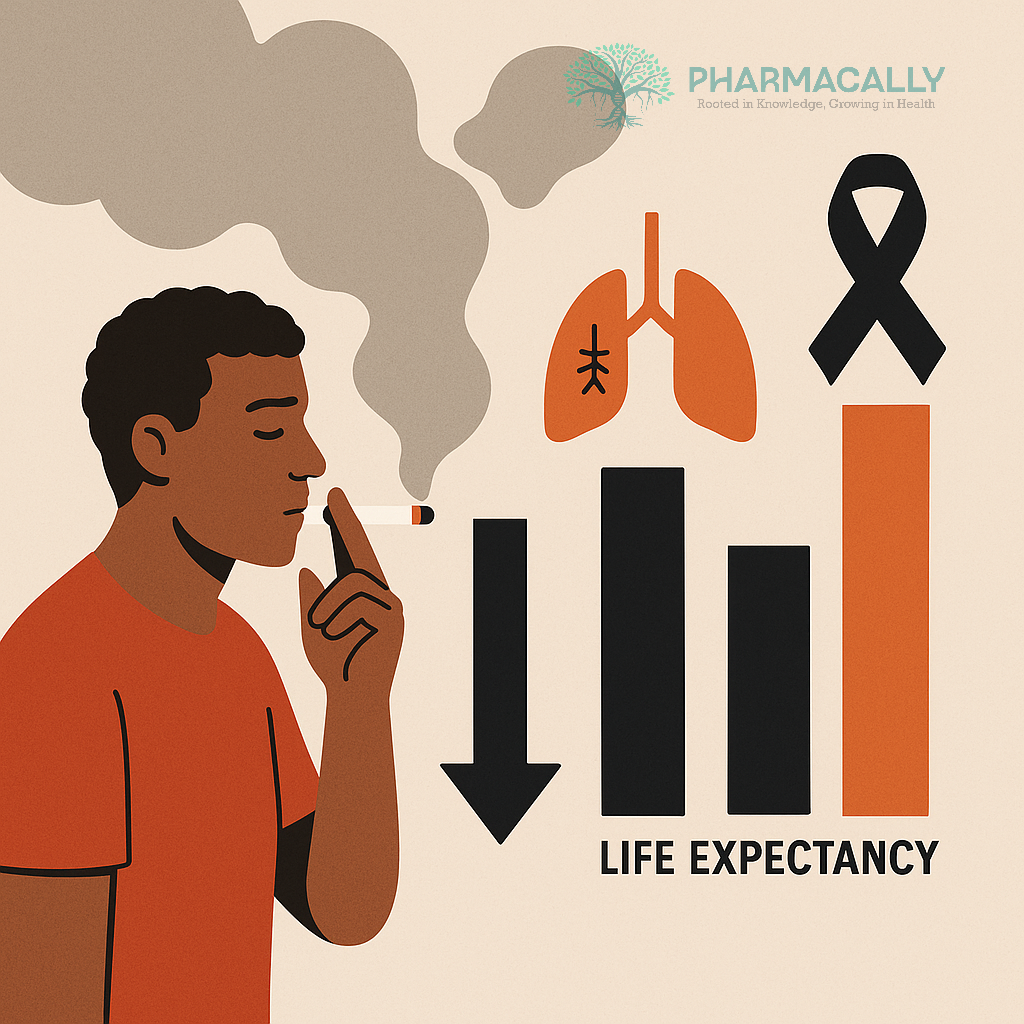
According to a recent study published in the New England Journal of Medicine (NEJM), tuberculosis (TB), HIV, and tobacco use are major causes of death worldwide. These three conditions often occur together in a harmful interaction called a syndemic, particularly affecting low- and middle-income countries. People living with TB or HIV use tobacco more frequently than the general public, which makes their infections worse, lowers adherence to treatment, and increases death rates. In fact, tobacco use causes more years of life lost among people with HIV than the virus itself.
How Tobacco Affects TB and HIV Outcomes
For people with TB, tobacco use raises the chance of active disease, worsens symptoms, lowers treatment success, and increases mortality. Among those with HIV, tobacco accelerates disease progression and raises the risk of other complications and death. Although many patients and clinicians know tobacco is harmful but very few understand how much it adds to the risks of TB and HIV. Tobacco use also worsens poverty by diverting household money to buy tobacco instead of essentials like food and housing.
Integrating Tobacco Cessation with HIV and TB Care
Helping HIV and TB patients quit tobacco has been recognized as important for over 100 years but remains underused. Effective tobacco treatment needs to be adapted to local conditions what works in one city or country may not in another. Key steps for successful programs include longer, repeated counseling sessions combined with medications; involving all healthcare staff; and providing nonjudgmental support sensitive to stigma faced by people with TB, HIV, and tobacco use.
Barriers and Attitudes toward Quitting Tobacco
Most people who use tobacco want to quit, but many don’t know the extra harm tobacco causes when living with TB or HIV. People are more likely to pay attention to and be affected by messages that talk about protecting children from harmful smoke caused by tobacco, rather than messages that only talk about the health risks to the person who smokes. Brief advice without ongoing help generally fails, so programs should extend beyond clinics, using policies like tobacco taxes, smoking bans, warning labels, and public education supported by global agreements such as the WHO Framework Convention on Tobacco Control.
Practical Steps for Healthcare Providers
Healthcare systems can:
Screen all patients routinely for tobacco use.
Train clinicians to ask about tobacco, advise quitting, and assist with resources.
Prescribe cessation medications and refer patients to support services.
Track tobacco use to measure progress.
Use reminders and environments promoting no-smoking.
Work with public health programs to improve quitline support and medication access.
Addressing Complex Needs
Tobacco cessation efforts must consider other common challenges such as psychiatric issues, other substance use, and unstable housing. Many quit attempts fail initially, so ongoing support and harm reduction are critical. For those who continue using tobacco, screening for lung cancer and managing heart risks are important to reduce harm.
New advances in artificial intelligence, genetics, drug development, and telehealth offer promising tools to improve tobacco cessation efforts integrated with TB and HIV care.
More than a century ago, physician William Osler advised healthy living with less tobacco use. Today, this wisdom remains relevant combining effective medicines with comprehensive tobacco cessation support can significantly improve outcomes for people living with tuberculosis and HIV.
Coordinated Public Health and Policy Integration for Tobacco Control in TB and HIV Care
A critical component missing in many discussions is the vital role of coordinated public health efforts and policy integration to control tobacco use within TB and HIV programs. This includes embedding tobacco control strategies into national TB and HIV guidelines, strengthening health system capacities for tobacco cessation, and leveraging international frameworks such as the WHO MPOWER package to provide a multisectoral approach. Such coordinated action not only helps reduce tobacco-related morbidity and mortality but also amplifies the effectiveness of TB and HIV treatment outcomes by addressing this preventable risk factor at the population level.
Simple Physician-Led Smoking Cessation Interventions in TB and HIV Care
A study conducted in South India demonstrated that brief advice by physicians combined with standard counseling can effectively support smoking cessation among patients with tuberculosis and HIV. This approach proved feasible and well-accepted within routine program settings, achieving promising quit rates at one-month follow-up. These findings highlight that incorporating simple, physician-led tobacco cessation interventions into standard TB and HIV care is a practical strategy, especially in resource-limited settings. Further research is needed to evaluate long-term cessation outcomes and wider implementation.
References
Jonathan Shuter et al, Integration of Tobacco-Cessation Interventions into Tuberculosis and HIV Care, Perspective New Eng J Med, 15 Nov 2025, DOI: 10.1056/NEJMp2500490
Jackson-Morris A, Fujiwara PI, Pevzner E. Clearing the smoke around the TB-HIV syndemic: smoking as a critical issue for TB and HIV treatment and care. Int J Tuberc Lung Dis. 2015 Sep;19(9):1003-6. Doi: 10.5588/ijtld.14.0813. PMID: 26260816; PMCID: PMC4752114.
Kumar SR, et al, Physician’s advice on quitting smoking in HIV and TB patients in south India: a randomised clinical trial. Public Health Action. 2017 Mar 21; 7(1):39-45. Doi: 10.5588/pha.16.0045. PMID: 28775942; PMCID: PMC5526492.
Helleberg M, et al, Smoking and life expectancy among HIV-infected individuals on antiretroviral therapy in Europe and North America. AIDS. 2015 Jan 14;29(2):221-9. Doi: 10.1097/QAD.0000000000000540. Erratum in: AIDS. 2015 Sep 10;29(14):1909. PMID: 25426809; PMCID: PMC4284008.