
Written By: Pharmacally Medical News Desk
FDA seized approximately 73,000 units of illegal 7-hydroxymitragynine (7‑OH) opioid products in a coordinated enforcement action on December 2, 2025, targeting concentrated shots, tablets, and other “dietary supplement” items that cannot legally be sold in the U.S. The move is part of a broader federal strategy to control potent 7‑OH opioids, which the agency views as an emerging driver of the next wave of the opioid crisis.
What is 7‑OH and why FDA is concerned
7‑hydroxymitragynine (7‑OH) is a highly potent opioid‑acting compound, typically manufactured as a concentrated derivative or analog of the kratom plant, with strong binding to mu‑opioid receptors and clear abuse potential. Unlike natural kratom leaf, which contains only small amounts of 7‑OH, these concentrated products can reach very high 7‑OH levels and may be more potent than morphine on a milligram‑for‑milligram basis.
There are no FDA‑approved medical uses for 7‑OH, and it cannot lawfully be added to conventional foods or dietary supplements under U.S. law. FDA has repeatedly warned that marketing 7‑OH products as supplements, foods, or unapproved drugs exposes consumers to opioid‑like effects without any established safety profile or clinical oversight.
Details of the December 2, 2025 seizure
On December 2, 2025, FDA, working with the U.S. Department of Justice and U.S. Marshals Service, seized roughly 73,000 units of 7‑OH‑containing products valued at about 1 million USD from three firms in Missouri. The seized inventory included liquid “energy” shots, tablets, and other dietary supplement‑style presentations that contained concentrated 7‑OH as an added ingredient.
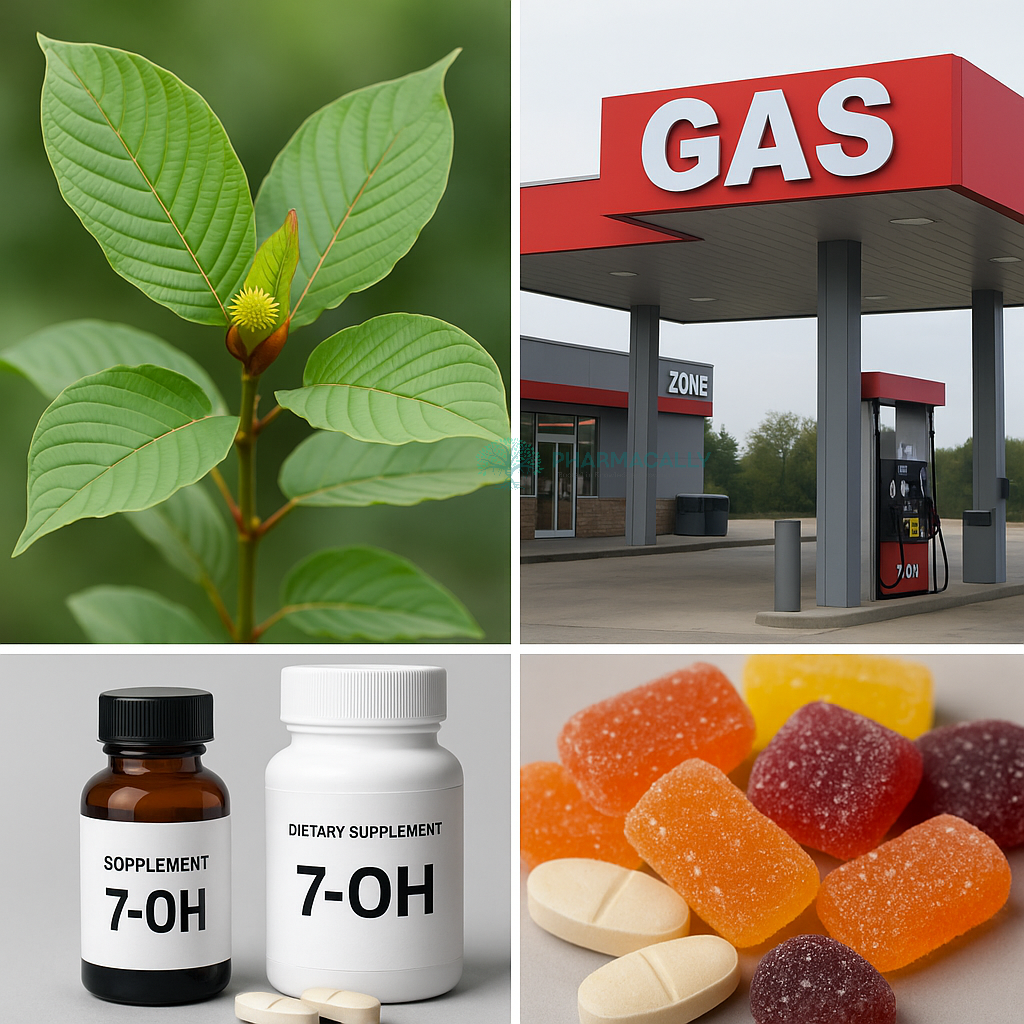
Regulators classified these items as adulterated because 7‑OH does not meet applicable safety standards and is not permitted as an ingredient in foods or supplements. FDA described the operation as a strong step to keep dangerous, unapproved opioid products off the market, particularly in formats that are easily accessible at gas stations (hence colloquially known as Gas Station Heroin) vape shops, and convenience stores.
How this action fits into FDA’s broader 7‑OH strategy
The December seizure follows a series of FDA actions throughout 2025, including a July recommendation to the Drug Enforcement Administration (DEA) to place certain concentrated 7‑OH products into Schedule I under the Controlled Substances Act. In mid‑2025, FDA also issued multiple warning letters to companies selling 7‑OH tablets, gummies, drink mixes, and shots as dietary supplements or foods, emphasizing that such marketing is illegal.
FDA Commissioner Marty Makary, M.D., M.P.H., stated “This enforcement action is a strong step to protect Americans from the dangers of concentrated 7-OH products, which are potent opioids and we must be proactive and vigilant to address emerging threats to our communities and our kids.”
Marty Makary has consistently warned that concentrated 7-OH products, often sold as gummies, shots, and treats in vape shops and gas stations, represent a potent opioid threat more powerful than morphine, with no approved medical use and high potential for abuse, addiction, and fatal respiratory depression. He applauds state-level actions like Florida’s Schedule I classification while pushing federal scheduling via the DEA, emphasizing proactive regulation to protect children from youth-appealing formats and prevent another epidemic wave. Makary stresses public education for parents, educators, and healthcare providers, distinguishing these synthetic derivatives from natural kratom leaf to focus enforcement on illegal, concentrated variants fueling community risks.
FDA has launched public education campaigns explaining that its enforcement focus is on synthetic or highly concentrated 7‑OH products, not on traditional kratom leaf itself. The agency has also developed consumer‑facing webpages on “Hiding in Plain Sight: 7‑OH Products” and “FDA and Kratom” to highlight risks, typical product forms, and how 7‑OH items may be disguised or mislabeled.
Public health risks and implications for consumers and industry
FDA underscores that concentrated 7‑OH can cause classic opioid‑type adverse effects, including respiratory depression, dependence, and withdrawal, particularly when used at high doses or combined with other CNS depressants. Because many 7‑OH products are sold in youth‑appealing formats like flavored gummies, shots, and ice‑cream‑style treats, the agency is especially concerned about accidental or intentional use by adolescents and young adults.
For consumers, the main takeaway is to avoid any product promoted as containing 7‑OH, “legal morphine,” or highly potent kratom analogs, particularly when sold as dietary supplements or convenience‑store shots. For manufacturers and retailers, the seizure is a clear signal that FDA will pursue coordinated enforcement, including product seizures and potential Schedule I controls, against companies that continue to market concentrated 7‑OH products in violation of federal law.
References
FDA Seizes 7-OH Opioids to Protect American Consumers, 02 December 2025, USFDA, https://www.fda.gov/news-events/press-announcements/fda-seizes-7-oh-opioids-protect-american-consumers
73,000 illegal 7-OH products seized from Kansas City warehouses following reports of dangerous addiction, 41 KSHB, https://www.kshb.com/news/local-news/73-000-illegal-7-oh-products-seized-from-kansas-city-warehouses-following-reports-of-dangerous-addiction
Statement from FDA Commissioner Marty Makary, M.D., M.P.H., on Florida Restriction of 7-OH Opioid Products, 13 August 2025, US FDA, https://www.fda.gov/news-events/press-announcements/statement-fda-commissioner-marty-makary-md-mph-florida-restriction-7-oh-opioid-products
FDA and Kratom, 02 December 2025, US FDA, https://www.fda.gov/news-events/public-health-focus/fda-and-kratom
FDA Takes Steps to restrict 7-OH Opioid Products Threatening American Consumers, 29 July 2025, US FDA, https://www.fda.gov/news-events/press-announcements/fda-takes-steps-restrict-7-oh-opioid-products-threatening-american-consumers