
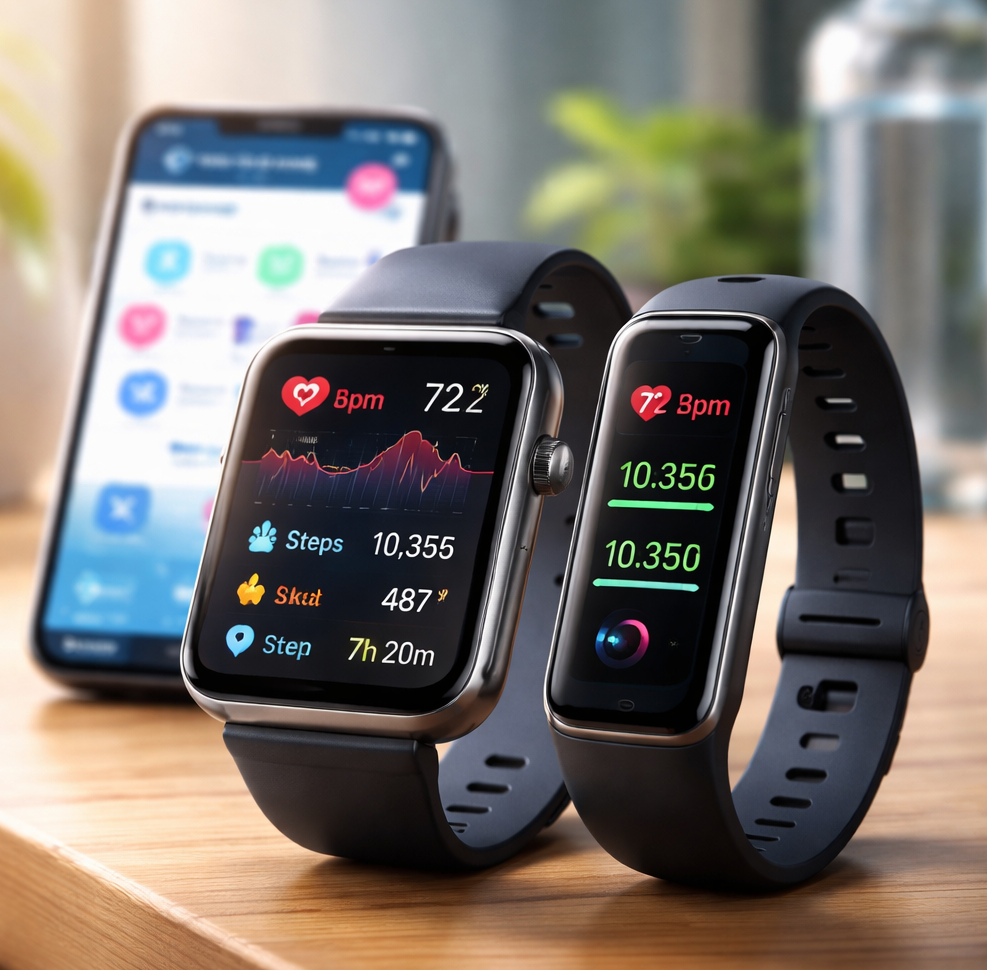
FDA guidance defines the limits of regulation for health and fitness wearables, distinguishing general wellness tools from regulated medical devices.
Written By: Pharmacally Medical News Desk
The U.S. Food and Drug Administration has clarified how it plans to treat most consumer wellness gadgets, including fitness trackers, lifestyle apps, and other low-risk health tools. In a guidance document titled “General Wellness: Policy for Low-Risk Devices,” the agency explains that many products meant to promote healthy living will not be regulated as medical devices, as long as they avoid clinical claims and pose minimal risk.
The move is aimed at removing confusion for companies building digital health tools, while still drawing a clear line around products that cross into diagnosis or treatment.
What qualifies as “General Wellness”
According to the guidance, products fall into the general-wellness category when they are intended to encourage healthy habits or support users in managing lifestyle factors. That includes features such as:
- activity and exercise tracking
- weight and diet monitoring
- sleep and stress management
- reminders and motivational coaching
The key point: these tools must not claim to diagnose, treat, prevent, or cure disease. Instead, they can frame benefits around overall fitness, healthier routines, or risk-reduction through lifestyle change.
Aspect | General Wellness (Exempt) FDA-Regulation-on-wearables.docx | Medical Device (Regulated) |
Claims Allowed | Lifestyle habits, fitness tracking | Diagnosis, treatment guidance |
Risk Level | Low (non-invasive) | Any clinical intent |
FDA Requirements | Enforcement discretion | Premarket review, validation |
Where FDA still steps in
The guidance also spells out what doesn’t qualify.
If a wearable or app presents information meant to guide clinical decisions or claims to measure a medical parameter for diagnosis or treatment, it falls under traditional device regulation. Examples include products marketed to monitor blood pressure, glucose, arrhythmias, or other medical conditions with clinical intent.
In those cases, companies must meet the full set of device requirements, including safety, performance validation, and in many situations, premarket review.
A focus on low risk
The policy applies only to products considered low risk. The FDA highlights several expectations: devices should be non-invasive, not implanted, and should not rely on potentially hazardous technologies like lasers or radiation. Their outputs should not create significant safety concerns if misunderstood or misused.
If a wellness product remains simple, lifestyle-oriented, and safe, the agency indicates it will generally exercise enforcement discretion and avoid regulating it as a medical device.
Real World Action in Past
The FDA has previously taken enforcement action when wearable companies moved beyond general wellness claims into clinical measurement. A clear example is the 2025 FDA warning letter issued to WHOOP over its “Blood Pressure Insights” feature. The agency said WHOOP was effectively offering estimates of systolic and diastolic blood pressure without regulatory clearance, placing the product squarely within the definition of a medical device. As a result, the FDA classified the feature as an unapproved and misbranded device, rejecting the company’s position that it was merely a wellness insight.
Why this matters for wearables and digital health
The guidance gives developers a clearer map of what they can build without triggering heavy regulatory review. For consumers, it also helps explain why some wearables are marketed as “wellness tools” rather than medical devices: they are allowed to provide motivation and insights, but they cannot claim to replace medical testing or treatment.
At the same time, the document reinforces that once companies begin positioning their technology as clinical, the FDA expects full compliance.
The bottom line
The FDA is signalling support for innovation in wellness technology, while keeping stronger oversight in place for anything that edges into medical care. For the booming market of wearables and health apps, the message is straightforward: promote healthier lifestyles, stay low risk, and avoid medical claims unless you are prepared to meet device-level standards.
References
General Wellness: Policy for Low-Risk Devices, Guidance for Industry and Food and Drug Administration Staff, 06 January 2026, US FDA, https://www.fda.gov/media/90652/download
General Wellness: Policy for Low-Risk Devices, 06 January 2026, https://www.fda.gov/regulatory-information/search-fda-guidance-documents/general-wellness-policy-low-risk-devices
FDA announces regulatory exemptions for ‘non-medical grade’ devices, 07 January 2026, Medical Device Network, https://www.medicaldevice-network.com/news/fda-announces-regulatory-exemptions-for-non-medical-grade-devices/
Simon DA, Shachar C, Cohen IG. Skating the line between general wellness products and regulated devices: strategies and implications. J Law Biosci. 2022 Jul 14;9(2):lsac015. PMID: 35855400; PMCID: PMC9280986. https://doi.org/10.1093/jlb/lsac015
Nan Jiang, Julia E. Mück, Ali K. Yetisen, The Regulation of Wearable Medical Devices,
Trends in Biotechnology, Volume 38, Issue 2, 2020, Pages 129-133, https://doi.org/10.1016/j.tibtech.2019.06.004
Warning Letter, WHOOP, Inc. 14 July 2025, https://www.fda.gov/inspections-compliance-enforcement-and-criminal-investigations/warning-letters/whoop-inc-709755-07142025