
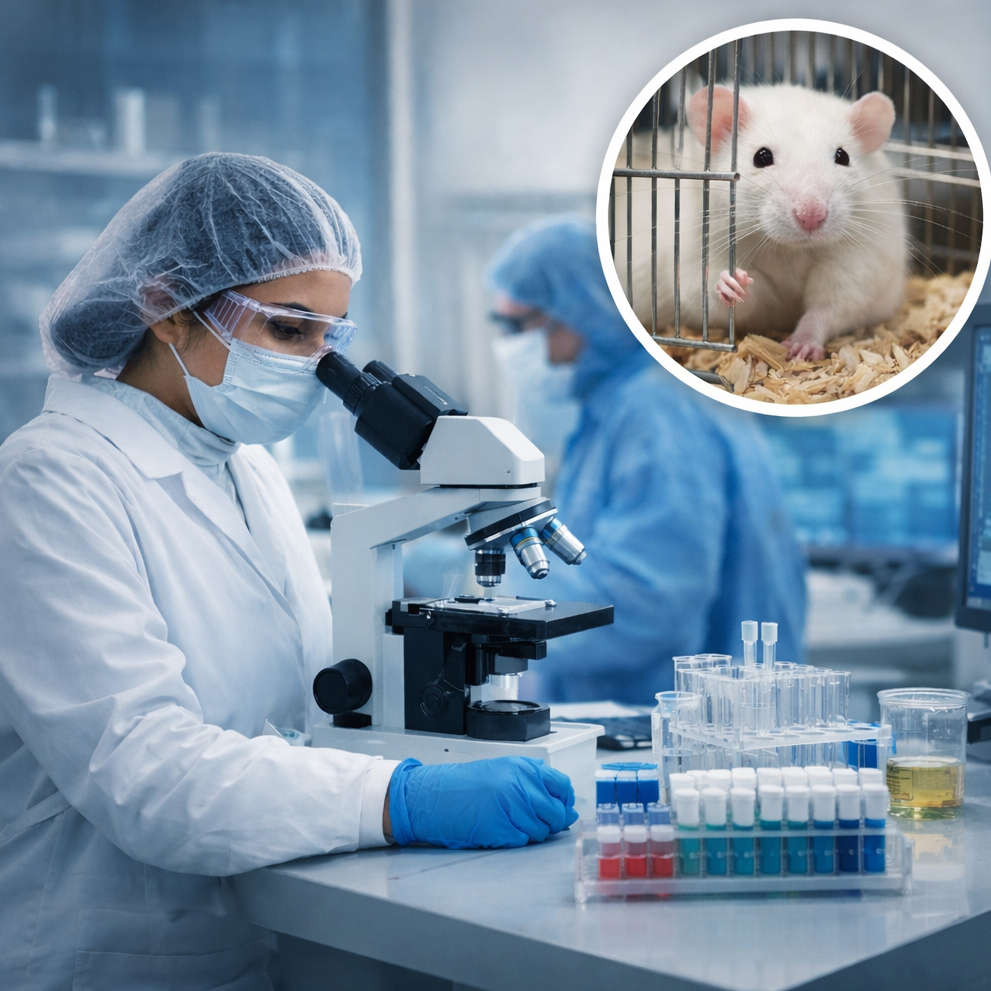
US FDA flags major GLP lapses at Palamur Biosciences while PETA approaches PMO, highlighting risks to global drug safety and animal research oversight.
Written By: Sana Khan BPharm
Reviewed By: Pharmacally Editorial Team
The United States Food and Drug Administration (FDA) has issued a public warning letter to Palamur Biosciences Pvt. Ltd., a contract animal testing laboratory and beagle breeder based in Mahbubnagar, Telangana, highlighting serious and systemic violations of Good Laboratory Practice (GLP) regulations that may jeopardise both data integrity and public safety.
The warning letter, dated December 11, 2025, followed a comprehensive inspection conducted by the FDA’s Office of Bioresearch Monitoring Foreign Inspection Cadre in January 2025. The regulatory agency found multiple deficiencies that it said “bring into question the quality and integrity of safety data collected at the testing facility.”
Key Findings from the FDA Inspection
The FDA’s inspection report identified a range of violations under Title 21, Code of Federal Regulations (CFR) Part 58, the U.S. regulation that governs nonclinical laboratory studies. Among the most serious issues cited were:
- Inadequate Recording and Verification of Experimental Data – The study director failed to ensure complete and accurate documentation of animal information, including birth dates, health status, and other critical parameters, undermining the reliability of safety assessments.
- Insufficient Standard Operating Procedures (SOPs) – Many SOPs were vague, lacked essential procedural details, or did not ensure consistency in critical testing steps, raising concerns about study repeatability and data quality.
- Training and Oversight Deficiencies – Management did not adequately ensure that personnel understood their roles or were sufficiently trained, contributing to inconsistent practices and risk of non-compliance.
- Unsanitary Conditions and Poor Animal Welfare – The FDA documented dirty premises with animal droppings and potential pest harborage, as well as missing veterinary records and inadequate assessment of animal health before procedures. It also criticised euthanasia methods that did not reliably ensure rapid unconsciousness.
Risk to Public Health and Safety
The FDA warned that unreliable or incomplete data from studies conducted at the facility “may put public health and safety at risk” as such information is relied upon globally for regulatory approvals and safety evaluations of medical devices and other products.
The letter also noted that Palamur’s responses to preliminary observations were inadequate, failing to demonstrate effective systemic corrective actions.
Animal Welfare Concerns
In addition to regulatory non-compliance, the FDA highlighted deficiencies that overlap with animal welfare issues an area that has already been under national and international scrutiny. Independent activists and organisations, including PETA India, have previously raised serious allegations about treatment of animals at the facility, including beagles, pigs, and monkeys. Their complaints, along with video evidence and inspection reports submitted to India’s Committee for the Control and Supervision of Experiments on Animals (CCSEA), described overcrowding, lack of veterinary care, and inadequate living conditions.
These concerns closely mirror some of the shortcomings noted by the FDA, including poor animal records and inadequate health examinations issues that are both regulatory and ethical.
What Happens Next?
The FDA has given Palamur Biosciences 15 working days from the receipt of the warning letter to provide detailed documentation of corrective and preventive actions, including timelines and verification measures. Failure to adequately respond could lead to further regulatory action, including potential disqualification proceedings under CFR regulations.
The FDA’s warning to Palamur Biosciences highlights critical deficiencies that go beyond procedural lapses to encompass deep concerns about scientific reliability and animal welfare. As global regulators increasingly scrutinise laboratory practices, this development underscores the importance of robust compliance, thorough oversight, and transparent reporting both for protecting public health and maintaining ethical standards in scientific research.
CAPA Submitted, But Deemed Inadequate
The laboratory first responded after the FDA’s on-site inspection conducted in January 2025, when investigators presented preliminary observations of GLP violations. Following those findings, Palamur Biosciences submitted a corrective and preventive action plan outlining root cause analysis, revised procedures, and proposed staff training measures intended to address the deficiencies. When the FDA issued its formal warning letter dated December 11, 2025, the agency reviewed those earlier responses and concluded that they were insufficient
The regulator stated that the company’s plan did not adequately demonstrate that the underlying systemic problems had been corrected and failed to provide assurance that similar violations would not recur.
The warning letter required the firm to submit a more robust CAPA within 15 working days of receipt, including verifiable timelines and evidence of implementation Until the FDA confirms that these actions are acceptable, the concerns over the reliability of studies performed at the facility remain unresolved.
Current Status: Issue Reaches the Union Government
The case has now moved beyond the FDA and the company to the highest levels of the Indian government. According to a report in Deccan Chronicle, in representations dated January 13, 2026 to the Union Ministry of Animal Husbandry and January 15, 2026 to the Prime Minister’s Office, PETA India argued that the FDA warning letter confirmed concerns raised earlier before Indian regulators.
Deccan Chronicle reported that the organisation stated the U.S. findings closely matched a detailed inspection report submitted on June 17, 2025 to the Committee for the Control and Supervision of Experiments on Animals, India’s statutory authority overseeing animal research. By approaching the central government, the group has sought direct intervention, alleging that earlier domestic recommendations for enforcement were not acted upon in a timely manner.
References
WARNING LETTER, Palamur Biosciences Private Limited, December 11, 2025. https://www.fda.gov/inspections-compliance-enforcement-and-criminal-investigations/warning-letters/palamur-biosciences-private-limited-708579-12112025
US FDA Issues Warning Letter to Palamur Biosciences Over ‘Serious Violations’; PETA Moves PMO, 17 January 2026, https://www.deccanchronicle.com/amp/southern-states/telangana/us-fda-issues-warning-letter-to-palamur-biosciences-over-serious-violations-peta-moves-pmo-1931044
In Historic First, FIR Registered Against Animal Experimentation Laboratory Palamur Biosciences—Following PETA India Complaint, 18 June 2025, https://www.petaindia.com/media/in-historic-first-fir-registered-against-animal-experimentation-laboratory-palamur-biosciences-following-peta-india-complaint
https://www.fda.gov/animal-veterinary/guidance-regulations
21 CFR Part 58, https://www.ecfr.gov/current/title-21/part-58
USFDA warning to Palamur Biosciences, 8 January 2026. https://telanganatoday.com/usfda-warning-to-palamur-biosciences
Report on the inspection of Palamur Bioscience Private Limited, 17 June 2025, https://www.petaindia.com/wp-content/uploads/2025/06/Palamur-Inspection-Report.pdf