
Written By: Srishti Avhad, BPharm
Reviewed By: Pharmacally Editorial Team
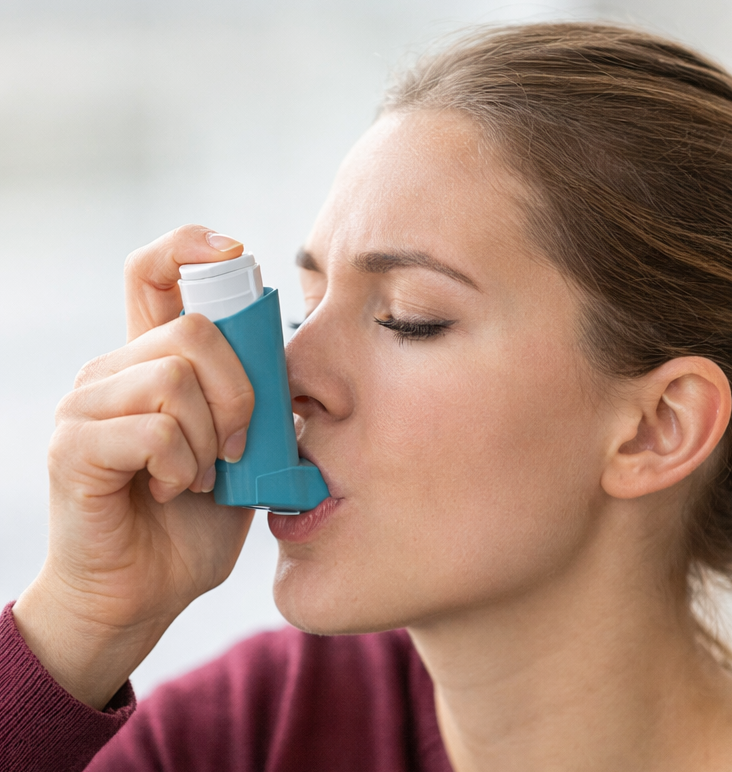
If you or someone in your family has asthma, inhalers are often part of daily life. They are meant to make breathing easier, prevent attacks, and help people stay active. But a common and important question comes up again and again:
Does smoking reduce how well asthma inhalers work?
Short answer: yes, it does.
Long answer: Let’s walk through.
How asthma inhalers help
Asthma inhalers mainly fall into two groups:
Reliever inhalers (often blue): These give quick relief during wheezing, a tight chest, or breathlessness.
Preventer inhalers (often brown, orange, or red): These are taken daily to reduce swelling and irritation inside the airways.
Preventer inhalers usually contain a low dose of steroids. These steroids are not the same as muscle-building steroids. They work locally in the lungs to calm inflammation.
When used correctly and regularly, inhalers can dramatically improve asthma control for most people.
What cigarette smoke does to asthmatic lungs
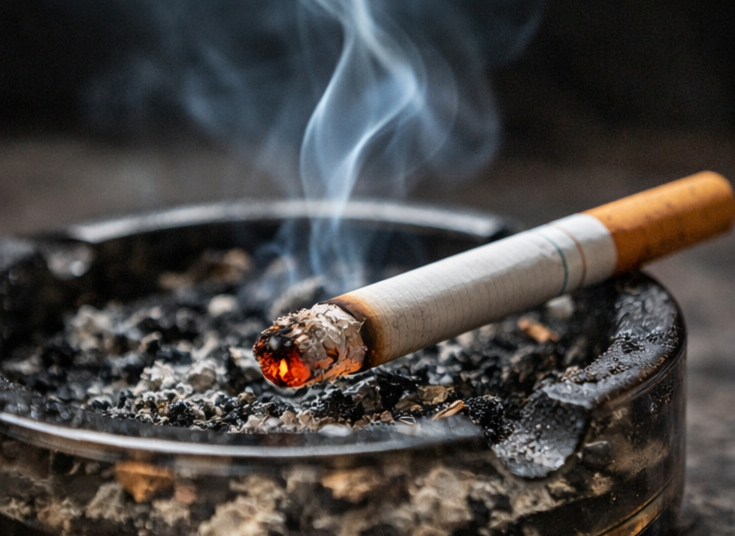
Cigarette smoke contains thousands of chemicals. When someone with asthma smokes, these chemicals irritate the airways again and again, every single day.
This leads to:
- More swelling inside the air tubes
- Thicker mucus that blocks airflow
- Ongoing irritation that never fully settles
In simple terms, smoking keeps the lungs in a constant “inflamed” state. This makes asthma harder to control and symptoms more frequent.
Does smoking really make inhalers less effective?
Yes, and this has been shown in medical studies.
Multiple clinical trials and reviews have found that smoking blunts the benefits of inhaled asthma drugs. For example, a 2007 study randomized asthmatics (smokers vs. nonsmokers) to either inhaled steroids or a leukotriene pill. It showed clearly that nonsmokers got significant lung improvement from the steroid, while smokers did not. This implies a form of steroid insensitivity in smoking asthmatics.
More recent analyses have confirmed these findings. A 2022 review in the Journal of Allergy and Clinical Immunology: In Practice looked at several trials and summarized that short-term courses of inhaled steroids raise lung function much less in smokers than in never-smokers. In other words, if a non-smoking patient gained 10% in their FEV₁ from treatment, a smoking patient might only gain a couple of percent. Even long-term use of inhaled steroids seems less protective: smokers still lose lung function faster and have more asthma exacerbations despite treatment.
Why does this happen?
Asthma inflammation in non-smokers is usually the type that responds well to inhaled steroids.
Smoking changes this.
Cigarette smoke creates a different kind of inflammation that:
- Is more aggressive
- Is harder to calm down
- Does not respond as well to steroid medicines
So even when a smoker uses their preventer inhaler daily, the medicine struggles to do its job properly.
What about rescue inhalers?
Quick-relief inhalers (like salbutamol or albuterol) still work in smokers. They can open the airways and reduce sudden tightness.
But here’s the catch:
- Smokers often need these inhalers more often
- Relief may not last as long
- Attacks can return sooner
So, while rescue inhalers help in the moment, they do not fix the deeper problem caused by smoking.
Does smoking make asthma worse overall?
Yes.
People with asthma who smoke tend to:
- Have more frequent flare-ups
- Visit emergency rooms more often
- Need higher doses of medication
- Lose lung function faster over time
Doctors now consider asthma in smokers as a more difficult-to-treat form of the disease.
Can quitting smoking improve inhaler response?
Research shows that people with asthma who stop smoking often regain better response to inhalers. Over time:
- Lung function improves
- Symptoms reduce
- Steroid inhalers start working better again
Even cutting down helps, but quitting gives the best results.
Importantly, these improvements can happen within months, not years.
What should people with asthma who smoke do?
If quitting feels overwhelming, start with small steps and medical support. In the meantime:
- Keep using your preventer inhaler daily
- Do not skip doses just because it feels less effective
- Avoid smoke-filled environments as much as possible
- Talk honestly with your doctor about smoking so treatment can be adjusted
- Seek help for quitting. Nicotine replacement and counselling work
Asthma control is always better when smoking is reduced or stopped.
The takeaway message
- Smoking does make asthma inhalers less effective
- Preventer inhalers work best in nonsmokers.
- Rescue inhalers still help, but symptoms return faster
- Quitting smoking can restore much of the inhaler benefit
Asthma inhalers are powerful tools, but they work best when the lungs are not constantly irritated by cigarette smoke. If you have asthma, stopping smoking is not just about general health it directly affects how well your treatment works and how easy it is to breathe every day.
References
Lazarus SC et al, Smoking affects response to inhaled corticosteroids or leukotriene receptor antagonists in asthma. Am J Respir Crit Care Med. 2007 Apr 15;175(8):783-90. Doi: 10.1164/rccm 200511-1746OC. Epub 2007 Jan 4. PMID: 17204725; PMCID: PMC1899291.
Thomson, Neil C. et al, Cigarette Smoking and Asthma, The Journal of Allergy and Clinical Immunology: In Practice, Volume 10, Issue 11, 2783 – 2797, DOI: 10.1016/j.jaip.2022.04.034
Chatkin JM, Dullius CR. The management of asthmatic smokers. Asthma Res Pract. 2016 Jun 20;2:10. doi: 10.1186/s40733-016-0025-7. PMID: 27965778; PMCID: PMC5142412.
Chalmers GW, Macleod KJ, Little SA, et al. Influence of cigarette smoking on inhaled corticosteroid treatment in mild asthma, Thorax 2002;57:226-230.
Asad Tamimi et al, The effects of cigarette smoke on airway inflammation in asthma and COPD: Therapeutic implications, Respiratory Medicine, Volume 106, Issue 3, 2012, Pages 319-328, https://doi.org/10.1016/j.rmed.2011.11.003
Surya P. Bhatt, Cigarette smoking and response to inhaled corticosteroids in COPD, European Respiratory Journal 2018 51(1): 1701393; DOI: https://doi.org/10.1183/13993003.01393-2017
Asthma and smoking, Better Health Channel, https://www.betterhealth.vic.gov.au/health/conditionsandtreatments/asthma-and-smoking
Asthma and Secondhand Smoke, US Centers for Disease Control and Prevention, https://www.cdc.gov/tobacco/campaign/tips/diseases/secondhand-smoke-asthma.html
Asthma, 06 May 2024, World Health Organization, https://www.who.int/news-room/fact-sheets/detail/asthma