
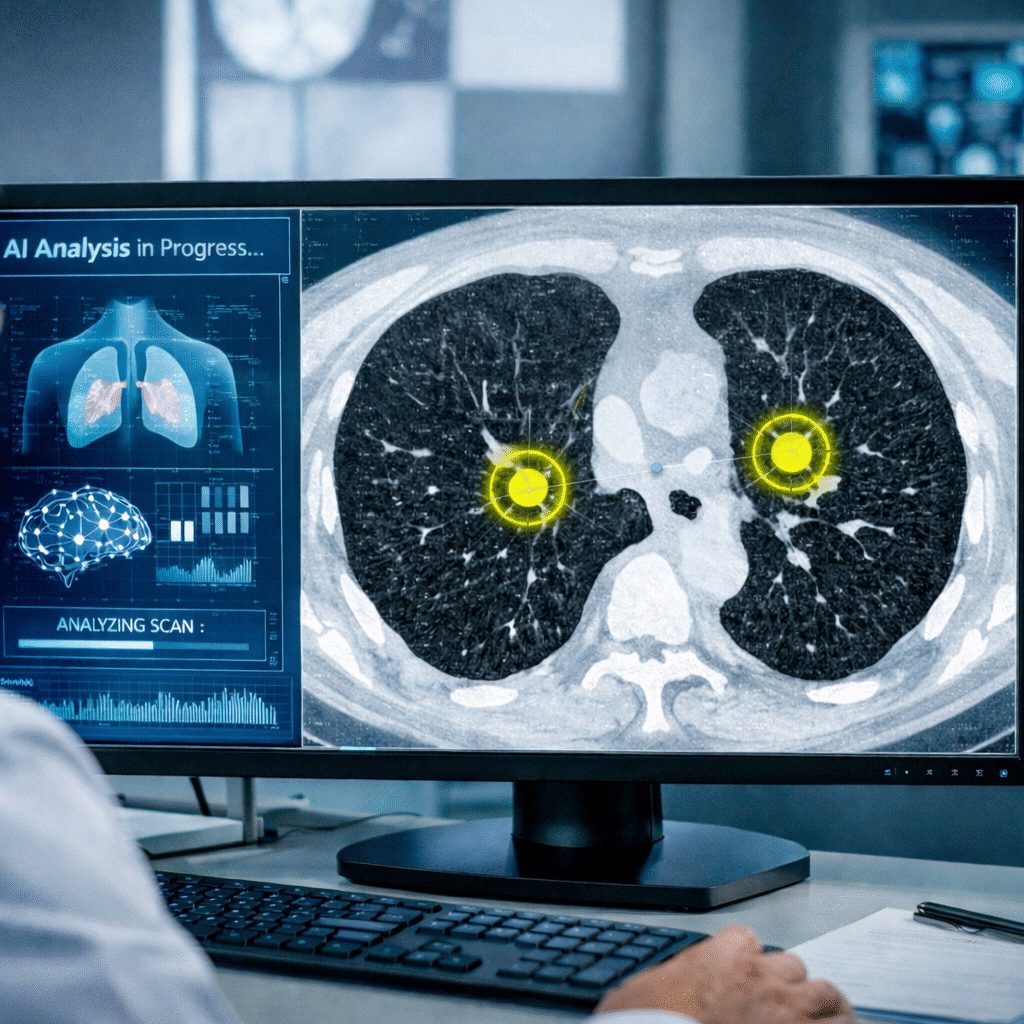
Bristol Myers Squibb and Microsoft partner to deploy FDA-authorized AI radiology tools for earlier lung cancer detection, improved follow-up, and expanded access to care in underserved communities across the U.S.
Written By: Nikita Chaudhari, BPharm
Reviewed By: Pharmacally Editorial Team
Bristol Myers Squibb (BMS) has entered a strategic digital health collaboration with Microsoft to accelerate the early detection of lung cancer across the United States. The partnership brings together BMS’ oncology expertise and Microsoft’s large-scale, AI-enabled radiology infrastructure with a clear goal: identify lung cancer earlier and close gaps in care, especially for underserved populations.
Deploying FDA-cleared AI in Everyday Radiology Workflows
Under the agreement, U.S. FDA-cleared radiology AI algorithms will be deployed through Microsoft’s Precision Imaging Network, part of its broader Microsoft for Healthcare radiology solutions. This network is already embedded in clinical practice, with more than 80 percent of U.S. hospitals using it to share medical imaging and access third-party imaging AI tools.
These AI algorithms automatically analyze chest X-rays and CT scans to detect lung abnormalities, including subtle lung nodules that can be difficult to identify during routine reads. By integrating directly into existing radiology workflows, the technology is designed to support radiologists rather than replace them, helping reduce workload while improving consistency and sensitivity in image interpretation.
Addressing a Major Unmet Need in Lung Cancer
Lung cancer remains the leading cause of cancer-related deaths in the U.S., with underserved populations facing higher mortality and lower access to screening. A key challenge is follow-up, as more than half of patients with incidental lung nodules are lost to care. The partnership integrates workflow management tools to track patients, support timely follow-up, and guide them toward appropriate evaluation and treatment.
Dr. Alexandra Goncalves, VP and Head of Digital Health at Bristol Myers Squibb, said the collaboration combines Microsoft’s scalable radiology technology with BMS’ oncology expertise to create an AI-enabled workflow that helps clinicians identify patients with non-small cell lung cancer earlier and guide them to appropriate precision therapies, improving both efficiency and patient outcomes.
Andrew Whitehead, VP and Head of Population Health at Bristol Myers Squibb, emphasized that the partnership reflects BMS’ broader commitment to health equity by bringing advanced AI tools into everyday clinical settings to reduce barriers to care and address disparities in lung cancer detection and follow-up.
A core focus of the initiative is health equity. The solution is intended to scale across rural hospitals and community clinics, where access to specialist radiology expertise and advanced screening programs is often limited. By deploying AI tools in resource-constrained settings, the collaboration seeks to enable earlier diagnosis, more reliable follow-up, and fairer access to high-quality cancer care.
References
Bristol Myers Squibb Announces Collaboration with Microsoft to Advance AI-Driven Early Detection of Lung Cancer, 20 January 2026, Bristol Myers Squibb – Bristol Myers Squibb Announces Collaboration with Microsoft to Advance AI-Driven Early Detection of Lung Cancer