
Atossa Therapeutics receives FDA Orphan Drug Designation for (Z)-Endoxifen in Duchenne muscular dystrophy, supporting development of a potential new therapy for this rare, progressive muscle disorder with high unmet need.
Written By: Nikita Jha BPharm
Reviewed By: Pharmacally Editorial Team
On January 16, 2026, Atossa Therapeutics, Inc. announced that the U.S. Food and Drug Administration’s Office of Orphan Products Development has granted Orphan Drug Designation to its investigational oral therapy (Z)-Endoxifen for the treatment of Duchenne muscular dystrophy (DMD). This designation is an important regulatory step that supports continued development of the drug in this rare and serious pediatric neuromuscular disease.
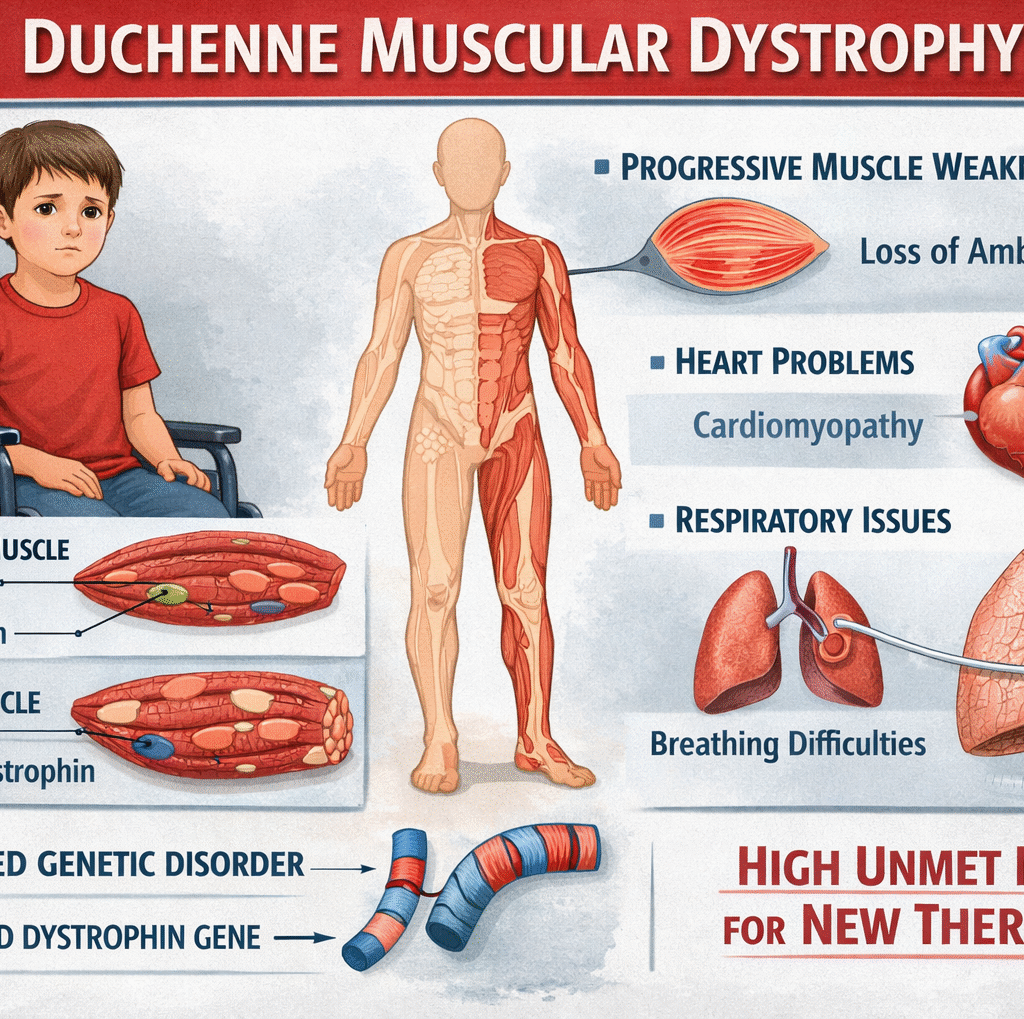
Duchenne muscular dystrophy is an inherited disorder that mainly affects boys and causes progressive muscle weakness, leading to loss of walking ability and later heart and breathing problems. Current treatments can only slow the disease and manage symptoms, and there is still a strong need for safer and more effective therapies for most patients, as emphasized by Steven Quay, MD, PhD, President and Chief Executive Officer of Atossa Therapeutics.
(Z)-Endoxifen
(Z)-Endoxifen is a potent selective estrogen receptor modulator/degrader (SERM/D) being developed by Atossa. It has a distinct pharmacologic profile compared with its parent compound tamoxifen and shows activity across multiple mechanisms that may be relevant both in oncology and in muscle disease. The company’s proprietary oral formulation aims for consistent systemic exposure and includes features like protein kinase C inhibition in its activity profile.
Atossa is actively exploring (Z)-Endoxifen in a range of indications, including oncology settings and rare diseases. In DMD, the molecule’s mechanism could complement the current therapeutic landscape by targeting biological pathways linked to muscle maintenance and repair. In DMD, the underlying cause is a mutation in the dystrophin gene, leading to progressive muscle breakdown. Current approved therapies, such as gene replacement (for example Elevidys) or antisense oligonucleotides that skip specific exons, help segments of patients but do not serve all genetic subtypes.
Next Steps in Development
Atossa’s announcement notes that the company plans to continue engaging with the FDA to advance the clinical development of (Z)-Endoxifen in DMD. The Orphan Drug Designation does not alter regulatory review timelines directly, but positions the program to benefit from regulatory incentives and focused development interactions as studies progress.
The company’s strategy across its pipeline continues to integrate both oncology and rare disease programs, with (Z)-Endoxifen as its lead candidate. Additional regulatory milestones, clinical data readouts, and future trial initiations will shape how quickly the DMD program can move toward later-stage development.
Duchenne Muscular Dystrophy
DMD is a genetic condition, typically affecting boys, that leads to worsening muscle weakness, loss of ambulation in childhood, and serious respiratory and cardiac complications later in life. There is no cure, and available treatments aim to slow the course of disease and manage complications. Beyond steroids and genetic therapies, there remains a high unmet need for additional safe and effective options that can be used across the broad DMD population.
Reference
Atossa Therapeutics Receives FDA Orphan Drug Designation for (Z)-Endoxifen for the Treatment of Duchenne Muscular Dystrophy, 16 January 2026, Atossa Therapeutics, https://investors.atossatherapeutics.com/2026-01-16-Atossa-Therapeutics-Receives-FDA-Orphan-Drug-Designation-for-Z-Endoxifen-for-the-Treatment-of-Duchenne-Muscular-Dystrophy