
Written By: Pharmacally Medical News Desk
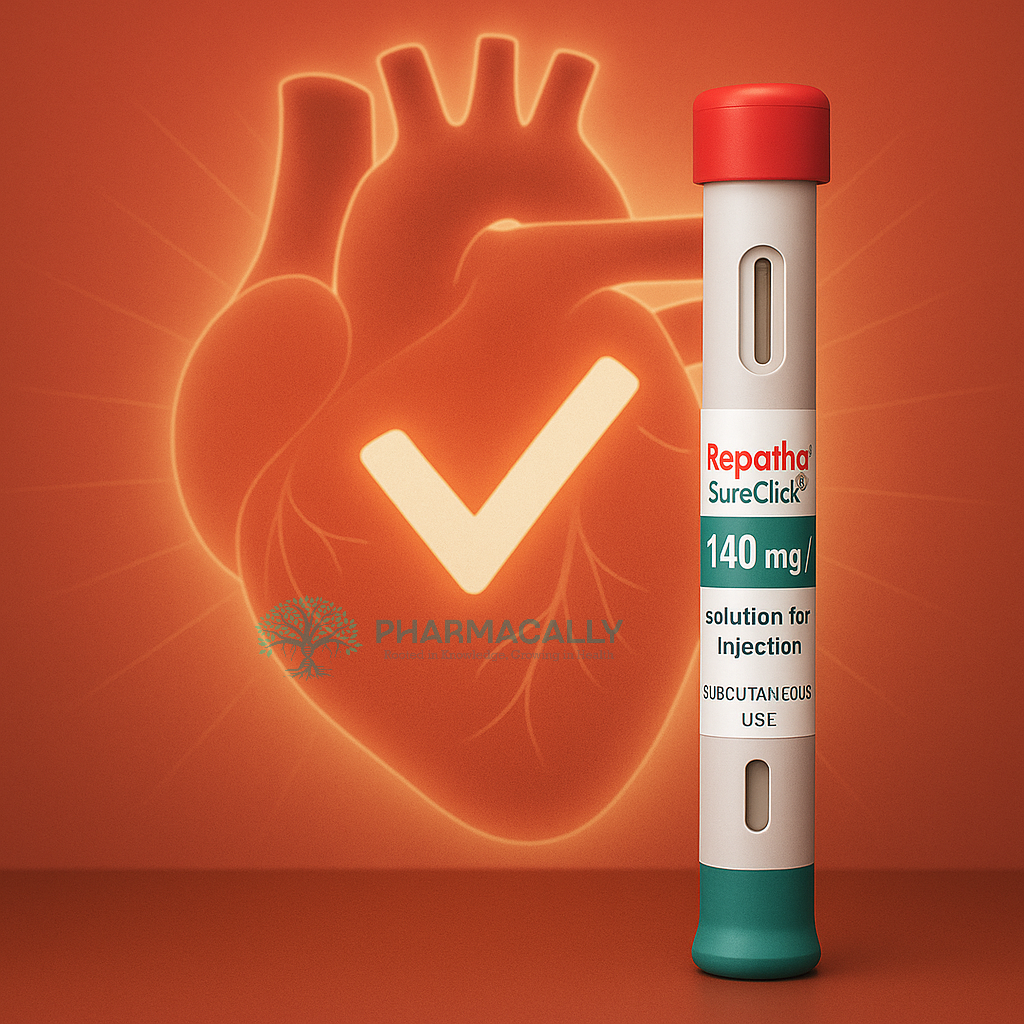
Amgen has announced promising results from the Phase 3 VESALIUS-CV trial showing that Repatha® (evolocumab) reduces the risk of first major adverse cardiovascular events (MACE) by 25% in high-risk patients without prior heart attack or stroke. This landmark study confirmed Repatha’s strong primary prevention benefit, with a 36% reduction specifically in heart attack risk among over 12,000 participants with atherosclerosis or diabetes and elevated LDL cholesterol despite standard therapy. The results were presented in a late-breaking session at the 2025 American Heart Association Scientific Sessions and simultaneously published in the New England Journal of Medicine.
VESALIUS-CV (NCT03872401) was a double-blind, randomized, placebo-controlled global study targeting adults at high cardiovascular risk without prior myocardial infarction (MI) or stroke. More than 12000 participants with known atherosclerotic cardiovascular disease (ASCVD) or high-risk diabetes with baseline LDL-C ≥ 90 mg/dL or similar lipid abnormalities despite receiving the highest tolerated doses of statins and/or ezetimibe were enrolled. The median follow-up period was 4.6 years.
Trial results showed that treatment with Repatha led to a 25% relative reduction in the composite risk of coronary heart disease (CHD) death, heart attack, or ischemic stroke compared to placebo. Furthermore, Repatha reduced the risk of heart attack alone by a remarkable 36%. Patients in a lipid sub-study achieved a median LDL-C level of 45 mg/dL with Repatha, significantly lower than 109 mg/dL in the placebo group.
Secondary endpoints also favored Repatha, revealing significant risk reductions across multiple composite cardiovascular outcomes such as heart attack, ischemic stroke, and ischemia-driven arterial revascularization. Numerical trends suggested lowered mortality rates, including cardiovascular death (21% relative risk reduction), CHD death (11%), all-cause death (20%), and ischemic stroke (21%).
No new safety issues were identified, and Repatha’s tolerability was consistent with existing prescribing information. The safety profile supports its use as a cornerstone medication in comprehensive lipid management for prevention of major cardiovascular events.
Repatha initially approved by the FDA in 2015 is indicated for lowering LDL cholesterol in patients with atherosclerotic cardiovascular disease or familial hypercholesterolemia and to reduce the risk of cardiovascular events. It works as a PCSK9 inhibitor by binding to the PCSK9 protein; Repatha prevents PCSK9 from degrading LDL receptors on liver cells. This blockade increases LDL receptor availability, enhancing clearance of LDL cholesterol (“bad cholesterol”) from the bloodstream, thus lowering LDL-C levels and reducing cardiovascular risk.
“Cardiovascular disease is the leading cause of death and illness in people with diabetes, driven by high LDL-C, and reducing this risk must be a priority in primary care,” said Osagie Ebekozien, M.D., M.P.H., Chief Quality Officer at the American Diabetes Association. “The ADA is committed to advancing diabetes care with evidence-based guidelines to manage lipids and reduce cardiovascular risk.”
Jay Bradner, M.D., Executive Vice President of Research and Development at Amgen, stated, “The VESALIUS-CV results clearly show that intensive LDL-C lowering is essential to cutting cardiovascular risk. Repatha continues to protect patients from heart attacks and strokes, even before these events occur. With a decade of real-world evidence, every patient with elevated LDL-C should be considered for Repatha.”
Marc S. Sabatine, M.D., M.P.H., Chair of the TIMI Study Group, commented, “Building on FOURIER, where adding evolocumab to statins lowered events in patients with prior heart attack or stroke, VESALIUS-CV shows that in a larger group without prior events, evolocumab significantly reduces MACE risk. Achieving LDL-C levels of 30 to 45 mg/dL is supported across diverse patient populations.”
References
Amgen’s Repatha® cuts risk of first major adverse cardiovascular events by 25% in landmark phase 3 Vesalius-cv trial, 08 November 2025, Amgen, https://investors.amgen.com/news-releases/news-release-details/amgens-repathar-cuts-risk-first-major-adverse-cardiovascular
Effect of Evolocumab in Patients at High Cardiovascular Risk Without Prior Myocardial Infarction or Stroke (VESALIUS-CV), ClinicalTrials.gov ID NCT03872401, https://www.clinicaltrials.gov/study/NCT03872401
Erin A. Bohula, Evolocumab in Patients without a Previous Myocardial Infarction or Stroke, New Eng J Med, November 8, 2025, DOI: 10.1056/NEJMoa2514428,