
FDA grants Priority Review to LEQEMBI IQLIK’s sBLA for a subcutaneous starting dose in early Alzheimer’s, supported by CLARITY AD OLE (NCT03887455) data showing IV-comparable exposure, with ARIA safety monitoring and potential for home dosing.
Written By: Pharmacally Medical News Desk
Biogen and Eisai have announced a major new regulatory development for LEQEMBI® IQLIK™ (lecanemab-irmb) in the United States potentially enabling home-based treatment starts for over 1 million early AD patients. The FDA has accepted a Supplemental Biologics License Application (sBLA) seeking approval of a subcutaneous starting dose formulation for patients with early Alzheimer’s disease, and the agency has granted the filing Priority Review. This step is significant because it could allow treatment to begin with a more convenient self-administered injection rather than requiring intravenous infusion at initiation. The FDA’s target action date under Priority Review is May 24, 2026. LEQEMBI IQLIK is already FDA-approved for once-weekly subcutaneous maintenance dosing in patients with early Alzheimer’s disease after they have completed the initial intravenous (IV) induction phase.
Clinical Evidence Supporting the FDA Filing
The sBLA is supported by data from Eisai’s clinical development program, including subcutaneous dosing evaluations within the Phase 3 CLARITY AD open-label extension (NCT03887455). According to the companies, the proposed weekly subcutaneous regimen achieves drug exposure comparable to the established intravenous dosing schedule (similar AUC), while maintaining similar effects on Alzheimer’s biomarkers and clinical outcomes. This evidence forms the basis for FDA review of whether SC initiation can provide equivalent therapeutic benefit while improving ease of administration for patients and caregivers.
Safety Profile and Key Considerations
LEQEMBI’s safety profile remains a central focus of ongoing regulatory review. As with other anti-amyloid monoclonal antibodies, treatment has been associated with amyloid-related imaging abnormalities (ARIA), including brain swelling (ARIA-E) and microhemorrhages (ARIA-H). These risks are particularly relevant during early dosing and require MRI monitoring in clinical practice, plus APOE4 genotyping per FDA requirements. The FDA’s review of the subcutaneous starting dose will therefore consider not only pharmacokinetic comparability, but also whether safety outcomes remain consistent with the established IV initiation approach.
LEQEMBI IQLIK and the Shift Toward Easier Administration
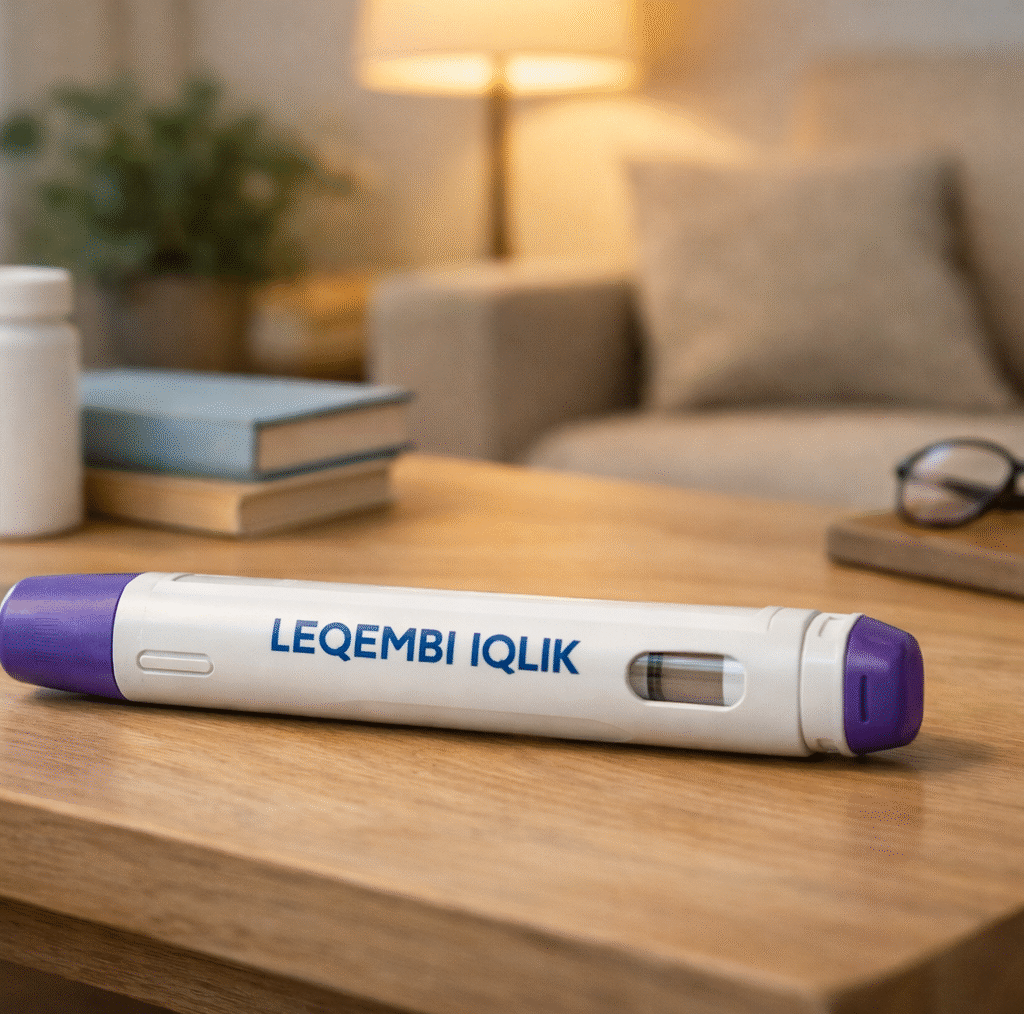
LEQEMBI IQLIK is an autoinjector-based formulation designed to support subcutaneous delivery. The goal of this approach is to reduce dependence on infusion centers and potentially expand access by enabling more flexible dosing settings, including home-based administration. If this sBLA is approved, it would mark an important evolution in how Alzheimer’s disease-modifying therapies are delivered, particularly at the earliest stage of treatment when patients and families are first navigating therapy initiation.
Prior Regulatory Milestones for LEQEMBI Worldwide
This FDA Priority Review decision builds on a broader pattern of regulatory progress for LEQEMBI across major global markets including China’s BLA acceptance, the earlier FDA regulatory submissions, Japan’s NDA filing, and ongoing CHMP/EMA reviews reflecting the coordinated effort by Eisai and Biogen to expand access worldwide. This latest submission focuses specifically on improving treatment convenience in the US, complementing the therapy’s growing international footprint.
Understanding Early Alzheimer’s Disease and the Role of LEQEMBI
Alzheimer’s disease is a progressive neurodegenerative disorder characterized by cognitive decline, functional impairment, and accumulation of amyloid-beta plaques in the brain. LEQEMBI is designed to target these plaques early in the disease course by selectively binding to and promoting the clearance of Aβ protofibrils, a highly toxic form of amyloid that contributes to neuronal injury and disease progression. It is indicated for patients with mild cognitive impairment or mild dementia due to Alzheimer’s. The therapy represents one of the first disease-modifying approaches aimed at slowing progression rather than only treating symptoms, making administration improvements such as subcutaneous initiation especially impactful for long-term care.
Reference
FDA Accepts LEQEMBI® IQLIK™ (lecanemab-irmb) Supplemental Biologics License Application as a Subcutaneous Starting Dose for the Treatment of Early Alzheimer’s Disease under Priority Review, 25 January 2026, https://investors.biogen.com/news-releases/news-release-details/fda-accepts-leqembir-iqliktm-lecanemab-irmb-supplemental
A Study to Confirm Safety and Efficacy of Lecanemab in Participants with Early Alzheimer’s Disease (Clarity AD), ClinicalTrials.gov ID NCT03887455, https://clinicaltrials.gov/study/NCT03887455
FDA Accepts LEQEMBI® IQLIK™ (lecanemab-irmb) Supplemental Biologics License Application as a Subcutaneous Starting Dose for the Treatment of Early Alzheimer’s Disease under priority Review, 26 January 2026, No.26-05