
China NMPA has accepted the NDA for Envafolimab, the world’s first subcutaneous PD-L1 antibody, combined with GEMOX as first-line treatment for unresectable or metastatic biliary tract cancer, marking a potential new immunotherapy option for this aggressive disease.
Written By: Pharmacally Medical News Desk
Simcere Pharmaceutical Group’s oncology arm, Simcere Zaiming, has announced that the China National Medical Products Administration has accepted for review the New Drug Application for Envafolimab in combination with gemcitabine and oxaliplatin (GEMOX) as first-line therapy for unresectable or metastatic biliary tract cancer. The application has been submitted in partnership with 3D Medicines and Alphamab Oncology. If approved, Envafolimab could become the first domestically developed PD-L1 antibody available in China for initial treatment of advanced biliary tract malignancies.
The current application is supported by results from the KN035-CN-005 trial (NCT03478488), a randomized, multicentre Phase III study evaluating Envafolimab combined with the GEMOX regimen in Chinese patients with previously untreated advanced biliary tract cancer. Additional development programs are ongoing. Phase III trials are assessing the drug as neoadjuvant and adjuvant therapy for non-small cell lung cancer, aiming to broaden its clinical use. The product has already received Breakthrough Therapy Designation from the Chinese regulator for solid tumors with high tumor mutational burden and has been granted three Orphan Drug Designations by the U.S. Food and Drug Administration, including one for advanced cholangiocarcinoma.
Envafolimab is the world’s first PD-L1 antibody designed for subcutaneous administration. By blocking the interaction between PD-1 on immune cells and PD-L1 on tumor cells, the drug restores anti-tumor immune activity. Its molecular structure is roughly half the size of conventional monoclonal antibodies, which may allow improved tissue penetration and delivery through the lymphatic system. The subcutaneous formulation removes the need for intravenous infusion and can be administered in about 30 seconds, a feature that may be particularly valuable for elderly or frail patients and for those who have previously experienced infusion-related reactions.
The therapy was initially approved in China in November 2021 for adults with unresectable or metastatic solid tumors characterized by microsatellite instability-high or mismatch repair deficiency. Since that approval, nearly 80,000 patients have received Envafolimab, and the drug has been incorporated into more than ten Chinese and international clinical guidelines and expert consensus documents, including recommendations from the Chinese Society of Clinical Oncology and the National Comprehensive Cancer Network.
The acceptance of this application marks an important step toward expanding immunotherapy options for a patient population with very limited choices. A convenient subcutaneous PD-L1 antibody combined with standard chemotherapy could redefine first-line management of biliary tract cancer and improve access to modern immunotherapy across China.
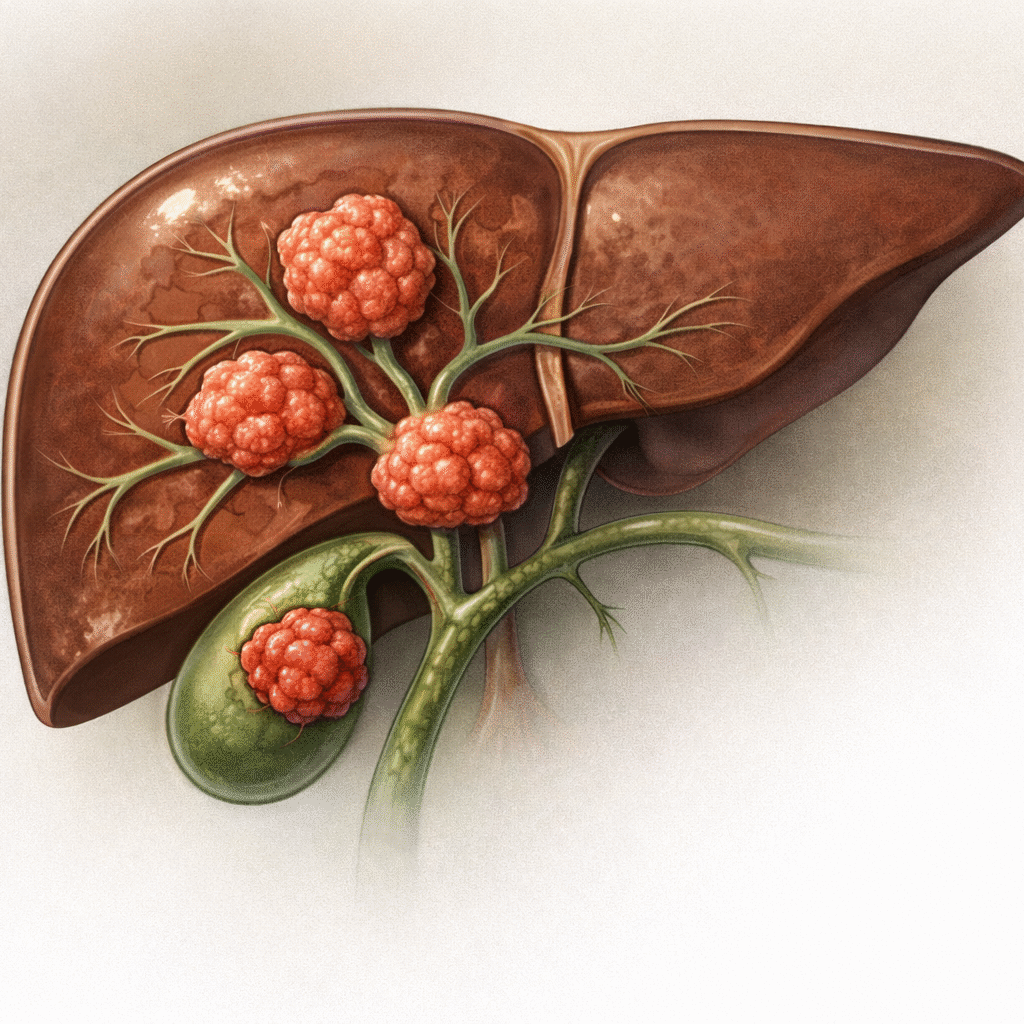
Biliary tract cancer includes intrahepatic and extrahepatic cholangiocarcinoma as well as gallbladder cancer. The disease is highly aggressive and is often diagnosed at an advanced stage. Long-term outcomes remain poor, with five-year survival rates generally between 5 and 15 percent. Current treatment options provide limited benefit, creating an urgent need for more effective and better tolerated therapies.
References
Programmed Death Ligand (PD-L1) Combined with Chemotherapy for Patients with BTC (KN035-BTC), ClinicalTrials.gov ID NCT03478488, https://clinicaltrials.gov/study/NCT03478488
Envafolimab Submits New Drug Application for Advanced Biliary Tract Cancer, Accepted for Review by NMPA, 16 January 2026, Simcere
Envafolimab Granted FDA Orphan Drug Designation for Gastric and GEJ Cancer: What It Means for Patients and Research, 26 December 2025, https://pharmacally.com/envafolimab-granted-fda-orphan-drug-designation-for-gastric-and-gej-cancer-what-it-means-for-patients-and-research/