
A practical Ramadan nutrition guide on how to support gut health and metabolism while fasting, with real meal examples, hydration tips, and science backed strategies for suhoor & Iftar.
Written By: Sana Khan BPharm
Ramadan is a blessed month of spiritual reflection, discipline, and self-care observed by millions of Muslims worldwide. During this month, fasting takes place daily from dawn, known as Suhoor, until sunset, called Iftar. Because the Islamic calendar follows a lunar cycle, Ramadan shifts about 10 to 11 days earlier each year. This means the fasting month gradually moves through all seasons, bringing very different experiences. In summer, fasting hours can extend beyond 14 to 16 hours in many regions, with high temperatures increasing the risk of dehydration and electrolyte loss. In winter, the fasting window is shorter, but cold weather often encourages heavier, calorie-dense meals that may burden digestion. These seasonal changes strongly influence appetite, fluid needs, energy levels, and food choices.
Beyond its religious significance, Ramadan fasting has attracted growing scientific interest for its potential effects on gut health, metabolic regulation, insulin sensitivity, and inflammation. Yet these benefits are not automatic. Long fasting hours, irregular meal timing, limited water intake, and reliance on fried or sugary foods can lead to acidity, constipation, fatigue, and unstable blood sugar. Thoughtful planning around hydration, balanced nutrition, and meal composition is therefore essential.
What Happens to the Gut and Metabolism During Fasting
During daylight fasting, insulin levels fall and the body shifts to using stored energy. The gut gets a long rest from constant digestion, which can reduce inflammation and improve the balance of gut bacteria. At the same time, dehydration and heavy evening meals can slow gut movement and disturb blood sugar control. The goal is to break the fast in a way that gently restarts digestion and keeps metabolism steady through the night.
Build a Smarter Suhoor
Suhoor works like fuel for the entire day. Meals high in refined carbs digest quickly and leave you hungry by mid-morning. A balanced suhoor should combine slow carbohydrates, protein, healthy fats, and fiber.
Practical suhoor examples
- Vegetable omelet with one whole wheat roti and a bowl of curd
- Oats cooked with milk, topped with almonds and chia seeds
- Moong dal chilla with paneer filling and a fruit
- Peanut butter on whole grain bread with a boiled egg
These meals release energy slowly, protect muscle, and feed good gut bacteria. Adding yogurt or buttermilk improves digestion and reduces acidity.
Break the Fast Without Shocking the Stomach
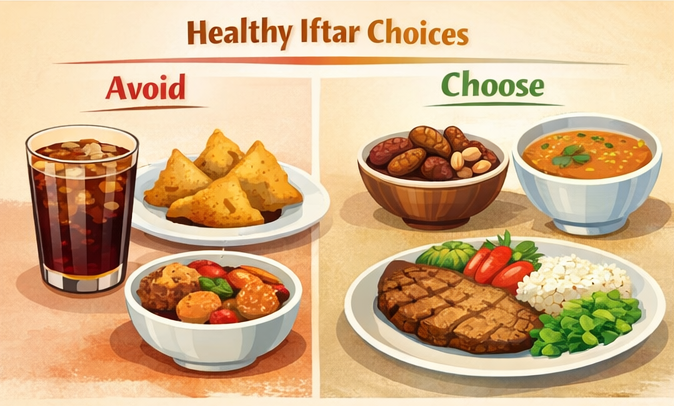
Iftar is the most critical moment for gut health. Large portions of fried foods and sugary drinks cause a rapid insulin spike, bloating, and extreme tiredness.
A gentle iftar routine
- Start with water and one or two dates
- Follow with a light soup such as lentil, tomato, or vegetable
- Wait 10 minutes before the main meal
- Keep the main plate balanced with protein and vegetables
Gut friendly iftar plates
- Grilled chicken, mixed vegetable salad, and a small portion of rice
- Rajma or chana curry with roti and cucumber raita
- Fish curry with sautéed vegetables
- Vegetable pulao with curd and lemon
Avoid making fried snacks the first food every evening. Save them for occasional treats rather than daily staples.
Hydration is Part of Digestion
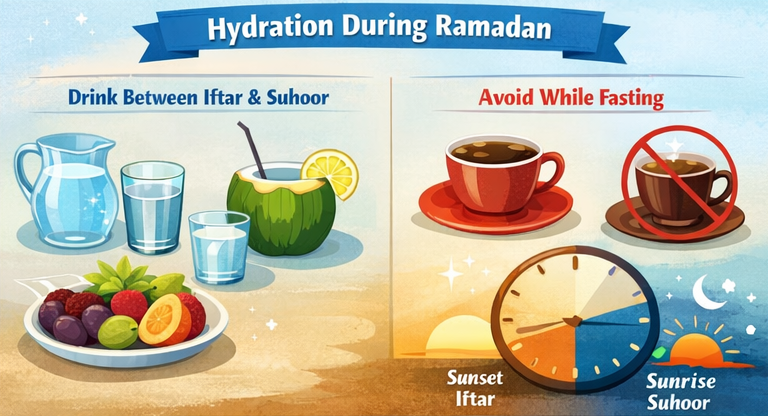
Dehydration is the main reason for constipation and headaches in Ramadan. The gut needs water to move food forward.
Simple hydration plan
- Two glasses at iftar
- One glass after dinner
- One glass before bed
- Two glasses at suhoor
Coconut water, lemon water, and thin buttermilk help better than sweet sherbets. Reduce strong tea and coffee at night because they increase water loss.
Feed the Microbiome Every Day
Gut bacteria thrive on fiber and fermented foods. When these are missing, bloating and irregular motions become common.
Daily microbiome checklist
- One bowl of curd, kefir, or buttermilk
- A portion of salad or cooked vegetables
- Whole grains such as oats, brown rice, or millets
- Prebiotic foods like onions, garlic, bananas, and chickpeas
Protect Metabolism with Protein
Many people lose muscle during Ramadan because meals focus only on carbs. Adequate protein keeps metabolic rate stable and controls hunger.
Easy protein targets
- Eggs, paneer, fish, chicken, or soy at iftar
- Dal, sprouts, or nuts at suhoor
- Aim for a protein source at both meals
Common Problems and Practical Fixes
Acidity and reflux
Choose smaller portions, avoid very spicy food, and keep the gap between dinner and sleep. Oats, bananas, and curd soothe the stomach.
Constipation
Add soaked chia or isabgol at night, increase vegetables, and drink warm water at suhoor.
Evening fatigue
Reduce sugary drinks and replace them with dates plus nuts or fruit.
Safe Approach for People with Metabolic Conditions
People with diabetes, fatty liver, or thyroid disorders should not copy generic plans. Monitor blood sugar, avoid skipping suhoor, and keep medications adjusted with a doctor. Warning signs such as dizziness, confusion, or very high glucose require breaking the fast and seeking care.
Light Movement Helps the Gut
A short walk after iftar improves digestion and blood sugar control. Gentle stretching before suhoor reduces cramps and stiffness. Intense workouts are better placed one hour after iftar.
A Simple One Day Model Plan
Suhoor
Oats with milk and nuts + boiled egg + one fruit + water
Iftar start
Water + two dates + lentil soup
Main meal
Grilled chicken + roti + mixed salad + curd
Later snack if needed
Fruit or roasted chana
This pattern supports steady energy, healthy bowel movement, and controlled weight.
After Ramadan Transition
When normal meal timing returns, increase breakfast slowly and keep portion sizes moderate. Continue fiber and hydration habits to avoid rebound acidity or weight gain.
Ramadan can strengthen gut health and metabolism when meals respect the body’s rhythm. Balanced suhoor, gentle iftar, enough water, and daily fiber turn fasting into a period of repair rather than stress. Small, consistent choices each evening build better health long after the month ends.
References
Mohammed R.A. Elhag et al, Transforming gut health through Ramadan intermittent fasting: A review on metabolic and microbiomic insights, Clinical Nutrition ESPEN, Volume 69, 2025, Pages 115-130, https://doi.org/10.1016/j.clnesp.2025.06.051
Mousavi SN et al, Effects of Ramadan and Non-ramadan Intermittent Fasting on Gut Microbiome. Front Nutr. 2022 Mar 22;9:860575. Doi: 10.3389/fnut.2022.860575. PMID: 35392284; PMCID: PMC8980861.
Sumel Ashique et al, Gut microbiota modulation and health benefits of various fasting regimens, Current Research in Biotechnology, Volume 10, 2025, 100311, https://doi.org/10.1016/j.crbiot.2025.100311
MoezAlIslam Ezzat Faris et al, Editorial: The model of Ramadan diurnal intermittent fasting: unraveling the health implications, volume III, Front. Nutr., Sec. Nutrition and Metabolism, Volume 12 – 2025, https://doi.org/10.3389/fnut.2025.1586573
Zouhal, H.; Bagheri, R.; Triki, R.; Saeidi, A.; Wong, A.; Hackney, A.C.; Laher, I.; Suzuki, K.; Ben Abderrahman, A. Effects of Ramadan Intermittent Fasting on Gut Hormones and Body Composition in Males with Obesity. Int. J. Environ. Res. Public Health 2020, 17, 5600. https://doi.org/10.3390/ijerph17155600
Rouhani MH, Azadbakht L. Is Ramadan fasting related to health outcomes? A review on the related evidence. J Res Med Sci. 2014 Oct;19(10):987-92. PMID: 25538785; PMCID: PMC4274578.
Ahmed, S.; Khokhar, N.; Shubrook, J.H. Fasting during Ramadan: A Comprehensive Review for Primary Care Providers. Diabetology 2022, 3, 276-291. https://doi.org/10.3390/diabetology3020019
Stay healthy during Ramadan, World Health Organization, https://www.emro.who.int/noncommunicable-diseases/campaigns/stay-healthy-during-ramadan.html