
Written By: Roshan Gunjal, BPharm
Reviewed By: Pharmacally Editorial Team
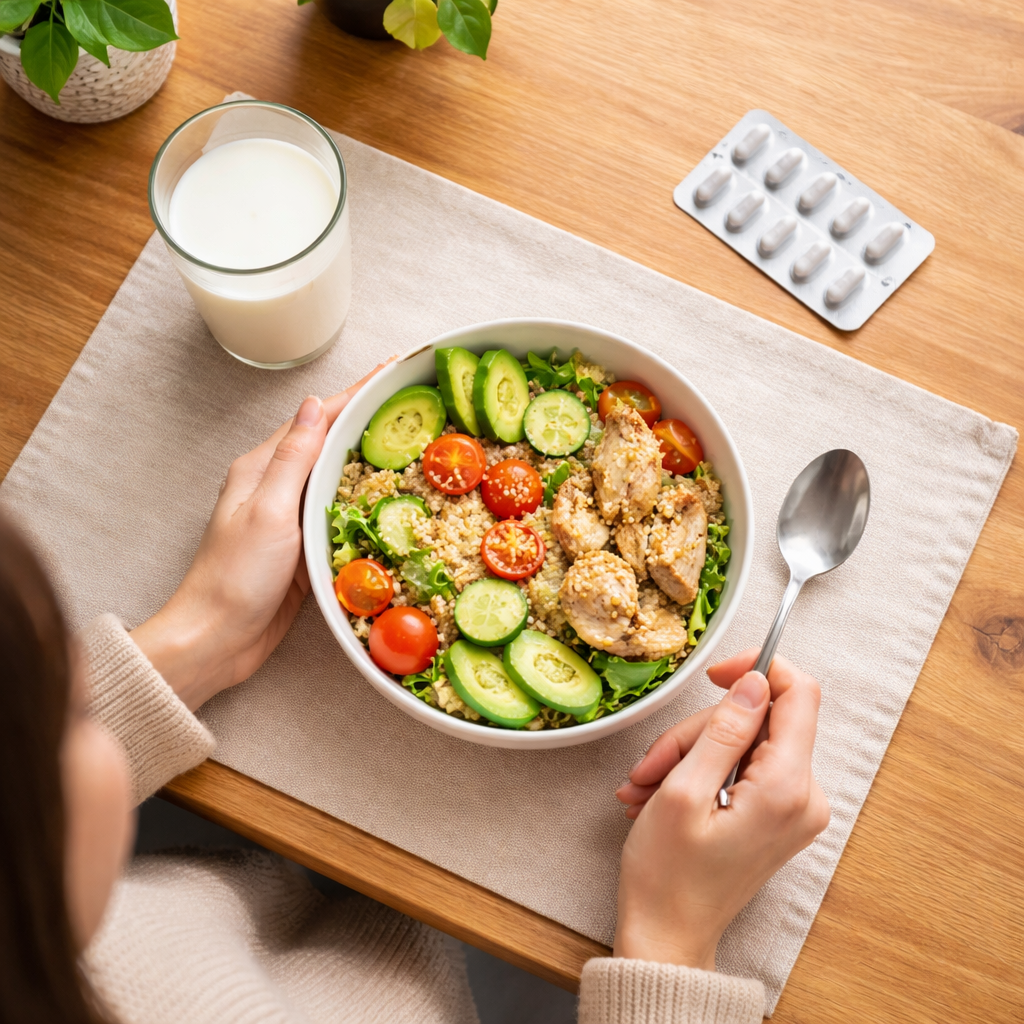
Antibiotics can save lives, but they often come with unwanted side effects in the stomach, such as nausea, cramps, or loose stools. Many people wonder how food choices and timing influence these effects and whether what they eat can also affect how well an antibiotic works. The answer is not the same for every medicine. Some antibiotics are easier on the stomach when taken with food, while others work best when certain foods are avoided. This article explains how food interacts with antibiotics, how it can change side effects and absorption, and offers practical guidance to help you take your medication safely and comfortably.
How antibiotics cause stomach upset
Antibiotics can bother the gut in two main ways. First, they can irritate the stomach lining directly, triggering nausea. Second, they change the mix of bacteria in your gut, which can lead to diarrhea. The likelihood and severity depend on the drug class and the individual. General advice is to follow the instructions in the patient leaflet or from your pharmacist because some antibiotics behave differently.
How does food change antibiotic tolerance and absorption?
Antibiotics that are commonly taken with food to reduce nausea
Metronidazole (Flagyl), if it makes you feel sick, taking it after a meal or snack usually helps and is commonly recommended.
Some amoxicillin formulations: you can usually take amoxicillin with or without food, but taking it with a meal may reduce upset stomach for some people.
Antibiotics, where food reduces stomach irritation, but can change absorption
Doxycycline and other tetracyclines: food (a light meal) often reduces stomach pain or reflux from doxycycline, but certain foods, especially dairy, can bind the drug and reduce how much gets into your bloodstream. To balance tolerance and effectiveness, many doctors advise taking doxycycline with a small non-dairy meal and a full glass of water and avoiding calcium-rich foods within a couple of hours.
Antibiotics that may need an empty stomach for best absorption
A few antibiotics lose significant absorption when taken with food, which could reduce effectiveness. That is why the patient leaflet or your prescriber will sometimes say “take on an empty stomach.” Follow those instructions rather than guessing.
Fluoroquinolones like ciprofloxacin often work best on an empty stomach for optimal absorption, though a light snack may ease nausea if tolerated. Food, especially dairy or calcium-rich items, can bind to these antibiotics and reduce their effectiveness. Similar to tetracyclines, it is best to wait at least 2 hours before or after consuming such foods.
Quick practical rules you can use now
- Read the leaflet or ask the pharmacist. The patient information that comes with the medicine will say whether to take it with food. That instruction is more important than general advice
- If the leaflet says “with food,” eat something small. A light snack or meal usually reduces nausea and helps tolerate the dose.
- If the leaflet says “empty stomach”—follow it. Absorption can matter for effectiveness. If stomach upset is severe, ask your prescriber whether an alternative or timing adjustment is okay.
- Dairy and minerals: separate them from certain antibiotics. For tetracyclines and some fluoroquinolones, avoid milk, calcium-fortified drinks, iron, or antacids close to the dose because they reduce absorption. If you need to eat, choose non-dairy options and wait the recommended time after the dose before consuming calcium-rich foods.
- Stay hydrated and avoid heavy, spicy meals if you’re feeling nauseous. Plain foods and fluids are easier on the stomach while you take antibiotics.
Probiotics and antibiotic-related gut side effects
Probiotics can help counter antibiotic-induced dysbiosis by supporting gut bacteria balance, potentially reducing diarrhea risk. Take them a few hours apart from your antibiotic dose to avoid interference, and choose strains like Lactobacillus or Saccharomyces boulardii backed by evidence. Discuss with your pharmacist for the best option during treatment.
A few example scenarios
You’re given metronidazole. Take it after a meal to reduce nausea. Avoid alcohol during treatment and for a short time after.
You’re given doxycycline. If it causes reflux or nausea, take it with a small non-dairy meal and water. Do not take it at the same time as milk or calcium supplements.
You’re given amoxicillin. You may take it with or without food. If it upsets you, take it with a snack.
When to see your doctor
Contact your prescriber if you have severe or persistent vomiting that prevents you from keeping pills down, blood in stool, signs of an allergic reaction (hives, swelling, breathing difficulty), or severe diarrhea (more than three loose stools a day or blood). If you are worried that food will reduce the effect of your antibiotic, ask your prescriber whether a timing adjustment or a different antibiotic is appropriate.
Conclusion
Food choices and timing can help reduce stomach upset with many antibiotics, but not all. The right approach depends on the exact antibiotic: some work best on an empty stomach, while others are safer and better tolerated with food. Always read the patient leaflet and follow medical advice. If nausea or other side effects are bad enough to stop treatment, contact your healthcare provider for an alternative rather than skipping doses.
References
Antibiotics, NHS, Accessed from https://www.nhs.uk/medicines/antibiotics/
Side effects of metronidazole, NHS, Accessed from https://www.nhs.uk/medicines/metronidazole/side-effects-of-metronidazole
Metronidazole (oral route), Mayo Clinic, Accessed from https://www.mayoclinic.org/drugs-supplements/metronidazole-oral-route/description/drg-20064745
Amoxicillin Capsules or Tablets, Cleveland Clinic, Accessed from https://my.clevelandclinic.org/health/drugs/20668-amoxicillin-capsules-or-tablets
Tao RE, et al, Oral Tetracycline-Class Drugs in Dermatology: Impact of Food Intake on Absorption and Efficacy. Antibiotics (Basel). 2023 Jul 5;12(7):1152. Doi: 10.3390/antibiotics12071152. PMID: 37508248; PMCID: PMC10376323.
Shambo Samrat Samajdar et al, Antimicrobial drug administration and food timings: clinico-pharmacological considerations, Explor Anim Med Res, Vol.11, Issue – 1, 2021, p. 10-13 DOI : 10.52635/EAMR/11.1.10-13
Antibiotic Dos and Don’ts: Tips for Staying Healthy While Taking an Antibiotic, University of Rochester Medical Center, https://www.urmc.rochester.edu/news/publications/health-matters/antibiotic-dos-and-donts-tips-for-staying-healthy-while-taking-an-antibiotic
Fluoroquinolone Antibiotics, NHS, Chelsea and Westminster Hospital, https://www.chelwest.nhs.uk/services/hiv-sexual-health/clinics/10-hammersmith-broadway/links/quinolone-leaflet.pdf
Shuwei Yang et al, Prevention and treatment of antibiotic-associated adverse effects through the use of probiotics: A review, Journal of Advanced Research, Volume 71, 2025, Pages 209-226, https://doi.org/10.1016/j.jare.2024.06.006
Hamed Al-Ghamdi et al, Impact of Concurrent Use of Probiotics on Risk of Antibiotic-Associated Diarrhoea in Adults, Journal of Healthcare Science, Vol-2, Issue-9, DOI: http://dx.doi.org/10.52533/JOHS.2022.2902