
Written By: Aparna Jadhav BPharm
Reviewed By: Pharmacally Editorial Team
If you take iron tablets for anemia and love your daily cup of tea, you have probably heard this advice:
“Do not take tea with iron pills.”
This warning is common, especially in countries where tea is part of daily life. But how real is this interaction? Does tea completely block iron tablets, or is it just another health myth?
Let us break it down…
Why Tea and Iron Are Connected
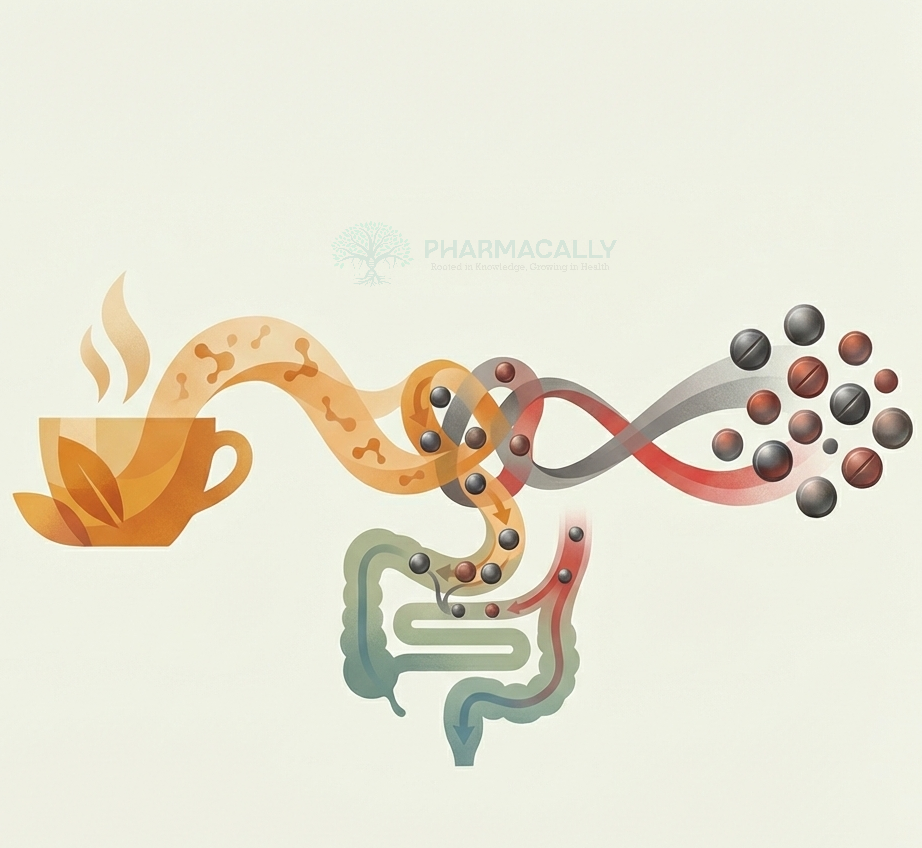
Tea, whether black or green, contains natural compounds called polyphenols, especially tannins. These compounds can attach to iron in the gut.
Most iron tablets contain non-heme iron, the same type found in plant foods. This form of iron is more sensitive to blockers. When tea is taken at the same time as an iron pill, tannins bind to the iron and form a complex that the body cannot absorb well. That iron then passes out of the body unused.
This is why tea is often discussed in relation to anemia and iron deficiency.
Does Tea Cancel the Effect of Iron Tablets?
No, Tea does not cancel or destroy the iron tablet.
What it does is reduce how much iron your body absorbs from that dose. Studies show that tea can reduce non-heme iron absorption by about 20% to as high as 70% or more, depending on how strong the tea is and when it is taken.
So the iron tablet still works, just not as efficiently if tea is taken together with it.
What Research Shows About Timing
As per a controlled trial published in The American Journal of Clinical Nutrition, consuming tea together with an iron-containing meal significantly reduced iron absorption. The same study showed that delaying tea intake by 1 hour after the meal markedly reduced this inhibitory effect, allowing substantially better iron absorption.
This finding supports current dietary advice that spacing tea and iron intake improves treatment response in iron deficiency.
Evidence from Earlier Studies
The interaction between tea and iron has been known for decades.
As per findings from a classic study published in Gut, tea consumed with meals significantly inhibited iron absorption due to the formation of iron-tannin complexes in the gut.
Further review of evidence supports this mechanism. As per the comprehensive review by Zijp et al., tea and other polyphenol-rich beverages consistently reduce non-heme iron absorption, particularly in diets low in heme iron, while heme iron absorption remains largely unaffected.
Common Myths and the Real Facts
Many people believe that even one cup of tea can cause anemia. That is not true.
In healthy people with good iron levels and a balanced diet, drinking tea in moderation does not usually cause iron deficiency. The risk becomes important in people who already have low iron levels or higher iron needs.
This includes:
- People with iron deficiency anemia
- Pregnant women
- Women with heavy menstrual bleeding
- Adolescents
- People on mostly plant-based diets
For these groups, timing matters much more.
How Much Difference Does Timing Make?
Timing plays a big role.
Research shows that drinking tea with an iron-rich meal or an iron tablet significantly lowers iron absorption. However, when tea is delayed by about 1 hour after the meal or tablet, iron absorption improves noticeably.
Many nutrition and clinical guidelines suggest keeping a gap of at least 1 hour, and preferably 2 hours, between iron tablets and tea or coffee.
This simple change can make iron treatment work faster and better.
What Happens Inside the Body?
Iron tablets need to stay dissolved in the gut to be absorbed in the small intestine. Tea tannins bind tightly to iron and make it insoluble. Once that happens, the body cannot absorb it.
Vitamin C helps iron stay soluble and improves absorption. That is why iron tablets are often advised with citrus juice or vitamin C. However, vitamin C can only partly offset the blocking effect of tea. Spacing the tea away from the iron is still important.
Iron from meat sources, called heme iron, is absorbed differently and is much less affected by tea. This is why tea has a stronger effect in people who rely mainly on plant-based iron.
Does the Type of Tea Matter?
Yes, but the advice remains similar.
- Black tea is the strongest blocker due to its high tannin content
- Green tea can also reduce iron absorption
- Some herbal teas, such as peppermint, may have a moderate effect
- Coffee and cocoa can also reduce iron absorption
For someone being treated for anemia, it is safest to avoid all these beverages close to iron tablets.
Practical Advice for People Taking Iron Tablets
Here is what actually works in daily life:
- Take iron tablets with plain water
- Avoid tea or coffee 1–2 hours before and after the iron dose
- If possible, take iron with a vitamin C-rich drink or fruit
- You do not need to give up tea completely; just adjust the timing
This approach improves iron absorption without forcing major lifestyle changes.
The Bottom Line
Tea does not cancel iron tablets, but it can significantly reduce iron absorption if taken together. The interaction is real and well supported by scientific studies. For people treating iron deficiency anemia, drinking tea with or immediately after iron pills can slow recovery.
The solution is simple. Keep tea and iron tablets apart by at least an hour. This small timing change allows you to enjoy your tea and still get the full benefit of your iron treatment.
References
Disler PB, et al, The effect of tea on iron absorption. Gut. 1975 Mar;16(3):193-200. Doi: 10.1136/gut.16.3.193. PMID: 1168162; PMCID: PMC1410962.
Salma F Ahmad Fuzi et al, A 1-h time interval between a meal containing iron and consumption of tea attenuates the inhibitory effects on iron absorption: a controlled trial in a cohort of healthy UK women using a stable iron isotope, The American Journal of Clinical Nutrition, Volume 106, Issue 6, 2017, Pages 1413-1421, https://doi.org/10.3945/ajcn.117.161364
Fan FS. Iron deficiency anemia due to excessive green tea drinking. Clin Case Rep. 2016 Oct 5;4(11):1053-1056. Doi: 10.1002/ccr3.707. PMID: 27830072; PMCID: PMC5093162
Zijp, I. M., Korver, O., & Tijburg, L. B. M. (2000). Effect of Tea and Other Dietary Factors on Iron Absorption. Critical Reviews in Food Science and Nutrition, 40(5), 371–398. https://doi.org/10.1080/10408690091189194