
Written By: Pharmacally Medical News Desk
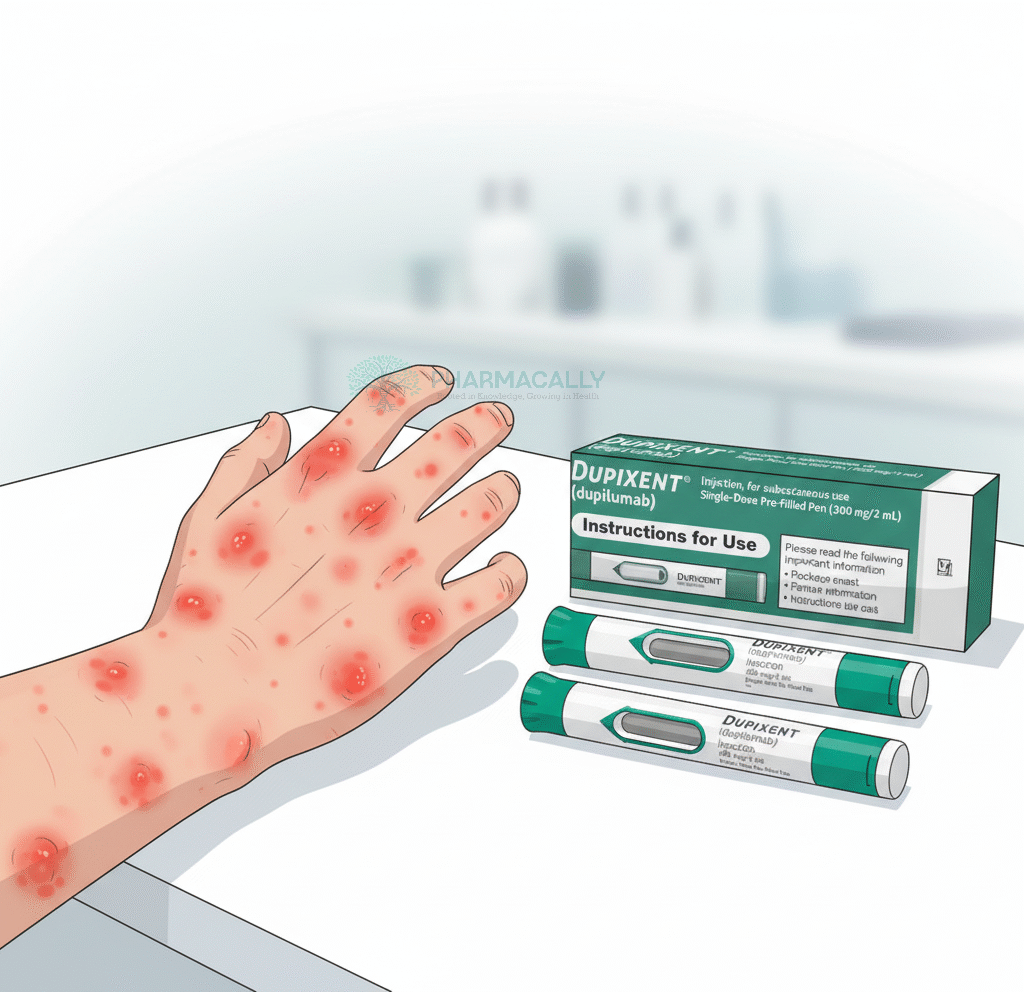
Sanofi and Regeneron’s Dupixent (Dupilumab) has been approved by the European Union as the first targeted medicine in more than ten years for treating moderate-to-severe chronic spontaneous urticaria (CSU). CSU is a long-lasting skin condition that causes itchy, sudden hives or welts on the skin. Dupixent is for patients aged 12 and older whose symptoms are not well controlled by usual antihistamine medicines and who have not used anti-IgE treatments. This approval offers fresh hope for many people with this distressing skin problem across Europe.
Chronic spontaneous urticaria happens when the immune system reacts too much, causing itchy hives and swelling without a clear cause. About 270,000 people in the EU aged 12 and above suffer from CSU that does not respond well to antihistamines alone. Dupixent works by blocking two key proteins in the immune system interleukin-4 (IL-4) and interleukin-13 (IL-13) which are involved in the inflammation that leads to these symptoms. By calming down this type of inflammation, Dupixent reduce both itching and the number of hives, improving patients’ quality of life.
The approval is based on results from two pivotal Phase III clinical trials under the LIBERTY-CUPID program (NCT04180488) Study A and Study C that included 284 patients aged 12 years and older. All these patients continued to have symptoms of chronic spontaneous urticaria even while taking standard antihistamine medicines and had never received anti-IgE treatments before. The studies compared patients who received Dupixent added to their usual antihistamine treatment versus those who remained on antihistamines alone (placebo group). These studies demonstrated that when added to standard antihistamine care, Dupixent significantly reduced itching and hive and increased the number of patients experiencing well-controlled disease or complete response after 24 weeks of treatment compared to antihistamines alone. The safety profile of Dupixent in CSU patients was consistent with its known tolerability from other indications. Over 24 weeks, the results showed that patients using Dupixent had a significant reduction in their disease activity, which means less itching and fewer hives. The studies also measured itch and hive severity separately and found both were lowered more with Dupixent compared to placebo. This shows Dupixent clear benefit when used alongside standard care for people suffering from this condition.
A third study, called Study B with 108 patients aged 12 and older, provided extra safety information. These patients had symptoms despite antihistamines and had not done well on or could not tolerate anti-IgE therapy. This study confirmed Dupixent safety and effectiveness even in this more challenging group when added to standard antihistamine care. Together, these studies show Dupixent clear benefit for people suffering from this condition, regardless of prior treatment history.
Safety results from Study A, Study B, and Study C were generally consistent with the known safety profile of Dupixent in its approved indications. The most common adverse reactions for Dupixent overall are injection site reactions, conjunctivitis, allergic conjunctivitis, joint pain, oral herpes, and eosinophilia. Additional adverse reactions of injection site induration, injection site dermatitis, and injection site hematoma were reported in the CSU adult and adolescent studies. Adverse events more commonly observed with Dupixent (≥5%) than placebo in patients with CSU were injection site reaction, COVID-19, hypertension, CSU, and accidental overdose.
Dupixent targeted mechanism addresses the type 2 inflammatory pathway driving the disease, providing a much-needed alternative to traditional treatment approaches. This marks Dupixent seventh approved indication in Europe, reaffirming its role as a key anti-inflammatory therapy across multiple chronic conditions. Notably, Dupixent won the prestigious Prix Galien Best Biotech Product award in 2025, recognizing its innovative multi-indication targeting and significant impact in biotechnology.
Tonya Winders, President and CEO of Global Allergy & Airways Patient Platform, said: “Chronic spontaneous urticaria causes unpredictable hives and itch that disrupt daily life. Dupixent reduces these symptoms and helps control the disease.”
Alyssa Johnsen, MD, PhD, Global Therapeutic Area Head of Immunology Development at Sanofi, stated: “Antihistamines provide limited relief for uncontrolled CSU patients facing constant itch and hives. Dupixent significantly cut symptoms and achieved well-controlled disease in phase 3 trials.”
George D. Yancopoulos, MD, PhD, Board co-Chair, President and Chief Scientific Officer at Regeneron, noted: “Dupixent is the first targeted CSU innovation in over a decade, blocking IL-4 and IL-13 to reduce itch and hives. It advances treatment for type 2 inflammation with a proven safety profile.”
Sanofi and Regeneron co-market Dupixent globally, and the drug continues to be a significant revenue driver with robust sales growth documented in 2025. Beyond CSU, regulatory authorities are reviewing additional indications for Dupixent, underscoring its expanding therapeutic scope in immunology and inflammation.
This landmark EU approval indicates a significant advancement in CSU management, offering patients a first-in-decade targeted treatment and potentially transforming the standard of care for this challenging skin disorder in Europe.
References
Press Release: Sanofi and Regeneron’s Dupixent approved as the first targeted medicine in the EU in over a decade for chronic spontaneous urticaria, Sanofi, 25 November 2025, https://www.sanofi.com/en/media-room/press-releases/2025/2025-11-25-06-00-00-3194015
Dupixent® (dupilumab) Approved as the First Targeted Medicine in the European Union (EU) in Over a Decade for Chronic Spontaneous Urticaria (CSU), Regeneron, 25 November 2025, https://investor.regeneron.com/news-releases/news-release-details/dupixentr-dupilumab-approved-first-targeted-medicine-european
Dupilumab for the Treatment of Chronic Spontaneous Urticaria in Patients Who Remain Symptomatic Despite the Use of H1 Antihistamine and Who Are naïve to, Intolerant of, or Incomplete Responders to Omalizumab (LIBERTY-CSU CUPID), ClinicalTrials.gov ID NCT04180488, https://clinicaltrials.gov/study/NCT04180488