
Written By: Pharmacally Medical News Desk
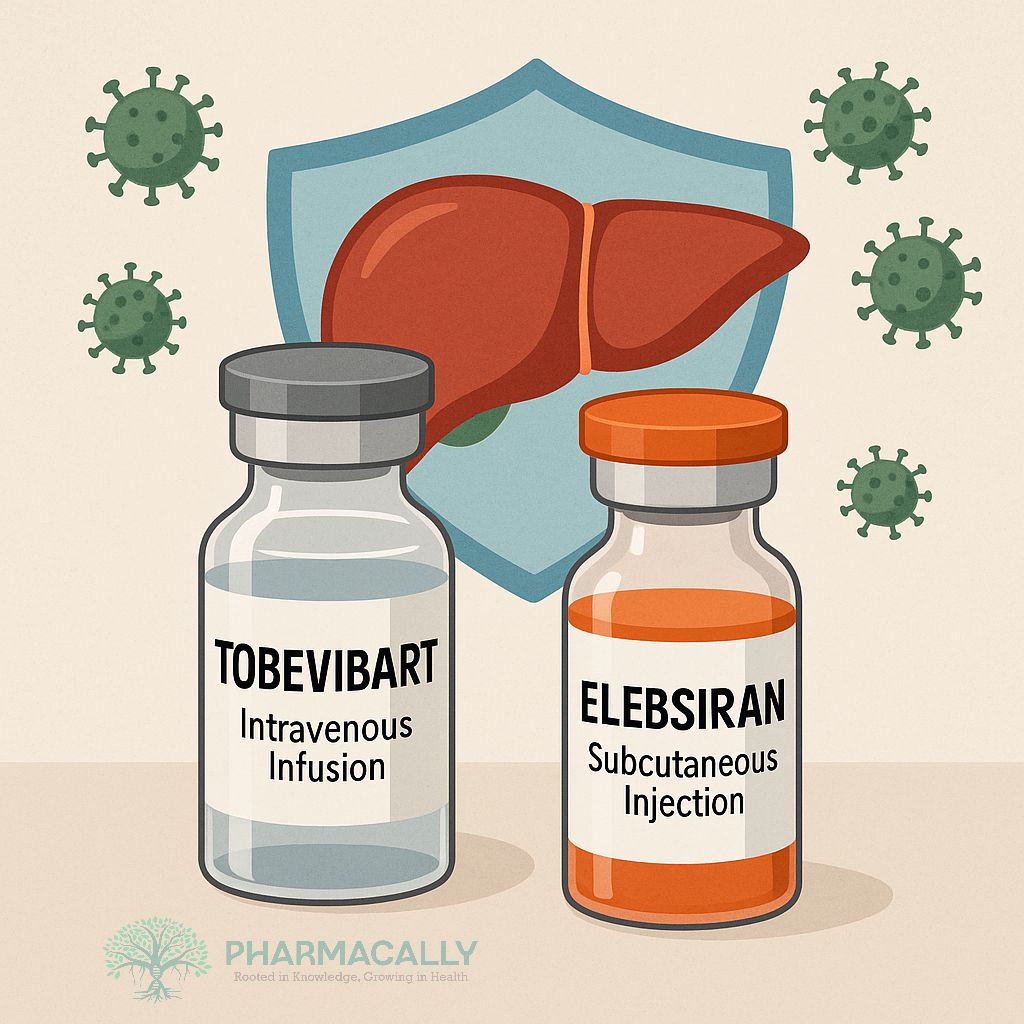
Vir Biotechnology recently announced promising data from its Phase 2 SOLSTICE clinical trial demonstrating that the combination of tobevibart and elebsiran delivers high rates of undetectable hepatitis D virus (HDV) RNA with a favorable safety profile. The 48-week data, presented at the American Association for the Study of Liver Diseases (AASLD) The Liver Meeting®, also published in the New England Journal of Medicine, underscores the potential of this investigational combination therapy to address the critical unmet need in chronic hepatitis delta (CHD) treatment.
The ongoing SOLSTICE Phase 2 (NCT05461170), open-label, multicenter trial randomly assigned participants to receive either the combination of tobevibart plus elebsiran every 4 weeks or tobevibart monotherapy every 2 weeks. The primary endpoint was a combined virologic and biochemical response at week 24, defined as an HDV RNA level below the limit of detection or a reduction of at least 2 log10 IU/mL from baseline (virologic response), accompanied by normalization of alanine aminotransferase (ALT) levels. This design aims to evaluate the efficacy and safety of the combination therapy versus monotherapy in achieving viral suppression and liver health improvement in patients with chronic hepatitis delta infection.
Results showed that combination therapy of tobevibart plus elebsiran achieved a high rate of virologic response, with 66% of participants reaching undetectable HDV RNA levels, compared to a lower response rate (48%) seen with tobevibart monotherapy administered every 2 weeks. Additionally, about 90% of participants in the combination arm had significant reductions in hepatitis B surface antigen (HBsAg) levels below 10 IU/mL, whereas the monotherapy group demonstrated smaller reductions.
Secondary endpoints included normalization of alanine aminotransferase (ALT) levels, which occurred at comparable rates between both treatments groups, indicating improvement in liver inflammation. Other secondary measures, such as sustained virologic response and improvements in liver function markers, also showed a favorable trend with combination therapy.
Safety profile shows both treatment regimens were well tolerated, with most adverse events being mild to moderate. No serious adverse events related to the study drugs were reported, confirming a favorable safety profile for the tobevibart and elebsiran combination over the study period.
Tobevibart works by inhibiting the entry of both hepatitis B and delta viruses into hepatocytes and reducing circulating viral particles, while elebsiran degrades viral RNA transcripts and limits HBsAg production. This complementary mechanism enhances viral suppression and liver function preservation.
Tarik Asselah, M.D., Ph.D., Professor of Hepatology at Hôpital Beaujon and University of Paris-Cité, stated that achieving undetectable HDV RNA is a crucial endpoint linked to better outcomes for chronic hepatitis delta patients, and praised the tobevibart and elebsiran combination for its impressive virologic suppression in the SOLSTICE Phase 2 trial, highlighting the encouraging 48-week data as evidence of meaningful patient benefit.
Marianne De Backer, Ph.D., CEO of Vir Biotechnology, expressed confidence in the monthly dosing regimen of the combination therapy, emphasizing the meaningful patient benefit it can deliver with convenient dosing, and she highlighted the significance of the New England Journal of Medicine publication as recognition of the data caliber. She reaffirmed Vir’s commitment to efficiently advancing the registrational ECLIPSE program to address the critical unmet needs in hepatitis delta treatment
Vir Biotechnology’s future plans include the ongoing ECLIPSE registrational program comprising three clinical trials (ECLIPSE-1, ECLIPSE-2, and ECLIPSE-3) to further evaluate the safety and efficacy of the tobevibart plus elebsiran combination therapy in chronic hepatitis delta. These studies aim to support regulatory submissions and expand treatment options globally; the topline results are expected to be out in first quarter of 2027.
In conclusion, the tobevibart and elebsiran combination represents a promising advance in CHD treatment, delivering high rates of undetectable HDV RNA with a favorable safety and tolerability profile at 48 weeks.
References
Tarik Asselah et al, A Phase 2 Trial of Tobevibart plus Elebsiran in Hepatitis D, The New Eng J Med, November 9, 2025, DOI: 10.1056/NEJMoa2508827
Vir Biotechnology Announces AASLD The Liver Meeting® Presentation & New England Journal of Medicine Publication of Phase 2 Data Demonstrating Tobevibart & Elebsiran Combination Deliver High Rates of Undetectable HDV RNA with Favorable Safety Profile, 09 November 2025, Vir Biotechnology, https://investors.vir.bio/news/news-details/2025/Vir-Biotechnology-Announces-AASLD-The-Liver-Meeting-Presentation–New-England-Journal-of-Medicine-Publication-of-Phase-2-Data-Demonstrating-Tobevibart–Elebsiran-Combination-Deliver-High-Rates-of-Undetectable-HDV-RNA-with-Favorable-Safety-Profile/default.aspx
SOLSTICE: Combination Therapy for the Treatment of Chronic Hepatitis D Infection, ClinicalTrials.gov ID NCT05461170, https://clinicaltrials.gov/study/NCT05461170