
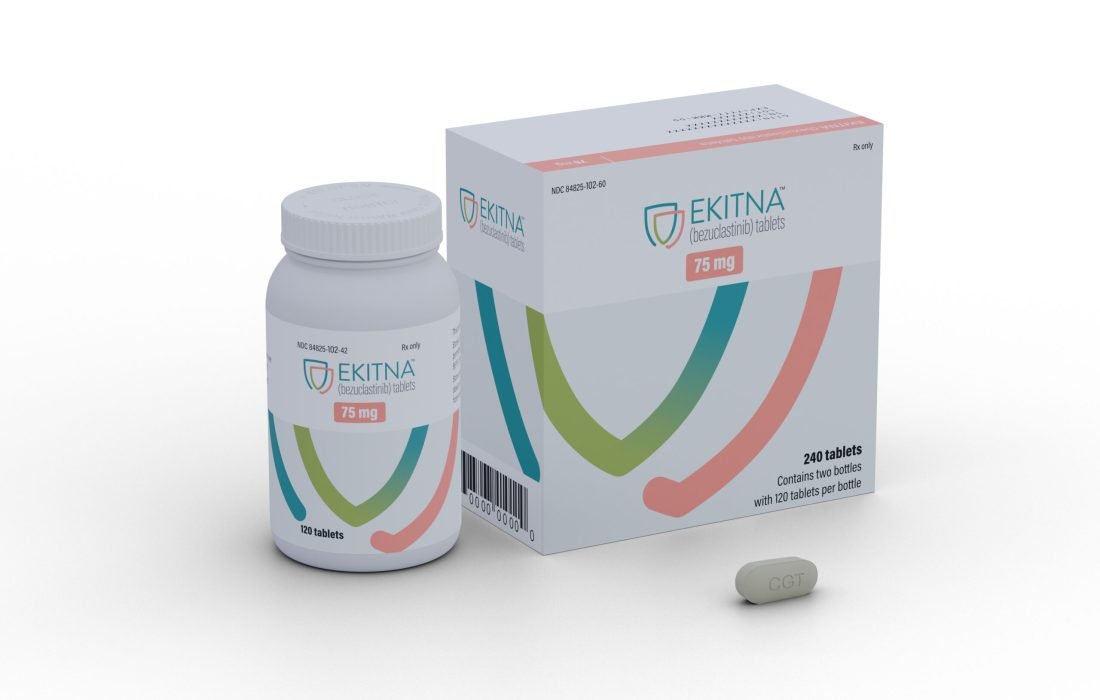
FDA approves Cogent Biosciences’ EKITNA (bezuclastinib) with sunitinib for advanced GIST, reducing progression or death risk by 50% in Phase 3 PEAK.
Written By: Anshu Gupta, PharmD
Reviewed By: Pharmacally Editorial Team
Cogent Biosciences announced on November 24, 2026, that the U.S. Food and Drug Administration (FDA) approved EKITNA (bezuclastinib) in combination with sunitinib for adults with advanced gastrointestinal stromal tumors (GIST) who have received prior treatment with imatinib.
The approval is supported by results from the Phase 3 PEAK trial, in which the combination reduced the risk of disease progression or death by 50% compared with sunitinib alone and improved median progression-free survival (PFS) from 9.2 months to 16.5 months.
According to Cogent, EKITNA represents the first treatment to demonstrate a statistically significant PFS benefit over an active comparator in second-line GIST in more than 20 years. The company has also initiated its U.S. commercial launch, with the drug available by prescription and patient support offered through the Cogent Connect program.
Phase 3 PEAK Trial Demonstrates Improved Disease Control
Phase 3 PEAK a global, randomized, open-label trial (NCT05208047), which enrolled 413 patients with histologically confirmed, locally advanced, unresectable, or metastatic GIST whose disease had progressed during imatinib treatment or who were unable to tolerate it.
Patients were randomized to receive either bezuclastinib 600 mg once daily combined with sunitinib 37.5 mg once daily (204 patients) or sunitinib 37.5 mg once daily alone (209 patients). Treatment continued until disease progression.
The primary endpoint was PFS assessed by blinded independent central review using modified RECIST version 1.1 criteria. Objective response rate (ORR) and overall survival (OS) were additional efficacy endpoints. At the September 30, 2025, data cutoff, the combination demonstrated:
- Median PFS: 16.5 months (95% CI: 13.8–19.2) versus 9.2 months (95% CI: 7.2–11.0) with sunitinib alone.
- Risk of disease progression or death: Reduced by 50% (HR: 0.50; 95% CI: 0.39–0.65; p less than 0.0001).
- Objective response rate (ORR): 46% (95% CI: 39–53) with the combination versus 26% (95% CI: 20–32) with sunitinib monotherapy (p less than 0.0001).
Mechanism of Action and Therapeutic Rationale
Bezuclastinib is a selective tyrosine kinase inhibitor designed to inhibit KIT D816V and other mutations in KIT exon 17. KIT is a receptor tyrosine kinase involved in cellular signaling, and oncogenic KIT signaling plays a central role in GIST pathogenesis.
Following initial therapy with imatinib, secondary resistance mutations commonly emerge across distinct regions of the KIT gene including the ATP-binding pocket (exons 13 and 14, targeted by sunitinib) and the activation loop (exons 17 and 18, targeted by bezuclastinib). Combining bezuclastinib with sunitinib provides complementary coverage across these resistance pathways, explaining the substantial gains in PFS and ORR over sunitinib monotherapy.
Safety Profile and Key Treatment Considerations
The combination carries an FDA boxed warning for hepatotoxicity. In the PEAK trial, elevated liver enzymes (ALT/AST) occurred in 43% of patients receiving bezuclastinib plus sunitinib (8% Grade 3), and increased bilirubin occurred in 13% (0.5% Grade 3). Because most transaminase elevations appeared within the first four months, liver function tests should be monitored at baseline and throughout treatment, with dose adjustments or discontinuation as needed.
The most common adverse reactions (occurring in at least 20% of patients) included diarrhea, elevated liver transaminases, hypertension, dysgeusia, nausea, hair color changes, fatigue, abdominal pain, and vomiting. Notable Grade 3 or 4 laboratory abnormalities included increased ALT and cytopenias (decreased leukocytes, neutrophils, lymphocytes, and hemoglobin).
Key prescribing precautions include avoiding concomitant UGT1A1 inhibitors and inducers, as well as managing embryo-fetal toxicity risks patients of reproductive potential must use effective non-hormonal contraception during therapy and for two weeks after the final dose, as bezuclastinib can reduce the effectiveness of hormonal contraceptives.
Regulatory Review and Recommended Dosage
The application received Priority Review, and the bezuclastinib-sunitinib combination was granted Breakthrough Therapy Designation. Bezuclastinib also received Orphan Drug Designation. The FDA reviewed the application through its Real-Time Oncology Review program and used an Assessment Aid submitted by the applicant to facilitate its evaluation.
The FDA-recommended dosage is bezuclastinib 600 mg orally once daily in combination with sunitinib 37.5 mg orally once daily.
Patient Access and Commercial Launch
EKITNA is now available by prescription in the United States. Cogent Biosciences has launched Cogent Connect, a patient support program designed to help patients and healthcare professionals navigate financial and access-related barriers to treatment.
Clinical Interpretation
The Phase 3 PEAK trial demonstrated a statistically significant and clinically meaningful PFS benefit with bezuclastinib plus sunitinib over sunitinib monotherapy in previously treated advanced GIST. The 50% reduction in the risk of progression or death, paired with an ORR of 46%, establishes the combination as a significant advancement following imatinib failure.
These findings are particularly notable because the combination achieved superior disease control against an active comparator rather than placebo. However, immature OS data and the potential for hepatotoxicity remain important clinical considerations. Additionally, the trial’s crossover design allowing patients in the sunitinib arm to receive the combination following confirmed progression will be an important factor when interpreting mature OS outcomes.
References
Cogent Biosciences. Cogent Biosciences Announces FDA Approval and Launch of EKITNA™ (bezuclastinib) for the Treatment of Patients with Gastrointestinal Stromal Tumors (GIST) Who Have Received Prior Treatment with Imatinib. November 24, 2026.
U.S. Food and Drug Administration. FDA Approves Bezuclastinib in Combination with Sunitinib for Advanced Gastrointestinal Stromal Tumors. November 24, 2026.
PEAK: A Study of Bezuclastinib in Combination with Sunitinib in Patients with Advanced Gastrointestinal Stromal Tumors. NCT05208047

About the Writer
Anshu Gupta (LinkedIn) is a PharmD professional and healthcare writer with interests in clinical research, pharmacovigilance, regulatory affairs, and medical writing. She has presented research at academic conferences and completed certifications in Good Clinical Practice (GCP), ICH-GCP, and drug safety. Passionate about clinical trials and evidence-based medicine, she is committed to translating scientific evidence into accurate, reliable, and accessible healthcare content.