
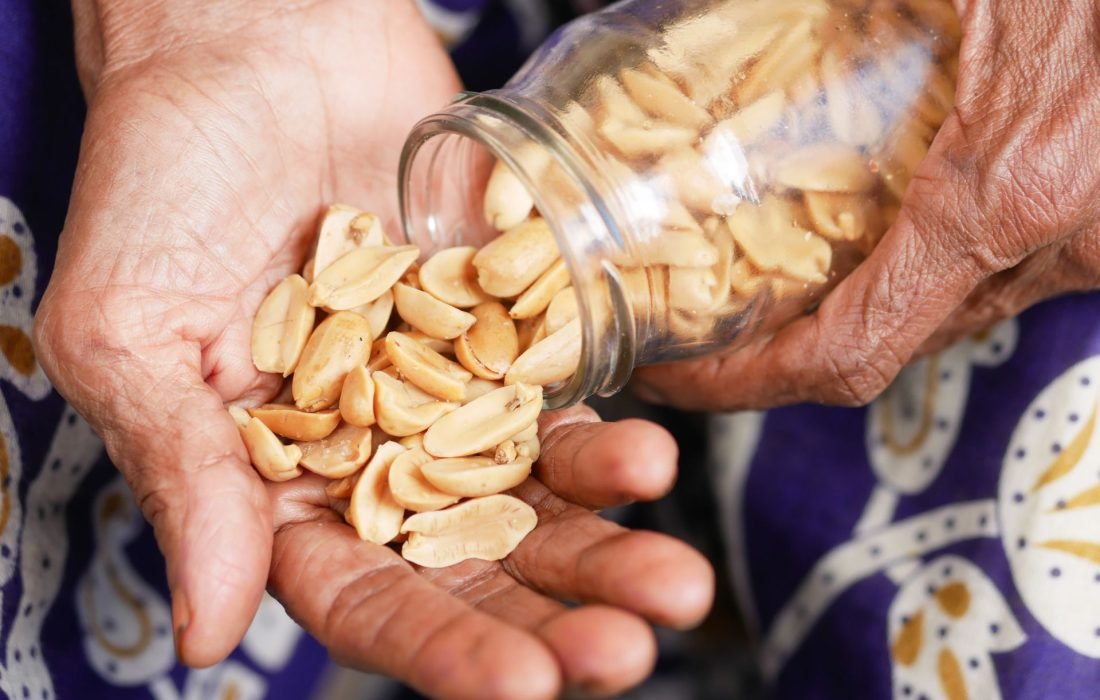
Aravax reports positive Phase 2 results for PVX108, with a 2.4-fold increase in peanut tolerance and sustained clinical effects in children.
Written By: Mayuri Vaja, PharmD
Reviewed By: Pharmacally Editorial Team
Aravax has reported positive topline results from its Phase 2 clinical trial of PVX108, an investigational peptide-based immunotherapy for peanut allergy in children aged 4–11 years. The study met its primary efficacy endpoint, demonstrating a statistically significant increase in the maximum tolerated dose of peanut following 12 months of once-monthly treatment (12 doses administered every four weeks) compared with placebo. The findings also showed reductions in allergic reaction severity, improvements in child-reported outcomes, and maintained clinical effects six months after treatment discontinuation.
Phase 2 Trial Meets Primary Efficacy Endpoint
The randomized, double-blind, placebo-controlled Phase 2 study (AVX-201; NCT05621317) was conducted across 14 sites in the United States and Australia, enrolling 95 participants: 24 adolescents aged 12–17 years in an initial pilot safety cohort (Cohort 1) and 71 children aged 4–11 years in the primary efficacy and safety cohort (Cohort 2), which is the focus of this readout.
In Cohort 2, participants received intradermal PVX108 at doses of 5 nmol or 50 nmol, or placebo, every four weeks over 12 months. Efficacy was assessed via a double-blind, placebo-controlled food challenge following PRACTALL guidelines.
The trial achieved its primary endpoint in the 50 nmol group. At Month 12, the least-squares geometric mean maximum tolerated dose of peanut increased 2.4-fold from baseline with 50 nmol PVX108 (), versus 1.2-fold with placebo (). A consistent dose-response relationship was observed across endpoints, whereas the 5 nmol dose did not reach statistical significance on the primary endpoint.
Additionally, 39.4% of participants receiving 50 nmol PVX108 tolerated a cumulative peanut protein dose of at least 443 mg (corresponding to a 300 mg maximum tolerated dose and a 600 mg reactive dose), compared with 16.7% in the placebo group. For context, one peanut contains approximately 250–300 mg of peanut protein.
Reaction Severity, Patient Outcomes, and Safety
PVX108 significantly reduced allergic reaction severity during food challenges. While all participants experienced moderate or severe reactions at baseline, 67% of reactions to baseline reactive doses in the 50 nmol group were graded zero or mild by Month 12, compared with 35% for placebo. Significant improvements were also observed in peanut skin prick test reactions and child-reported emotional impact scores in the 50 nmol group.
Overall, 68 of 71 primary cohort participants (96%) completed Month 12 with no treatment-related withdrawals. PVX108 demonstrated a favourable safety profile, with no treatment-related allergic adverse events, anaphylaxis, or serious adverse events reported. Treatment-related adverse events occurred in six participants one (4.2%) on placebo, two (8.3%) on 5 nmol, and three (13%) on 50 nmol none exceeding Grade 2 severity, primarily local administration-site reactions.
Following treatment, participants entered a six-month treatment-free period. The Month 18 food challenge demonstrated maintenance or further improvement of clinical effects versus Month 12, suggesting potential disease modification, though longer-term studies are needed to confirm sustained immune tolerance.
Mechanism and Path Forward
PVX108 is an FDA Fast Track-designated T-cell-targeting peptide immunotherapy designed to retrain peanut-specific immune responses toward tolerance while minimizing acute allergic reactions associated with whole-allergen therapies.
Following Phase 2 completion, 59 of 68 completers (87%) enrolled in a 12-month open-label extension study, with results expected in the second half of 2027. Full topline data will be presented at the ACAAI Annual Scientific Meeting on November 14, 2026 (Abstract 7001 / LBA005), and at the EAACI Food Allergy and Anaphylaxis Meeting (FAAM-EUROBAT-ISMA) in Utrecht, Netherlands, on November 20, 2026. While encouraging, these topline findings come from a relatively small paediatric cohort and require confirmation in larger, longer-term trials.
Reference
Aravax Announces Positive Results of Phase 2 Clinical Trial of PVX108, a Novel Immunotherapy for the Treatment of Peanut Allergy, Aravax, 12 November 2026
A Safety and Efficacy Study of PVX108 in Children and Adolescents with Peanut Allergy, ClinicalTrials.gov ID NCT05621317

About the Writer
Mayuri Vaja (Linkedin) is a Pharm.D professional with a strong interest in clinical research, pharmacovigilance, and medical writing, supported by certifications in pharmacovigilance and academic projects exploring AI in healthcare and drug safety.
With a growing focus on evidence-based healthcare and scientific communication, she is developing expertise in clinical research and translating healthcare evidence into clear, meaningful content.
As a Pharmacally healthcare writer, Mayuri is committed to creating accurate, research-driven, and clinically relevant healthcare content while continuously strengthening her professional skills.