
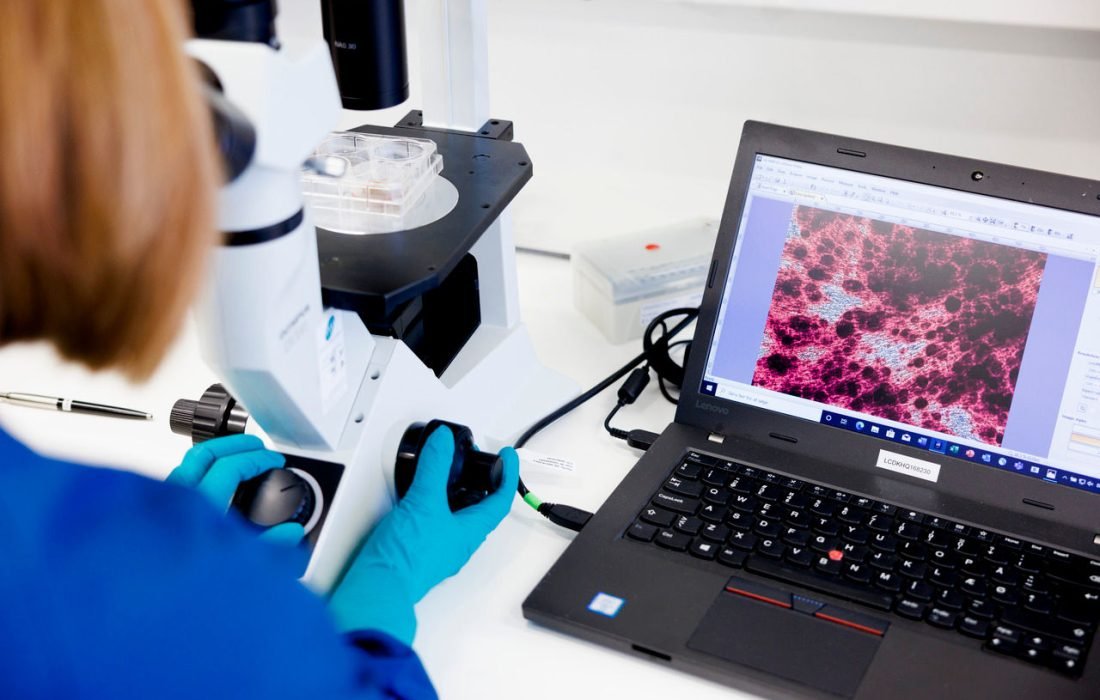
Novo Nordisk reports improved liver injury and fibrosis markers with Wegovy 2.4 mg in a 106-patient lower-BMI MASH subgroup analysis of the Phase 3 ESSENCE trial.
Written By: Anamika Koshti, PharmD
Reviewed By: Pharmacally Editorial Team
Novo Nordisk reported on November 8, 2026, results from a post hoc analysis of its Phase 3 ESSENCE trial (NCT04822181), evaluating once-weekly semaglutide 2.4 mg (Wegovy) in adults with metabolic dysfunction-associated steatohepatitis (MASH), liver fibrosis and a body mass index (BMI) below 27 kg/m². Presented orally at The Liver Meeting 2026, organised by the American Association for the Study of Liver Diseases (AASLD) in Denver, the analysis found improvements in multiple measures of liver injury, disease activity and fibrosis at week 72 compared with placebo.
The findings address a population that may receive less attention in MASH management because the disease is frequently associated with obesity. However, the analysis was exploratory and does not establish clinical benefit specifically in lower-BMI patients.
Analysis Design: A 106-Patient Subgroup of the Phase 3 ESSENCE Trial
ESSENCE enrolled 1,197 adults with biopsy-confirmed MASH and moderate-to-advanced liver fibrosis (F2 or F3), randomised in a 2:1 ratio to receive semaglutide 2.4 mg or placebo alongside standard care for 240 weeks.
The trial’s first part evaluated histological outcomes at week 72 in the first 800 participants. The current post hoc analysis included 106 participants from this group who had a BMI below 27 kg/m².
The analysis was not originally designed to establish treatment efficacy in this subgroup. Novo Nordisk therefore describes the findings as hypothesis-generating, with further investigation needed to establish their clinical relevance.
Key Results: Improvements Across Liver Injury and Fibrosis Markers
At week 72, several exploratory non-invasive measures favoured semaglutide over placebo.
Markers of liver injury: Alanine aminotransferase (ALT) showed an estimated treatment ratio (ETR) of 0.61 (95% CI 0.48–0.79), while aspartate aminotransferase (AST) recorded an ETR of 0.67 (95% CI 0.56–0.80). Both results favoured semaglutide.
Disease activity: The FibroScan-AST (FAST) score, which combines liver stiffness, liver fat assessment and AST measurements to estimate the likelihood of at-risk MASH, showed an estimated treatment difference (ETD) of -0.13 (95% CI -0.26 to -0.01).
Fibrosis markers: The Enhanced Liver Fibrosis (ELF) score showed an ETD of -0.45 (95% CI -0.73 to -0.17), while PRO-C3, a marker associated with type III collagen formation, recorded an ETR of 0.82 (95% CI 0.71–0.95).
Liver stiffness measured through vibration-controlled transient elastography (VCTE-LSM) showed an ETR of 0.88 (95% CI 0.73–1.06). However, this result did not establish a statistically significant treatment difference because its confidence interval included 1.0.
ETR values below 1 and ETD values below 0 favour semaglutide.
Histological Outcomes and Safety: Important Data Limitations
The biomarker findings complement the two primary histological endpoints evaluated in ESSENCE Part 1: resolution of steatohepatitis without worsening of fibrosis, and improvement in fibrosis without worsening of steatohepatitis.
Novo Nordisk states that histological data are available for this subgroup but does not provide numerical subgroup results in its announcement. Consequently, the reported biomarker improvements should not be interpreted as independent confirmation of histological improvement.
The announcement also does not provide subgroup-specific safety results, weight changes or treatment-arm sample sizes. These gaps limit further assessment of the benefit-risk profile in this population.
MASH Beyond Obesity: An Overlooked Patient Population
Michelle Skinner Moore, Vice President of Medical Affairs at Novo Nordisk, highlighted that MASH can affect people across different body types and that patients with BMI below 27 kg/m² have received comparatively less attention.
Professor Jörn Schattenberg of Saarland University Medical Center also emphasised the importance of evaluating multiple measures of liver injury, disease activity and fibrosis rather than relying on a single biomarker.
These observations reinforce the need to recognise MASH independently of body size. Nevertheless, the current analysis does not demonstrate that BMI influences semaglutide’s treatment effect. Establishing such a relationship would require a formal treatment-by-BMI interaction analysis.
Regulatory Status
Wegovy has received FDA accelerated approval for adults with MASH and moderate-to-advanced fibrosis, but without cirrhosis. The approval is based on improvements in liver histology, with continued approval dependent on confirmation of clinical benefit.
ESSENCE Part 2 remains ongoing and will assess whether semaglutide reduces the risk of liver-related clinical events over 240 weeks.
Clinical Interpretation
The ESSENCE subgroup analysis provides additional evidence that semaglutide 2.4 mg is associated with improvements across several liver injury, disease activity and fibrosis markers in adults with MASH and BMI below 27 kg/m². The findings are relevant because they extend the investigation of semaglutide beyond populations commonly associated with obesity.
However, the small subgroup, exploratory post hoc design, absence of numerical subgroup histology and safety results, and non-significant VCTE-LSM finding warrant caution. Non-invasive biomarkers cannot independently establish improvements in histological disease or reductions in liver-related clinical events.
The findings therefore broaden the available evidence on semaglutide in lower-BMI MASH but do not establish clinical benefit in this population or demonstrate that BMI modifies treatment response. Results from the ongoing ESSENCE programme and further clinical validation will be important in determining their significance.
Reference
Novo post hoc analysis finds Wegovy 2.4 mg was associated with improvements in liver markers in adults with MASH with liver scarring and a BMI less than 27 kg/m2, presented at The Liver Meeting® (AASLD) 2026, Novo Nordisk, 09 November 2026
Research Study on Whether Semaglutide Works in People with Non-alcoholic Steatohepatitis (NASH) (ESSENCE), ClinicalTrials.gov ID NCT04822181

About the Writer
Anamika Koshti (LinkedIn) is a PharmD professional and healthcare writer with interests in clinical research, pharmacovigilance, and evidence-based medicine. She has authored peer-reviewed publications on Alzheimer’s disease and PCOS, presented research at national conferences, and gained hands-on experience in medical content development and clinical data interpretation. She is committed to translating complex medical research into accurate, accessible content for healthcare professionals and patients.