
Ferring has agreed to acquire Gameto in a deal worth up to $1.3825 billion, adding investigational Fertilo technology as its Phase 3 trial continues.
Written By: Siddhi Bhadekar, M. Pharm (QA)
Reviewed By: Pharmacally Editorial Team
Ferring Pharmaceuticals has signed an agreement to acquire Gameto in a global transaction valued at up to $1.3825 billion, the companies announced on 27 October 2026. The transaction would expand Ferring’s reproductive-medicine portfolio with Gameto’s investigational in vitro maturation (IVM) programme, which aims to support egg maturation using engineered ovarian cells.
The agreement remains subject to customary and other closing conditions. The companies will continue operating independently until completion. The announced value includes development, regulatory and commercial milestones, but the companies have not disclosed the upfront payment, milestone breakdown or expected closing date.
The acquisition announcement contains no new clinical results. The central question is whether Gameto’s Fertilo platform can demonstrate a clinically meaningful advantage over existing IVM approaches.
Transaction Terms and Strategic Rationale
Ferring, a privately owned biopharmaceutical group headquartered in Saint-Prex, Switzerland, has an established presence in reproductive medicine, alongside gastroenterology and urology. Gameto, a US-based biotechnology company headquartered in New York, focuses on infertility and has also identified ovarian disease and menopause as areas of interest.
Ferring Chairman and Chief Executive Officer Jean-Frédéric Paulsen said the proposed combination could support the development of new fertility-care approaches and extend patient access. Gameto Chief Executive Officer and co-founder Dr. Dina Turner highlighted Ferring’s global reach as a potential advantage for advancing the company’s technology.
What Fertilo Does and What FIRST Will Test
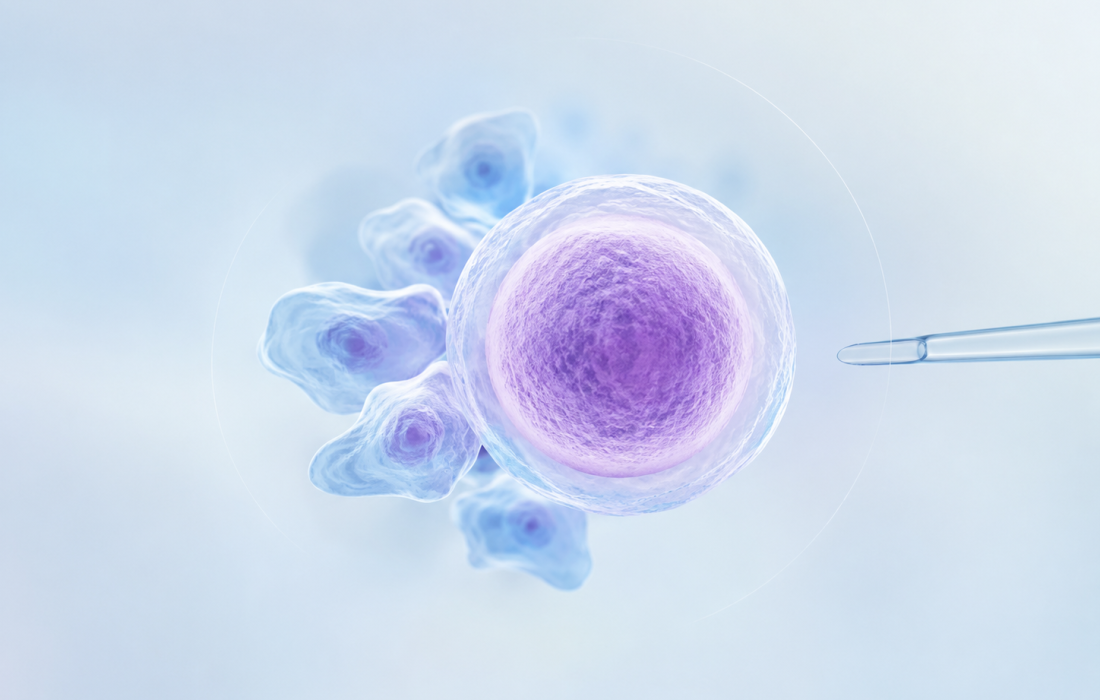
Fertilo is an investigational IVM product that uses ovarian support cells derived from human induced pluripotent stem cells. These engineered cells are intended to provide a supportive environment for immature eggs to mature outside the body.
In conventional in vitro fertilisation (IVF), ovarian stimulation is generally used to obtain multiple mature eggs. IVM instead allows immature oocytes to complete maturation in the laboratory, potentially reducing the need for ovarian stimulation. Fertilo targets this laboratory maturation stage by introducing engineered support cells into the culture system.
Gameto is evaluating Fertilo in the registered Phase 3 Fertilo In Vitro Research Study and Trial (FIRST; NCT06858111). The randomised, parallel-group, quadruple-masked study plans to enrol approximately 500 women aged 18–35.
Participants’ immature cumulus–oocyte complexes, comprising eggs surrounded by supporting cells, are cultured for 30 hours using either Fertilo or the comparator MediCult IVM system. The oocytes are then fertilised, the resulting embryos are cultured to the blastocyst stage, vitrified and transferred in a subsequent cycle.
The primary endpoint is cumulative ongoing pregnancy, assessed at 12 weeks of gestation or later, across up to the first two embryo transfers. Secondary measures include oocyte maturation, fertilisation and embryo-development outcomes, as well as cumulative live birth.
The study’s eligibility criteria include an anti-Müllerian hormone level of at least 3 ng/mL. Consequently, findings may not automatically apply to women with diminished ovarian reserve or to older patients outside the trial’s age range.
Regulatory Status and Development Timeline
Ferring states that the IVM programme remains investigational in the United States and has not been approved by the US Food and Drug Administration (FDA). The announcement does not disclose an IND number, detailed regulatory history or a planned marketing application.
An investigational new drug application supports the conduct of human studies under applicable FDA requirements; it is not marketing authorisation. The acquisition agreement itself does not change Fertilo’s regulatory status or establish its safety and effectiveness.
According to the trial registry, FIRST began on 17 April 2025. Primary completion is estimated for May 2027, with overall study completion expected in January 2028. These are sponsor-reported estimates and may change.
Clinical Interpretation
The proposed acquisition represents a strategic investment in cell-engineered fertility technology, not a clinical endorsement of Fertilo’s effectiveness. Earlier research may inform the platform’s development, but it cannot substitute for the comparative evidence generated by the ongoing Phase 3 study.
The most important result will be whether Fertilo improves the prespecified ongoing-pregnancy outcome compared with MediCult IVM, supported by the secondary embryo-development, live-birth and safety findings. The trial is not a direct comparison with conventional, fully stimulated IVF, so its results should not be interpreted as establishing superiority over all IVF approaches.
For Ferring, the programme offers a potential extension of its reproductive-medicine business. Its ultimate clinical and commercial value will depend on the trial results, regulatory review and subsequent development milestones. Until those uncertainties are resolved, Fertilo should remain classified as investigational in the United States, with any advantage over existing IVM methods still to be demonstrated.
References
Ferring Pharmaceuticals and Gameto Sign Agreement for Proposed Acquisition, Ferring Pharmaceuticals and Gameto, 27 October 2026.
Fertilo In Vitro Research Study and Trial (FIRST), ClinicalTrials.gov ID NCT06858111
Christian C. Kramme et al, Research on the development of the Fertilo ovarian support cell platform, Cell Stem Cell, Volume 33, Issue 2, 5 February 2026, Pages 202-216.e12, https://doi.org/10.1016/j.stem.2025.12.020

About the Writer
Siddhi Rajendra Bhadekar (Linkedin) is an M.Pharm professional with expertise in medical and scientific writing, literature review, publication writing, and evidence synthesis, supported by four peer-reviewed publications.
She brings working knowledge of ICH-GCP, MedDRA, pharmacovigilance, ADR/AE reporting, clinical data management, and regulatory documentation.
With experience across pharmaceutical R&D, Quality Control, and Quality Assurance, she combines scientific research skills with strong attention to accuracy and detail.
Her background in manuscript development, publication planning, and scientific communication enables her to translate complex healthcare information into clear, reliable content.