
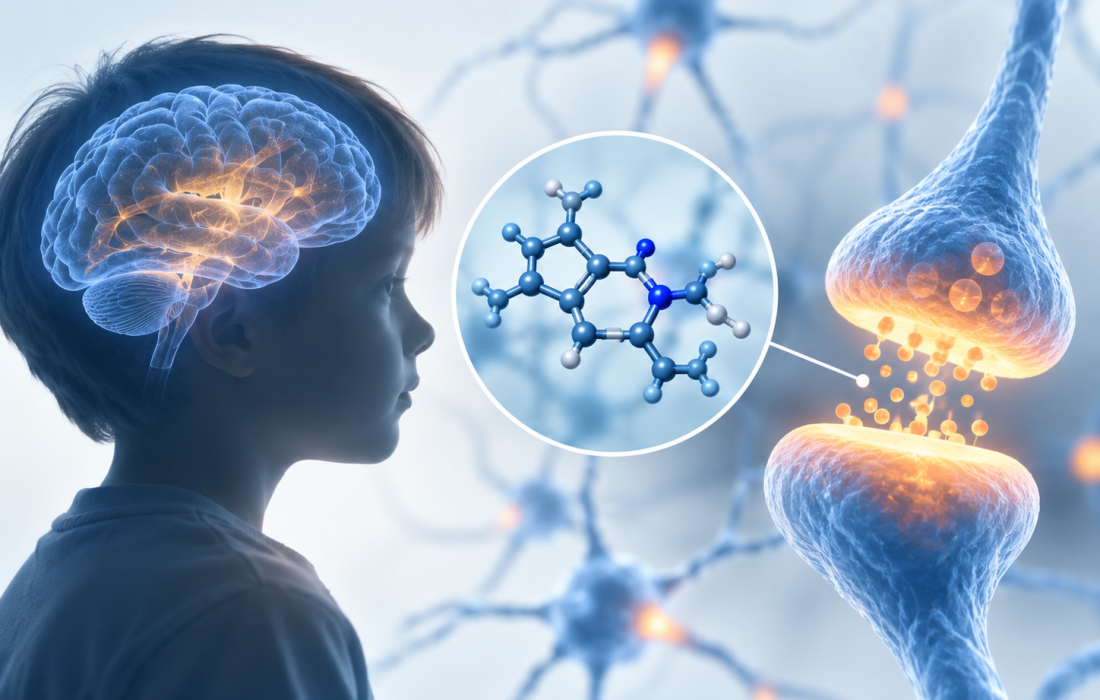
Rumi Therapeutics advances RTX-7340, an investigational PDE2 inhibitor, toward clinical testing for Fragile X syndrome following an option-to-license agreement.
Written By: Creola Gonsalves, MS Biotech
Reviewed By: Pharmacally Editorial Team
Rumi Therapeutics has secured an option-to-license agreement with Enthorin Therapeutics for RTX-7340 (ENT-7340), an investigational phosphodiesterase 2 (PDE2) inhibitor with an IND-ready development package for Fragile X syndrome. The agreement adds a preclinical-stage therapeutic candidate to Rumi Therapeutics’ pipeline and advances Rumi Scientific Holdings’ strategy to move from disease modeling and drug discovery toward clinical development.
PDE2 Inhibition Shows Potential in Fragile X Models
Fragile X syndrome is a genetic neurodevelopmental disorder caused by changes in the FMR1 gene that reduce or eliminate production of fragile X messenger ribonucleoprotein (FMRP), a protein essential for normal brain development. The condition can affect intellectual development, language, learning, attention, behavior and social functioning. Treatment development remains challenging, creating a need for therapies that address underlying disease biology and demonstrate meaningful clinical benefits.
PDE2A activity is elevated in animal models of Fragile X syndrome. Preclinical studies suggest that inhibiting this enzyme can improve dendritic spine maturation, synaptic plasticity, and social and cognitive measures in these models.
Studies of RTX-7340 in Fmr1-knockout mice have also shown correction of disease-associated electroencephalography (EEG) abnormalities following PDE2 inhibition. These findings provide a potential foundation for developing neurophysiological biomarkers to assess whether treatment produces measurable changes in brain function.
However, these results remain preclinical. Whether RTX-7340 can produce comparable effects in humans, and whether changes in brain activity translate into clinical benefits, remains unknown.
Human Organoid Research to Support Clinical Translation
The development programme combines preclinical findings with Rumi Scientific’s proprietary human organoid platform, which supports disease modeling and therapeutic discovery. The company plans to use this research alongside neurophysiological endpoints to inform clinical development.
The proposed biomarker strategy could help researchers connect drug exposure and target occupancy with measurable changes in brain activity. Investigators would then need to determine whether these changes correlate with improvements in symptoms or functioning among people with Fragile X syndrome.
Craig Erickson, director of the Fragile X Syndrome Research and Treatment Center at Cincinnati Children’s Hospital, highlighted the importance of establishing this link between disease biology and patient outcomes. Combining organoid research with neurophysiological measures could help researchers assess both the biological effects of treatment and their relationship to clinical benefit.
Partnership Advances Rumi’s Clinical Development Strategy
The agreement marks a step in Rumi Therapeutics’ transition toward clinical development. CEO Ignacio Muñoz-Sanjuán said RTX-7340 combines an IND-ready candidate with insights from the company’s human organoid platform, with Fragile X syndrome serving as the initial indication.
Enthorin Therapeutics, represented by managing partner and co-founder J. Guy Breitenbucher, will support the programme’s advancement toward clinical evaluation through the agreement.
Beyond RTX-7340, Rumi Scientific plans to investigate whether PDE2 inhibition could have relevance in other neurodevelopmental disorders. Such expansion would depend on additional evidence supporting the biological rationale and therapeutic potential in each condition.
Clinical Development Milestones Remain Ahead
Although RTX-7340 has an investigational new drug (IND)-ready package, the source announcement does not establish that regulators have authorized a clinical trial or that first-in-human testing has begun. The next steps will include advancing the candidate toward clinical evaluation and determining how preclinical findings can inform human studies.
RTX-7340 remains investigational. Its safety and efficacy in people with Fragile X syndrome have not been established, and the clinical value of PDE2 inhibition remains to be demonstrated.
Reference
Rumi Therapeutics Announces Licensing Agreement with Enthorin Therapeutics to Advance RTX-7340, an IND-Ready PDE2 Inhibitor, for Fragile X Syndrome, 27 October 2026

About the Writer
Creola Gonsalves (Linkedin) is an M.S. Biotechnology postgraduate with a strong interest in clinical research, evidence interpretation, and healthcare writing, with a focus on translating life-science knowledge into meaningful real-world insights.
She is trained in Good Clinical Practice (GCP), clinical research principles, and critical interpretation of randomized clinical trials, with certifications from NIH and Stanford University.
Her research background in biotechnological applications and microbial research strengthens her ability to understand scientific evidence and develop clear, accurate, and research-driven healthcare content.