
AimedBio’s BI 4060107 enters Phase I testing in advanced solid tumors, triggering a milestone payment under its licensing deal with Boehringer Ingelheim.
Written By: Rishabh Sonawane, BPharm
Reviewed By: Pharmacally Editorial Team
AimedBio’s BI 4060107 has entered Phase I clinical development, with the first patient dosed in a study evaluating the investigational ADC in people with advanced solid tumors. Boehringer Ingelheim is developing the candidate under a global collaboration and licensing agreement signed in October 2025.
The first-in-human study (NCT07827144) will evaluate different doses of BI 4060107, with an initial focus on safety and tolerability. The study marks the transition from preclinical development to human testing, where researchers can begin assessing the candidate’s safety profile and determine doses for further clinical evaluation.
No clinical efficacy or safety results have been reported. The candidate remains investigational, and its therapeutic potential will depend on findings from ongoing development.
Targeted ADC Approach for Advanced Cancers
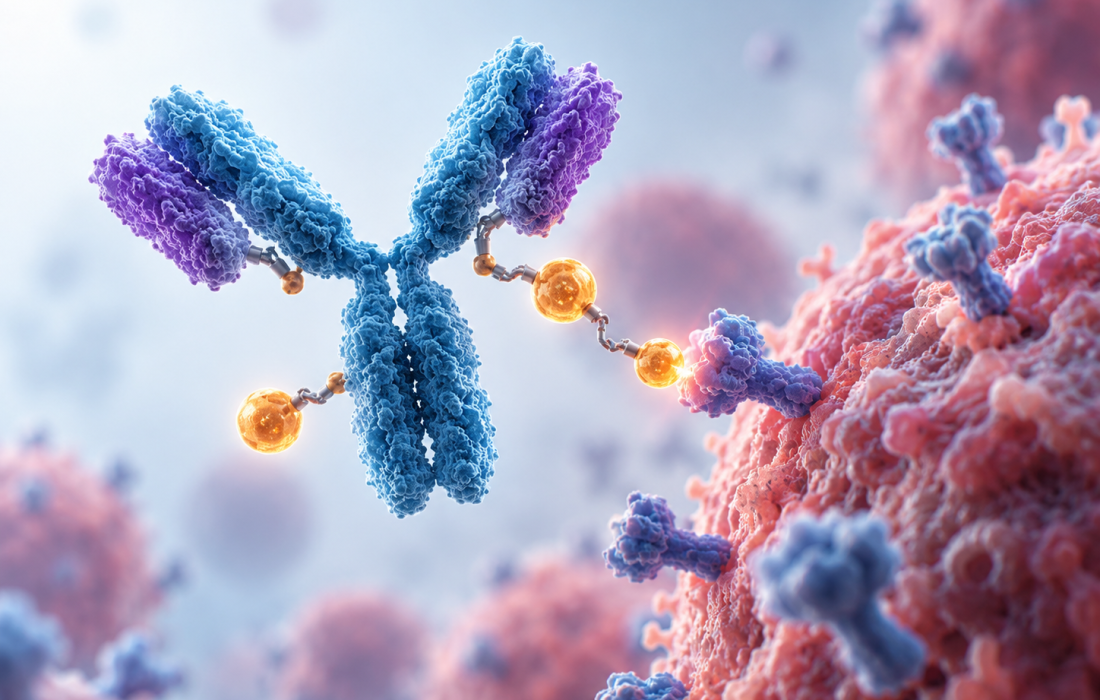
Antibody-drug conjugates combine an antibody that recognizes a specific biological target with a cytotoxic payload that can kill cancer cells. By directing the payload toward cells expressing the target, ADCs may improve drug delivery to tumors, although their safety and effectiveness depend on target expression, payload activity and other biological factors.
BI 4060107 was discovered using AimedBio’s proprietary P-ADC™ platform, which applies a patient-driven approach to target identification and validation for targeted cancer therapies.
According to AimedBio, the candidate targets a tumor-selective marker that is highly expressed across a broad range of cancers, has minimal expression in normal tissues and is associated with tumor growth, metastasis and treatment resistance.
This target profile provides the biological rationale for evaluating BI 4060107 across advanced solid tumors. However, differences in target expression between tumor types and individual patients will need to be assessed during clinical development. The company has not disclosed detailed clinical data establishing the candidate’s activity or safety in humans.
Phase I Study to Establish Safety and Tolerability
The ongoing Phase I study will assess different doses of BI 4060107 in people with advanced solid tumors. Early-stage testing will establish the candidate’s tolerability and help investigators characterize its safety profile and identify doses suitable for subsequent studies.
The available announcement does not specify the planned enrollment, detailed dose-escalation design, primary and secondary endpoints, or expected completion date. It also does not report objective response rates, duration of response or other measures of antitumor activity.
AimedBio CEO Nam-Gu Her described the first-patient dosing milestone as a step toward clinical evaluation of the company’s ADC discovery pipeline. Boehringer Ingelheim’s Global Head of Experimental Medicine, Vittoria Zinzalla, similarly identified the start of clinical development as an important step in advancing its oncology research.
Licensing Agreement Triggers Milestone Payment
The clinical milestone makes AimedBio eligible for a payment from Boehringer Ingelheim under their October 2025 global collaboration and licensing agreement. The companies have not disclosed the payment amount.
Under the agreement, AimedBio could receive up to $991 million in combined upfront, development, regulatory and commercial milestone payments, in addition to royalties on net sales. The maximum represents potential payments tied to future development and commercial milestones, rather than guaranteed revenue.
Clinical Data Will Determine the Next Development Steps
The first-in-human study will provide the initial evidence needed to determine whether BI 4060107 can advance through clinical development. Key questions include its tolerability, dose-limiting toxicities, recommended dose for further testing and preliminary antitumor activity.
The candidate’s broad potential application across solid tumors will also require clinical evidence showing which cancer types and patient groups are most likely to benefit. Until those data emerge, the first-patient dosing milestone represents progress in development rather than evidence of clinical benefit.
For AimedBio, the milestone also demonstrates the advancement of a partnered discovery programme into human testing, while the licensing agreement gives Boehringer Ingelheim responsibility for further development of the candidate under the collaboration.
Reference
AimedBio and Boehringer Ingelheim initiate Phase I study of antibody-drug conjugate BI 4060107, Aimedbio, 27 October 2026
A Study to Test How Well Different Doses of BI 4060107 Are Tolerated by People with Advanced Cancer (Solid Tumours), ClinicalTrials.gov ID NCT07827144

About the Writer
Rishabha Sonawane, B.Pharm (LinkedIn) is healthcare writer with a strong interest in medical writing, regulatory affairs, clinical research, and AI-driven drug discovery. He has completed specialized training from the NIH and ICMR in clinical pharmacology, clinical research, and scientific writing. Passionate about evidence-based healthcare communication, he focuses on translating complex scientific research into clear, accurate, and engaging medical content.