
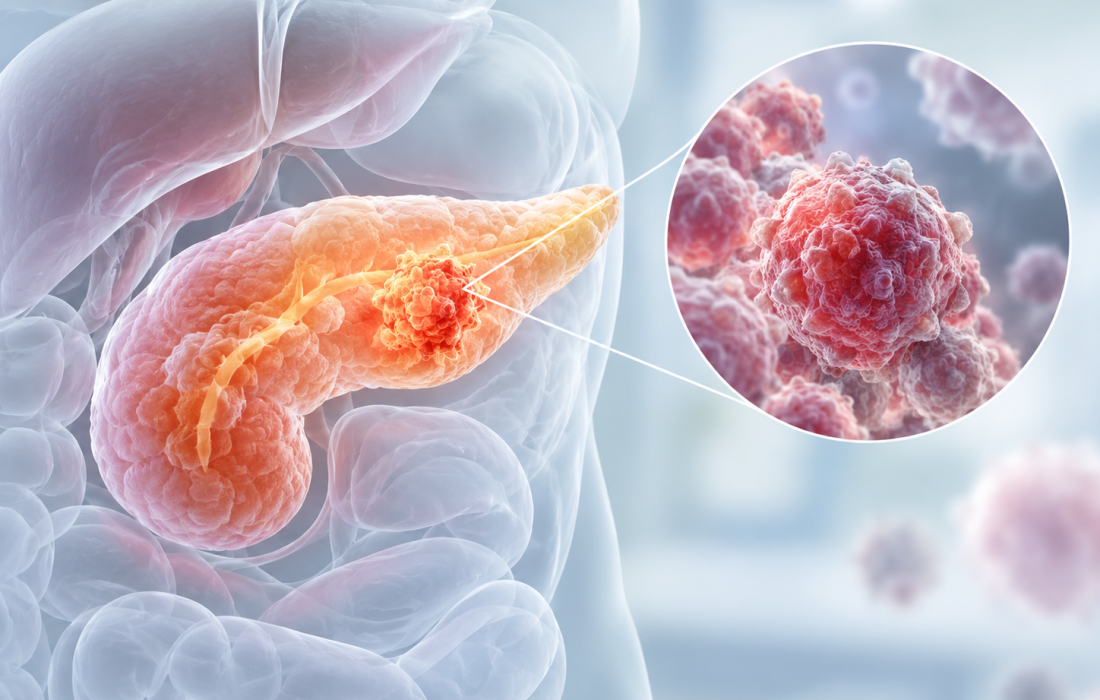
Tango Therapeutics reports an 82% response rate with vopimetostat plus daraxonrasib in previously treated MTAP-deleted pancreatic cancer, supporting Phase 3 plans.
Written By: Khushi Patel, PharmD
Reviewed By: Pharmacally Editorial Team
Tango Therapeutics has reported updated Phase 1/2 results for vopimetostat, an investigational PRMT5 inhibitor, combined with Revolution Medicines’ RAS(ON) inhibitor daraxonrasib in patients with MTAP-deleted, RAS-mutant metastatic pancreatic ductal adenocarcinoma (PDAC). Among 22 efficacy-evaluable patients who had received second- or third-line treatment, the combination achieved an objective response rate (ORR) of 82% and a nine-month progression-free survival (PFS) rate of 88%.
The results, based on an August 20, 2026, data cutoff, were presented at the European Society for Medical Oncology (ESMO) 2026 Congress, held in Madrid from October 23–27. Tango plans to initiate a randomized Phase 3 trial in first-line MTAP-deleted pancreatic cancer in the first half of 2027.
PRMT5 Inhibition Targets MTAP-Deleted Tumors
Vopimetostat is an investigational oral, once-daily inhibitor of protein arginine methyltransferase 5 (PRMT5). The drug targets a vulnerability associated with deletion of the methylthioadenosine phosphorylase (MTAP) gene, an alteration found in several cancer types, including pancreatic and lung cancers.
The Phase 1/2 study is evaluating vopimetostat in combination with RAS(ON) inhibitors to assess whether targeting these pathways together can produce clinically meaningful antitumor activity. The findings remain preliminary because the study is ongoing and the reported cohorts are small.
Daraxonrasib Combination Shows Sustained Disease Control
Among the 22 efficacy-evaluable PDAC patients, 13 received the combination as third-line treatment. Patients received vopimetostat at either 200 mg or 250 mg once daily, alongside daraxonrasib at 100 mg once daily.
The combination achieved an ORR of 82% (18/22), with a 100% disease control rate. At the data cutoff, 11 responses were confirmed partial responses and seven were unconfirmed partial responses. All seven additional responses were confirmed after the cutoff date.
Median PFS had not been reached, while the estimated nine-month PFS rate was 88%. Median follow-up was 7.1 months, with a range of 3.3–12.5 months.
The results indicate that tumor responses were observed alongside a promising early signal of disease control duration in this previously treated population. However, the small sample size, limited follow-up, and absence of a randomized comparator prevent conclusions about whether the combination improves outcomes relative to existing treatments.
Safety Findings Support Further Dose Evaluation
At dose level 1, the combination was generally well tolerated among 25 safety-evaluable patients. No dose-limiting toxicities or withdrawals due to treatment-related adverse events (TRAEs) were reported. Dose reductions occurred in 20% of patients.
Grade 3 TRAEs occurred in 40% of patients, with no Grade 4 or Grade 5 TRAEs reported. The most common TRAEs were stomatitis (48%), rash (44%), and diarrhea (28%); all were Grade 1–2.
The higher vopimetostat dose at dose level 2 was less tolerable. Three dose-limiting toxicities were reported in two patients among four safety-evaluable patients. These findings highlight the importance of dose selection as development progresses.
In the five-patient NSCLC cohort treated at dose level 1, the combination achieved an ORR of 80% (4/5) and a 100% disease control rate. Grade 3 TRAEs occurred in one patient, with no Grade 4 or Grade 5 TRAEs. Rash, diarrhea, stomatitis, nausea, and fatigue were the most common treatment-related events, all Grade 1–2. Given the very small cohort, these results should be interpreted as preliminary evidence of activity rather than a reliable estimate of efficacy in NSCLC.
Zoldonrasib Combination Also Shows Activity
Tango also reported results for vopimetostat combined with zoldonrasib in patients with MTAP-deleted, KRAS G12D-mutant PDAC.
Across four dose levels, 35 efficacy-evaluable patients achieved an ORR of 54% (19/35), including 18 confirmed partial responses and one confirmed complete response. The nine-month PFS rate was 61%, and the disease control rate was 97%.
Among 39 safety-evaluable patients, no dose-limiting toxicities or withdrawals due to TRAEs were reported. Dose reductions occurred in 15% of patients. Grade 3 TRAEs occurred in 28%, with one Grade 4 event and no Grade 5 TRAEs. Nausea and vomiting were the most common TRAEs, each reported in 39% of patients, followed by dysgeusia (28%) and fatigue (26%); these common events were Grade 1–2.
Although the response rate was lower than that reported with daraxonrasib, the two combinations were evaluated in different patient populations and dose regimens. Their results should not be interpreted as a direct comparison of efficacy.
Phase 3 Trial Planned for First-Line Pancreatic Cancer
Following discussions with the U.S. Food and Drug Administration (FDA), Tango plans to initiate a global, randomized registrational Phase 3 trial in first-line MTAP-deleted PDAC in the first half of 2027.
The planned study will randomize patients 1:1 to receive vopimetostat 200 mg once daily plus daraxonrasib 100 mg once daily or standard-of-care chemotherapy. The dual primary endpoints are ORR and PFS, with overall survival as a key secondary endpoint. Tango also intends to discuss a potential second-line approval pathway with regulators.
The Phase 3 programme will be important in determining whether the response and disease-control signals observed in the early-stage study translate into a meaningful clinical benefit. Until comparative data become available, the combination remains investigational, and its potential role in pancreatic cancer treatment is not yet established.
Reference
Tango Presents Promising Results from Phase 1/2 Study of Vopimetostat and Daraxonrasib in Pancreatic Cancer and Provides Updates to Development Strategy, Tango Therapeutics, 23 October 2026
Study to Evaluate the Safety, Tolerability & Efficacy of TNG462 in Combination in PDAC & NSCLC Patients, ClinicalTrials.gov ID NCT06922591

About the Writer
Khushi Patel is a Pharm.D (Linkedin) professional with a strong foundation in clinical pharmacy, patient-centered care, regulatory affairs, and pharmacovigilance, with published work on Brugada syndrome.
Her interests include regulatory affairs, pharmacovigilance, guideline integration, multimodal therapy, pharmacogenomics, and antibiogram utilization, with a focus on evidence-based clinical decision-making and medication safety.
As a Pharmacally healthcare writer, she translates clinical and scientific evidence into clear, accurate, and clinically relevant healthcare content, while continuously developing her expertise in evolving pharmacy practice.