
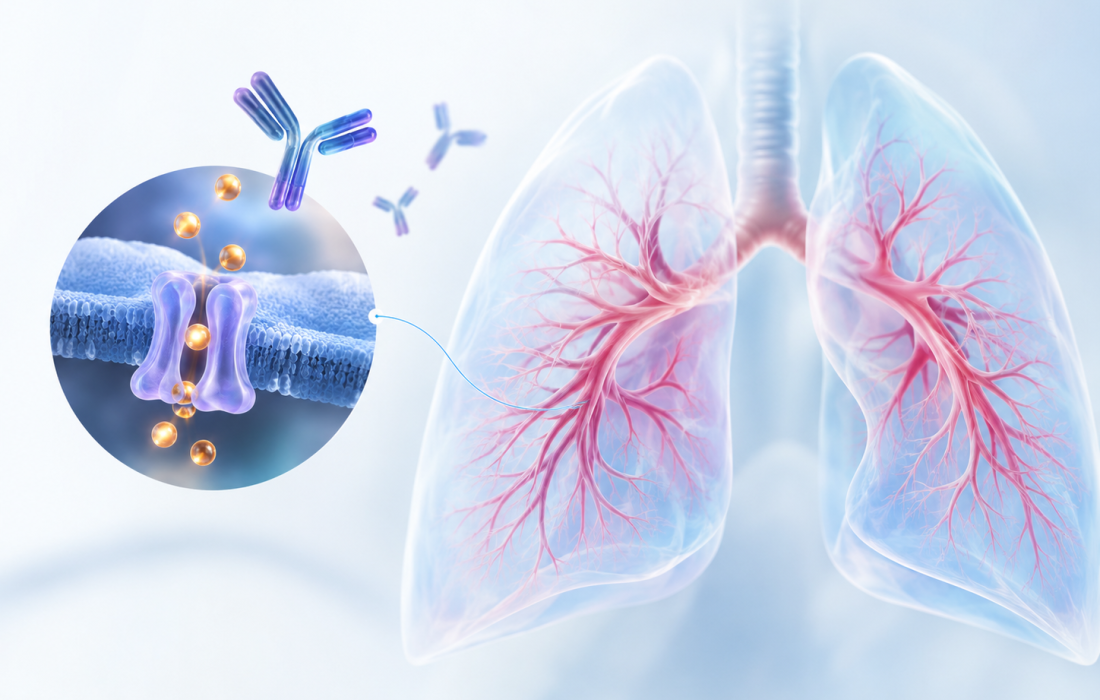
Apollo Therapeutics advances APL-9796 into Phase 2 for pulmonary hypertension, supported by findings on ZIP12-mediated zinc signaling and vascular remodeling.
Written By: Mayuri Vaja, PharmD
Reviewed By: Pharmacally Editorial Team
Apollo Therapeutics has reported the publication of new research in Science Translational Medicine supporting APL-9796, an investigational monoclonal antibody designed to target vascular remodeling associated with pulmonary hypertension (PH). The findings strengthen the rationale for targeting ZIP12-mediated zinc signaling, a pathway implicated in abnormal pulmonary vascular cell activity, and support continued clinical development of the antibody.
APL-9796 is being evaluated in the Phase 2 ViTAL-PH trial in adults with pulmonary hypertension. The research connects earlier academic discoveries with patient-derived cell experiments, preclinical disease models and initial human safety and pharmacokinetic findings. However, whether inhibiting ZIP12 can produce meaningful clinical benefits remains to be established.
ZIP12 Links Zinc Signaling to Pulmonary Vascular Remodeling
Pulmonary hypertension is characterized by elevated pressure in the pulmonary circulation. In pulmonary arterial hypertension (PAH), abnormal changes in pulmonary blood vessels increase vascular resistance and place additional strain on the right ventricle, potentially leading to right-sided heart failure.
Although approved therapies have improved outcomes, many established treatments primarily influence vascular tone. Targeting the cellular processes underlying pathological vascular remodeling represents a different therapeutic strategy.
The new publication builds on research published in Nature in 2015, which implicated ZIP12 in hypoxia-associated pulmonary hypertension. Earlier findings linked increased ZIP12 expression in pulmonary arteries to the disease and showed that disrupting the transporter could prevent disease development in hypoxic rats.
The newer research describes how increased ZIP12 activity in pulmonary vascular cells can raise intracellular labile zinc levels and promote cellular proliferation, metabolic changes and Akt signaling. These processes are associated with the abnormal growth and survival characteristics of vascular cells implicated in PAH.
APL-9796 Targets ZIP12-Mediated Zinc Transport
APL-9796 is a humanized monoclonal antibody designed to bind the extracellular domain of ZIP12, also known as SLC39A12, and inhibit its function. By reducing ZIP12-mediated zinc influx, the antibody aims to address cellular processes contributing to pulmonary vascular dysfunction and remodeling.
In pulmonary vascular cells derived from patients with idiopathic PAH, APL-9796 reportedly normalized elevated intracellular zinc levels and reduced pathological cell proliferation and contractility. These findings extend the investigation beyond animal models and provide translational evidence supporting the biological rationale for ZIP12 inhibition.
The antibody also improved pulmonary artery pressure, right ventricular hypertrophy and pulmonary vascular remodeling across three preclinical models of pulmonary hypertension.
Together, these results support further investigation of ZIP12 as a therapeutic target. They do not, however, establish that APL-9796 reverses vascular remodeling or modifies disease progression in patients.
Phase 1 Findings Support Further Development
The publication also reports findings from a Phase 1 single-ascending-dose study in healthy adults. Participants received subcutaneous APL-9796 at doses ranging from 0.3 mg/kg to 12 mg/kg.
The study reported that APL-9796 was well tolerated, with no serious adverse events or treatment-related adverse events of Grade 3 or higher reported in the published Phase 1 abstract. Its dose-proportional pharmacokinetic profile supports the potential for once-monthly administration.
These findings provide an initial human safety and pharmacokinetic basis for continued development. Because the study involved healthy participants, it does not establish safety or efficacy in people with pulmonary hypertension. The potential monthly dosing schedule also requires evaluation in the intended patient population.
Phase 2 ViTAL-PH Trial Will Assess Clinical Potential
The ongoing Phase 2 ViTAL-PH study (NCT06846554) is a multicentre, open-label, dose-escalation trial evaluating repeated subcutaneous administrations of APL-9796 in adults with pulmonary hypertension.
Part A plans to enroll up to 36 adults with World Health Organization (WHO) Group 1 PAH across three dose levels. An optional Part B will evaluate up to 12 adults with WHO Group 3 pulmonary hypertension associated with interstitial lung disease (PH-ILD).
The study requires participants to have an implanted CardioMEMS pulmonary artery pressure sensor. This enables continuous remote hemodynamic monitoring, including assessment of pulmonary artery pressure and other measures of cardiovascular function. The trial will assess safety, tolerability, pharmacokinetics and immunogenicity, alongside exploratory measures of treatment effects.
Clinical Evidence Remains the Key Test
The research positions APL-9796 as an investigational approach directed at a biological process implicated in pulmonary vascular remodeling, rather than solely at vascular tone. Evidence from patient-derived cells and preclinical models provides a rationale for testing this strategy in humans, while Phase 1 findings offer initial support for continued clinical development.
The central question is whether ZIP12 inhibition can produce measurable and clinically meaningful benefits in patients with pulmonary hypertension. Results from ViTAL-PH will help determine whether the mechanistic findings translate into changes in hemodynamics, functional capacity and other relevant clinical measures.
References
Apollo Therapeutics Announces Science Translational Medicine Publication Supporting APL-9796 as a Potential Disease-Modifying Approach for Pulmonary Hypertension, Apollo Therapeutics, 22 October 2026
A Trial of “APL-9796” in Adults with Pulmonary Hypertension (ViTAL-PH), ClinicalTrials.gov ID NCT06846554
Lan Zhao et al, Targeting ZIP12-mediated Zn2+ signaling as a treatment for pulmonary hypertension. Sci. Transl. Med.18, eaee0680(2026). DOI:10.1126/scitranslmed.aee0680

About the Writer
Mayuri Vaja (Linkedin) is a Pharm.D professional with a strong interest in clinical research, pharmacovigilance, and medical writing, supported by certifications in pharmacovigilance and academic projects exploring AI in healthcare and drug safety.
With a growing focus on evidence-based healthcare and scientific communication, she is developing expertise in clinical research and translating healthcare evidence into clear, meaningful content.
As a Pharmacally healthcare writer, Mayuri is committed to creating accurate, research-driven, and clinically relevant healthcare content while continuously strengthening her professional skills.